Beauty – Once Again for the First Time
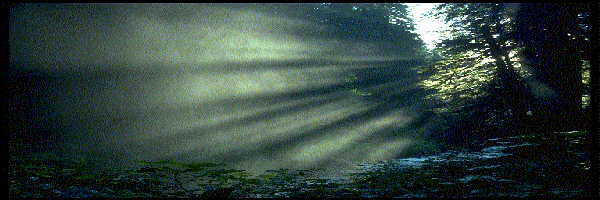
How do we know beauty but in her absence? As a night that longs for a moon we long for her light. With restless winds that churn through our darknesses beauty wrests us from our abyss, our history. Where darkness casts no shadow of hope, there in that vulva, do we await our moment of birth; our time in the sun. When beauty exists no more, then do we arrive at our eternal shore; then does that first ray of light grace our soulless night. We die no more. We rise for the first time to what we never knew but what knew us as mother, as lover, as home. My love, how can I have forgotten you? How could I have lost my name? I wake to beauty, your beauty. I love for the first time. Your beauty calls the dead to life they never knew. You speak my soul to light. I live, a new sun that breathes a first archaic light. Beauty is that which first wakes us into life. Beauty is that which requires it’s absence so that our mortal deaths can once again arise to the light that spawns the galaxies and begins anew the love of loves, the truth of stars and flesh and once again summons the ageless repetition of life, death, rebirth; of love and loss. Oh woeful tragedy that yet again must negate our burdened days until we once again can turn our moments skyward to the heavens where beauty begins for the first time and lovers first caress as morning suns kiss dew filled forests that eyes never knew. Beauty is what only lovers first know and babies first breathe. To die, to negate, to break one’s heart – all these prepare the way for our awakening to beauty for the first time.
To engage in the thought of beauty is to begin again our retreat from beauty. The history that made beauty a Cartesian idea[i] has vanished and Nietzsche’s prophecy in “The Birth of Tragedy”[ii] has a strange ring of truth – the greatness (the beauty) of the Greeks was already beginning to get lost with the freezing of thought into logic with Plato and Aristotle. The truth of our time, deconstruction, shows what we already knew – that every construction already carries the seeds of its undoing, the theme of its deconstruction[iii]. Beauty already insists on its ugly, dark side; its absence. This does not cast all beauty into an empty dark shell. To the contrary, it insists that for beauty to be beauty and not to fall into absolute emptiness it must undo itself, it must get lost, it must abolish itself. Only then, can we cast aside our dead weights of history; our stale being in the world (everydayness)[iv] and for the first time (yet again) look with infant eyes into the translucent clearing,[v] the event of appropriation[vi] that entices us beyond ourselves and allows us to first be able to have an idea, a truth, a Plato and Aristotle, or a Cartesian science and logic. Even more so, beauty and its essential absence first make possible a love and a being at home in a world that is thrown void[vii]. Beauty always begins again for the first time and we are dutifully bound as unfaithful lovers to capture again what captured us as birth and thus - world. This eternal recurrence of what we never knew but what we hold in the thought, ‘beauty’ is perhaps better pointed to in the muse of poetry – thus the beginning.
A Link to My Other Music and Poetry: Mark's Music