Philosophy Series 2 – Introduction
Philosophy Series 3 – Appendix A, Part 1
Philosophy Series 4 – The Pre-Socratics – Hesiod
Philosophy Series 5 – A Detour of Time
Philosophy Series 6 – The Origin
Philosophy Series 7 – Eros
Philosophy Series 8 – Thales
Philosophy Series 9 – An Interlude to Anaximander
Philosophy Series 10 – On the Way to Anaximander: Language and Proximity
Philosophy Series 11 – Aristotle and Modernity: The Eternal and Science
Philosophy Series 12 – Levinas and the Problem of Metaphysics
Philosophy Series 13 – On Origin
Philosophy Series 14 – George Orwell and Emmanuel Levinas Introspective: Socialism and the Other
————————————————
Philosophy Series 14
George Orwell and Emmanuel Levinas Introspective: Socialism and the Other
Introduction
George Orwell (1903 to 1950) and Emmanuel Levinas (1905 to 1995) were both engaged in the fight against fascism during the 20th century. Orwell, born in India but educated and resided in England, fought with the Popular Front, leftist government in Spain against the right-wing, military coup of Nationalists lead by General Francisco Franco. Orwell was shot in the neck and barely escaped with his life (Colls, 2014). Levinas, a Lithuanian, became a naturalized French citizen in 1931. He fought with the French and was captured by the Nazis where he remained a prisoner of war until the end of the war in 1945. His father and brothers died at the hands of the Nazi SS in Lithuania. Maurice Blanchot helped Levinas’ wife and daughter spend the war in a monastery (Emm). Both men understood the horror of war and made brilliant strides to wrestle with the absolute need for meaning in what appeared to be a meaningless world. They both described in very different ways the pitfalls of humanity and articulated with painful integrity and brilliance an avenue of hope in a hopeless world. For Orwell, with astute recognition of the weaknesses of socialism, nevertheless thought of socialism as the only possible hope for the disenfranchised and horrors of impoverishment in industrialized England. Levinas is not so easy to pin down with a political philosophy. Levinas warns us of the insidious nature of totalitarianism. In this way, his forebodings about the state have a kinship to Orwell’s critique of nationalism. While Levinas’ philosophy is deeply informed by the history of philosophy, his purpose is quite simple.
Sometimes, I think academic philosophy is its own worst enemy. Philosophy started out and literally means ‘love of wisdom’. Wisdom is not limited to the Aristotelian academy and its occidental linage. To the contrary, wisdom is widely available to every tradition, every culture, every human being. Personally, I also find wisdom in other animals besides humans. It seems the repetition which comes with age invites a certain sort of memory which allows the possibility for accommodation of difference and a sense of the profundity of love amid inevitable tragedies. This is not a given but a potential as Aristotle would suggest.
Perhaps, one way to think of the failure to make wisdom actual could be as a decline of our species, an evolutionary failure. However, even in this paradigm, individual evolutionary adaptation is always given as a possibility endemic to life. The downside of reducing wisdom to an evolutionary paradigm is to once again fall into the mode of totalizing objectivity which transforms the other to an ‘it’ of objectivity in the form of evolutionary taxonomy. In any case, the paradigm of evolution is not adequate in thinking about and desiring wisdom.
Levinas opens an alternative route to wisdom by putting a face on the other. He exposes convention which itself totalizes the other in the form of self-interest. In my estimation, anyone who follows the actual teachings of compassion and responsibility for the other, the stranger, the oppressed, the impoverished has achieved the goal, the telos (culmination, end) of Levinas’ monumental challenge – to help us see the face of the other for the very first time not obscured by the pitfalls of an already-assumed, historic situatedness cooked into language and tradition.
However, as each one of us carries our histories with us, we will eventually have to write a new history if the state is to be viable. This is the direction I am pointing towards in this post. Certainly, the kinds of historic changes I am thinking of takes hundreds of years. To the extent that academics bring the notions of Levinas and similar others to a wider audience is how they live the responsibility Levinas’ places on each of us. To the extent that academics puts up barriers of access to the wisdom of our responsibility to the other is once again reinforcing the barriers of totalitarianism. My goal is, to the best of my ability, to continue to open with others which proceeded me the historic way we came into totalitarianism and highlight the way out of the prison of self-interest to the he or she who faces us. In any case, let us remember the following which I will come back to later:
Language is the historic, cultural map that defines reality for us.
First, I would like to look at Orwell’s eyewitness chronicling of Europe’s devolution leading up to World War II with a view to his political solutions for the state. Today, we once again hear the rhyme of Orwell’s history. It seems we are always only condemned to repeat the past no matter what the state looks like although certainly some states seem better than others for delaying the inevitable. Levinas provides us with an especially needful alternative to the inability of the state to survive inevitable catastrophic failure and to deal effectively with planet wide threats from climate change and nuclear weapons. However, Levinas’ alternative requires a monumental change which probably represents more like a species type adaptation. It resides in the potential of wisdom if humans are to survive on this planet. To arrive at Levinas’ solution, we will need to look at how we arrived philosophically from ancient Greeks to modernity and what perpetually sabotages the state, any state.
Democratic democracies, communism, and science all arrived in the modern, occidental age from enlightened liberalism. Enlightenment also brings in the rise of capitalism and socialism. For once and for all lets please put this oxymoron to rest, there has never been a pure democracy or a pure socialism. Every democratic country, including the U.S., is a combination of both. Democracy is the will of the people. If the people vote for government run social programs like welfare and food stamps or government funded research and development, health care, retirement, industry regulation, and so forth, it is because private enterprise is unable or unwilling to address the human condition and suffering of its citizens. When people in a democracy vote for government owned and operated services, the people want the text-book definition of socialism. The U.S. is a democratic, capitalistic, socialist country like it or not. If democracy denies the vote of the people, democracy is plain and simple totalitarianism. If the state totally controls and owns every resource, that is not socialism it is communism. Communism clearly is nothing other than totalitarianism as history has shown.
In this post we will take a brief look at the beginning of modernity and British Enlightenment to orient us to the path we are traversing. This will also require a look at the ancient Greeks to situate how Enlightenment came about in the first place. After that, I will take the political, and necessarily philosophical, challenge Levinas presents us to prevent the fate of the totalitarian state. Levinas understood the necessity of the state and the conditions for which it could escape its failed history. For Orwell, socialism was the hope for resolving an inevitable fascist nationalism resulting in the bourgeoisie and the proletariat. Orwell faced the impossibility of democratic change in 20th century England with the intractability of aristocracy and its self-interest in the face of Hitler’s fascism. He saw no other solution for England except revolution. For Levinas, the inevitability of state totalitarianism was due to how each person in the state was locked in a philosophical and historic leveling off, or totalizing, of the other to the same. For now, the ‘same’ here is meant as how we find ourselves always already caught up in a history, a language, a culture which levels off radical alterity (otherness, difference) and holds the state hostage to preconceptions doomed to violence.
Orwell Chronicles the Impossibility of Totalitarianism in the Histories of 20th Century States
One of the most alarming struggles of reality over illusion is chronicled in the Spanish Civil War from 1936 to 1939 by an early thirty-year-old Eric Blair whose pen name was George Orwell. Orwell fought in the war with the Popular Front government Republicans against the Spanish revolutionary Nationalists. For Orwell nationalism was synonymous with fascism. Contrary to the propagandized illusions of Jonah Goldberg in his book “Liberal Fascism”, the history of fascism is the history of conservatism, aristocracy, and wealth. The Spanish Civil War is yet one more example of how corrosive nationalism will always pit the haves against the have nots. Orwell faced the autocracies of nationalism and extreme poverty in England. He traveled to Spain to fight for the Spanish Republicans, a left-leaning group, against the Nationalist fascists. As a life-long devoted socialist, Orwell’s greatest virtue was his devotion to the plight of impoverished and oppressed others and his undying willingness to critically question any ideology which undermined that quest, including the horrors of communism. He would even make fun of his own socialists in “Can Socialists Be Happy” (Freeman, 1943) written under the pseudonym John Freeman where he writes,
Nearly all creators of Utopia have resembled the man who has toothache, and therefore thinks happiness consists in not having toothache. They wanted to produce a perfect society by an endless continuation of something that had only been valuable because it was temporary. The wider course would be to say that there are certain lines along which humanity must move, the grand strategy is mapped out, but detailed prophecy is not our business. Whoever tries to imagine perfection simply reveals his own emptiness. This is the case even with a great writer like Swift, who can flay a bishop or a politician so neatly, but who, when he tries to create a superman, merely leaves one with the impression the very last he can have intended that the stinking Yahoos had in them more possibility of development than the enlightened Houyhnhnms.
The debate between those that believe Orwell was ‘conservative’ or ‘liberal’ in contemporary, U.S. politics is superficial. Most appropriately, Orwell was a painfully honest socialist. When the Franco fascists won the Spanish Civil War, Stalin and the Bolshevik communists who fought on the side of the socialists against fascism exterminated the socialists. Thus, we have Orwell’s hatred of communism illustrated in “Animal Farm” and “Nineteen Eighty-Four”. However, the essential link between fascism and communism for Orwell was nationalism. In Orwell’s essay, Notes on Nationalism (Orwell, 1945), he lays this out very clearly. Nationalism is the eternal struggle between rotting protectionism, spoiled mana, violent conservation of wealth, consolidation of power and the resulting facts of human suffering. He writes,
It is also worth emphasizing once again that nationalist feeling can be purely negative. There are, for example, Trotskyists who have become simply enemies of the U.S.S.R. without developing a corresponding loyalty to any other unit. When one grasps the implications of this, the nature of what I mean by nationalism becomes a good deal clearer. A nationalist is one who thinks solely, or mainly, in terms of competitive prestige. He may be a positive or a negative nationalist – that is, he may use his mental energy either in boosting or in denigrating – but at any rate his thoughts always turn on victories, defeats, triumphs and humiliations. He sees history, especially contemporary history, as the endless rise and decline of great power units, and every event that happens seems to him a demonstration that his own side is on the up-grade and some hated rival is on the down-grade. But finally, it is important not to confuse nationalism with mere worship of success. The nationalist does not go on the principle of simply ganging up with the strongest side. On the contrary, having picked his side, he persuades himself that it is the strongest, and is able to stick to his belief even when the facts are overwhelmingly against him. Nationalism is power hunger tempered by self-deception. Every nationalist is capable of the most flagrant dishonesty, but he is also – since he is conscious of serving something bigger than himself – unshakeably certain of being in the right.
…
Indifference to Reality. All nationalists have the power of not seeing resemblances between similar sets of facts.
…
The nationalist not only does not disapprove of atrocities committed by his own side, but he has a remarkable capacity for not even hearing about them.
…
Every nationalist is haunted by the belief that the past can be altered. He spends part of his time in a fantasy world in which things happen as they should – in which, for example, the Spanish Armada was a success or the Russian Revolution was crushed in 1918 – and he will transfer fragments of this world to the history books whenever possible. Much of the propagandist writing of our time amounts to plain forgery. Material facts are suppressed, dates altered, quotations removed from their context and doctored so as to change their meaning. Events which, it is felt, ought not to have happened are left unmentioned and ultimately denied.
…
Indifference to objective truth is encouraged by the sealing-off of one part of the world from another, which makes it harder and harder to discover what is actually happening. There can often be a genuine doubt about the most enormous events.
Eerily, this reminds us of events in the U.S. today. In the buildup between the Spanish Civil War and the rise of fascism in Nazi Germany, the aristocracy and conservatism of Prime Minister Neville Chamberlain in England from 1937 to 1940 was sympathetic to the other axis powers, Germany, Italy, and Japan of World War II. Orwell writes,
The British ruling class were not altogether wrong in thinking that Fascism was on their side. It is a fact that any rich man, unless he is a Jew, has less to fear from Fascism than from either Communism or democratic Socialism. One ought never to forget this, for nearly the whole of German and Italian propaganda is designed to cover it up. The natural instinct of men like Simon, Hoare, Chamberlain, etc. was to come to an agreement with Hitler. But – and here the peculiar feature of English life that I have spoken of, the deep sense of national solidarity, comes in – they could only do so by breaking up the Empire and selling their own people into semi-slavery. A truly corrupt class would have done this without hesitation, as in France. But things had not gone that distance in England. Politicians who would make cringing speeches about “the duty of loyalty to our conquerors” are hardly to be found in English public life. Tossed to and fro between their incomes and their principles, it was impossible that men like Chamberlain should do anything but make the worst of both worlds (Orwell, The Lion And The Unicorn: Socialism And The English Genius, 1941).
While Orwell detested war with Germany he believed that war was a necessity despite the conservative leanings of Chamberlain to make peace with Hitler and avoid war,
If I had to defend my reasons for supporting the war, I believe I could do so. There is no real alternative between resisting Hitler and surrendering to him, and from a Socialist point of view I should say that it is better to resist; in any case I can see no argument for surrender that does not make nonsense of the Republican resistance in Spain, the Chinese resistance to Japan, etc. etc. But I don’t pretend that that is the emotional basis of my actions. What I knew in my dream that night was that the long drilling in patriotism which the middle classes go through had done its work, and that once England was in a serious jam it would be impossible for me to sabotage. But let no one mistake the meaning of this. Patriotism has nothing to do with conservatism. It is devotion to something that is changing but is felt to be mystically the same, like the devotion of the ex-White Bolshevik to Russia. To be loyal both to Chamberlain’s England and to the England of tomorrow might seem an impossibility, if one did not know it to be an everyday phenomenon. Only revolution can save England, that has been obvious for years, but now the revolution has started, and it may proceed quite quickly if only we can keep Hitler out. Within two years, maybe a year, if only we can hang on, we shall see changes that will surprise the idiots who have no foresight. I dare say the London gutters will have to run with blood. All right, let them, if it is necessary. But when the red militias are billeted in the Ritz I shall still feel that the England I was taught to love so long ago for such different reasons is somehow persisting. (Orwell, My Country Right or Left, 1940)
Orwell determined that inaction was the action of fascism and could not be tolerated. He also saw that the indifference of ‘democracies’ prior to Franklin Delano Roosevelt and Winston Churchill, some anarchists, pacifists, and those that did not have the will to actively oppose bourgeois fascism, were themselves an instrument of nationalism and thus, fascism.
‘It is nonsense to talk of opposing Fascism by bourgeois “democracy”. Bourgeois “democracy” is only another name for capitalism, and so is Fascism; to fight against Fascism on behalf of “democracy” is to fight against one form of capitalism on behalf of a second which is liable to turn into the first at any moment. The only real alternative to Fascism is workers’ control. If you set up any less goal than this, you will either hand the victory to Franco, or, at best, let in Fascism by the back door. Meanwhile the workers must cling to every scrap of what they have won; if they yield anything to the semi-bourgeois Government they can depend upon being cheated. The workers’ militias and police-forces must be preserved in their present form and every effort to “bourgeoisify” them must be resisted. If the workers do not control the armed forces, the armed forces will control the workers. The war and the revolution are inseparable.’ (Orwell, ‘Three Parties that Mattered’: Extract from Homage to Catalonia, 1938)
In any serious emergency the contradiction implied in the Popular Front is bound to make itself felt. For even when the worker and the bourgeois are both fighting against Fascism, they are not fighting for the same things; the bourgeois is fighting for bourgeois democracy, i.e., capitalism, the worker, in so far as he understands the issue, for Socialism. And in the early days of the revolution the Spanish workers understood the issue very well. In the areas where Fascism was defeated they did not content themselves with driving the rebellious troops out of the towns; they also took the opportunity of seizing land and factories and setting up the rough beginnings of a workers’ government by means of local committees, workers’ militias, police forces, and so forth. They made the mistake, however (possibly because most of the active revolutionaries were Anarchists with a mistrust of all parliaments), of leaving the Republican Government in nominal control. And, in spite of various changes in personnel, every subsequent Government had been of approximately the same bourgeois-reformist character. At the beginning this seemed not to matter, because the Government, especially in Cataloñia, was almost powerless and the bourgeoisie had to lie low or even (this was still happening when I reached Spain in December) to disguise themselves as workers. Later, as power slipped from the hands of the Anarchists into the hands of the Communists and right-wing Socialists, the Government was able to reassert itself, the bourgeoisie came out of hiding and the old division of society into rich and poor reappeared, not much modified. Henceforward every move, except a few dictated by military emergency, was directed towards undoing the work of the first few months of revolution. Out of the many illustrations I could choose, I will cite only one, the breaking-up of the old workers’ militias, which were organized on a genuinely democratic system, with officers and men receiving the same pay and mingling on terms of complete equality, and the substitution of the Popular Army (once again, in Communist jargon, “People’s Army”), modelled as far as possible on an ordinary bourgeois army, with a privileged officer-caste, immense differences of pay, etc., etc. Needless to say, this is given out as a military necessity, and almost certainly it does make for military efficiency, at least for a short period. But the undoubted purpose of the change was to strike a blow at equalitarianism. In every department the same policy has been followed, with the result that only a year after the outbreak of war and revolution you get what is in effect an ordinary bourgeois State, with, in addition, a reign of terror to preserve the status quo. (Orwell, ‘Spilling the Spanish Beans’: Extract from Homage to Catalonia, 1937)
But who are the pro-Fascists? The idea of a Hitler victory appeals to the very rich, to the Communists, to Mosley’s followers, to the pacifists, and to certain sections among the Catholics. (Orwell, The Lion And The Unicorn: Socialism And The English Genius, 1941)
Orwell would not tolerate apathy with the oncoming tidal waves of fascist autocracy in World War II. He believed that while socialism was flawed, it was the better than all the other alternatives, so much so that here was his plan to save England,
I suggest that the following six-point programme is the kind of thing we need. The first three points deal with England’s internal policy, the other three with the Empire and the world:–
I. Nationalization of land, mines, railways, banks and major industries.
II. Limitation of incomes, on such a scale that the highest tax-free income in Britain does not exceed the lowest by more than ten to one.
III. Reform of the educational system along democratic lines.
IV. Immediate Dominion status for India, with power to secede when the war is over.
V. Formation of an Imperial General Council, in which the coloured peoples are to be represented.
VI. Declaration of formal alliance with China, Abyssinia and all other victims of the Fascist powers.
The general tendency of this programme is unmistakable. It aims quite frankly at turning this war into a revolutionary war and England into a Socialist democracy. I have deliberately included in it nothing that the simplest person could not understand and see the reason for. In the form in which I have put it, it could be printed on the front page of the Daily Mirror. But for the purposes of this book a certain amount of amplification is needed. (Orwell, The Lion And The Unicorn: Socialism And The English Genius, 1941)
Immediately following this plan, he elaborates in detail on each point. I will only state the first one in the main text of this paper but will include the rest in the notes below. [1] On the first point he writes,
I. Nationalization. One can “nationalize” industry by the stroke of a pen, but the actual process is slow and complicated. What is needed is that the ownership of all major industry shall be formally vested in the State, representing the common people. Once that is done it becomes possible to eliminate the class of mere owners who live not by virtue of anything they produce but by the possession of title-deeds and share certificates. State-ownership implies, therefore, that nobody shall live without working. How sudden a change in the conduct of industry it implies is less certain. In a country like England we cannot rip down the whole structure and build again from the bottom, least of all in time of war. Inevitably the majority of industrial concerns will continue with much the same personnel as before, the one-time owners or managing directors carrying on with their jobs as State-employees. There is reason to think that many of the smaller capitalists would actually welcome some such arrangement. The resistance will come from the big capitalists, the bankers, the landlords and the idle rich, roughly speaking the class with over £2,000 a year – and even if one counts in all their dependants there are not more than half a million of these people in England. Nationalization of agricultural land implies cutting out the landlord and the tithe-drawer, but not necessarily interfering with the farmer. It is difficult to imagine any reorganization of English agriculture that would not retain most of the existing farms as units, at any rate at the beginning. The farmer, when he is competent, will continue as a salaried manager. He is virtually that already, with the added disadvantage of having to make a profit and being permanently in debt to the bank. With certain kinds of petty trading, and even the small-scale ownership of land, the State will probably not interfere at all. It would be a great mistake to start by victimizing the smallholder class, for instance. These people are necessary, on the whole they are competent, and the amount of work they do depends on the feeling that they are “their own masters”. But the State will certainly impose an upward limit to the ownership of land (probably fifteen acres at the very most), and will never permit any ownership of land in town areas.
From the moment that all productive goods have been declared the property of the State, the common people will feel, as they cannot feel now, that the State is themselves. They will be ready then to endure the sacrifices that are ahead of us, war or no war. And even if the face of England hardly seems to change, on the day that our main industries are formally nationalized the dominance of a single class will have been broken. From then onwards the emphasis will be shifted from ownership to management, from privilege to competence. It is quite possible that State-ownership will in itself bring about less social change than will be forced upon us by the common hardships of war. But it is the necessary first step without any real reconstruction is impossible. (Orwell, The Lion And The Unicorn: Socialism And The English Genius, 1941)
From our current vantage in the history in the United States, “bourgeois fascism” seems to many on the political right to be an impossibility. However, our state as a constitutionally based democracy is in tatters on the Republican right who are increasingly in favor of authoritarianism – the necessary step to fascism. Many conservative libertarians have also jettisoned the state as, at best, an example of anti-capitalism due to market regulation and at worse to make it so small we can drown it in the bathtub. While many of these folks have not acknowledged it, this really ranges from anarchism to pure market Darwinism. Certainly, all this would only play into the hands of those who would seek to protect their wealth and power not some anti-government ideology. In Orwell’s time the ‘state’ was not optional even with 20th century fascism and communism breathing down his throat. For Orwell, the state as “the common people” in socialism would make them “feel, as they cannot feel now, that the State is themselves”. The proletariat would be promoted to co-owners of the state. Orwell did not see the oblivion of the state as a viable alternative. Certainly, the abolition of the state is not ‘viable’ in any sense of the word. However, for Orwell, the fatal flaw of any state was nationalism. He cited the rich English class as shining examples of decadent nationalism,
England is a family with the wrong members in control. Almost entirely we are governed by the rich, and by people who step into positions of command by right of birth. Few if any of these people are consciously treacherous, some of them are not even fools, but as a class they are quite incapable of leading us to victory. They could not do it, even if their material interests did not constantly trip them up. As I pointed out earlier, they have been artificially stupefied. Quite apart from anything else, the rule of money sees to it that we shall be governed largely by the old – that is, by people utterly unable to grasp what age they are living in or what enemy they are fighting. Nothing was more desolating at the beginning of this war than the way in which the whole of the older generation conspired to pretend that it was the war of 1914-18 over again. All the old duds were back on the job, twenty years older, with the skull plainer in their faces. Ian Hay was cheering up the troops, Belloc was writing articles on strategy, Maurois doing broadcasts, Bairnsfather drawing cartoons. It was like a tea-party of ghosts. And that state of affairs has barely altered. The shock of disaster brought a few able men like Bevin to the front, but in general we are still commanded by people who managed to live through the years 1931-9 without even discovering that Hitler was dangerous. A generation of the unteachable is hanging upon us like a necklace of corpses. (Orwell, The Lion And The Unicorn: Socialism And The English Genius, 1941)
Orwell was a Democratic Socialist which is still the most prolific party in Europe today. There is no doubt that Jonah Goldberg was merely smoking the pot of bourgeois fascism when he fantasized the link between liberalism and fascism. Even now, in U.S. politics, the warnings and admonitions of Orwell ring true as QAnon regurgitates its radical conservative fantasies in praise of bourgeois fascism. Ironically, it is those that have the least to gain from bourgeois fascism that are its most ardent supporters. This exemplifies the extent to which history, language, culture, and marketing have eroded the hard-earned lessons from the past. It appears that the demons of Orwell’s era once again rise from the depths of Hades to conserve its dark domain in the twilight of mere mortals.
So, history certainly has a rhyme which beckons to us today. The reality of living in illusion in the U.S. is that the cat we see jumping on our lap to purr is really a very hungry old lion akin to the one in Nazi Germany. When the ancient notion of democracy is wholly abandoned by the ruling elites (e.g., white bred, wealthy capitalists) we find ourselves in Orwell’s chaotic world of ‘damned if we do’ and ‘damned if we don’t’, the hellacious necessity of impossible decision. For Orwell, the choice of every individual living in an illusory, anti-government, ‘free market’ with little or no state, was a ‘wish-fulfillment’ conservatism that must result in a dystopian nightmare. He was right. Let’s not forget that even Germany was required after World War I to be a republic, the Weimar Republic. These republics eventually erupted in the horrors of World War II. Orwell’s fight on the side of the proletariat, artists, and socialists in the Spanish Civil War against fascism failed and, to add insult to injury, the Stalinists communists took over much of what was left of the Republican resistance in Spain slaughtering the remaining socialists.
Orwell was a man who felt the pain of injustice in a time of mind-boggling, body-numbing dizziness requiring action but thriving on the meaninglessness of any action. When all ideals fail or fall into delusion, one must still find a way to live with meaning even if it has little hope of succeeding. However, unlike the delusions of the bourgeoisie, Orwell hung on to a version of the state that would be ‘owned’ by the people. Orwell was fully aware that that the communists were an abject failure just as the bourgeois capitalists were. However, his compass was to move towards egalitarianism, fairness, dignity, and income equality for the common folk. Even if this is yet another delusion, at least, it is based on a concern for the other which cannot dismiss the other or belittle the other in its delusional obsession with itself. If it is a delusion, it is a delusion which is centered on the same ideals the ancient Greeks envisioned in democracy as flawed as it was. So how did democracies and communism evolve from modernity? Through what lens does Levinas view the violence of 20th century states?
The Rise of the State in Modernity
For Levinas, traditional, enlightened liberalism is contaminated by a kind of obscurantism resulting in a more sedated but deadly predecessor to the endlessly repeated horrors of National Socialism or Nazi fascism. By ‘liberalism’ I do not mean the trite understanding in today’s U.S. politics. Hitherto, liberalism is meant as the enduring history from Kant to Hegel to British empiricism and enlightenment embodying all forms of democracy, capitalism, communism, and socialism. Enlightened liberalism is found upon the individual and its function as a collectivity. Both modern democracies and communism were offshoots of this tradition.
For 17th century English, Enlightenment thinkers Adam Smith, Thomas Hobbes, and John Locke, the greater good was promoted by self-interest. Self-interest was necessarily tied to the ‘state of nature’ for these thinkers. In modern terms Hobbes is what we might call a pure materialist. Hobbes saw reasoning as merely a causal reaction to sensation. The world was full of objects which we bump into with our senses. We form images of them in our mind which remain there when we close our eyes. From this, similarities are recognized between things which give rise to signifiers. An example of a signifier could be a mark made on a stone which stands for some animal. The mark is a signifier. Signifiers can be abstracted in the mind and used in various applications. Signifiers give rise to ideas and knowledge is acquired from them. Ultimately, everything is material substance. Hobbes had a public disagreement with a contemporary of his time named Rene Descartes who believed that mind and body were two distinct substances so there could be a thinking thing which had no body. This was absurd for Hobbes who thought the only substance was in nature as a material body.
For Hobbes, it seems a certain insidious idea of ‘nature’ has been assigned to phenomenon as already known – as matter, as stuff, as thing called ‘substance’ which was self-evident. By ‘self-evident’ he did not mean ‘innate’. He meant how phenomena show itself to our sense. ‘Substance’ is a shorthand for showing of phenomena as material object, whether human, animals, or inanimate and nothing more. With this pre-understanding of phenomenon, relations are simply transactions. Generic signifiers such as matter, stuff, things can then be pragmatically taken as a common, radically reduced (regressus) assumption of all phenomena, as what really ‘is’ and nothing more. For example, a rock is an object. In turn, the assumed essence of a rock is simply its ‘thingness’, ‘object-ness’, its ‘stuff-ness’ or what in Latin we could call substance (substantia meaning ‘stand under’). By the way, in using the word ‘reduction’ I am not intending to evoke a true or false judgement. What I am referring to is a way of seeing, understanding, orienting oneself to our environing in the world. In a Kantian sense this kind of understanding would be stated as temporally a priori or a prior conditioning which makes a certain kind of sense possible. This is what I mean by ‘understanding’ as what rests under and guides our footing, our orientation, our standing. What stands under all phenomenon from Enlightenment is already understood from the ancient notion of substance.
Substantia is a controversial translation of the ancient Greek work ousia. A well-known 20th century phenomenologist philosopher Martin Heidegger takes issue with translating ousia as substance. Rather, Heidegger thinks the word should be translated as ‘being”. So, already in the translation from ancient Greece to Latin Christendom we have a change from being to what Heidegger tells us is present-at-hand. By present-at-hand he means a certain modality of being which privileges presence, a stark appearance of phenomena, over other ways or modalities of human beings in the world. For example, another way of human being in the world is when we are working with tools. When we are working with tools, we are not looking at the tool as an object present before us. The modality of “ready-to-hand” is how we work with tools because the tool disappears in use so we can focus on the work we are trying to accomplish with the tool. This modality can change if the tool breaks. In that case, the tool immediately becomes present-at-hand while we curse it out. I will come back to this a little further down. What I want to draw our attention back to is the modality of present-at-hand where substantia accurately describes a particular modality of human being in the world. In the case of present-at-hand, substantia is a particular appearing of how we are situated in phenomenon. When the Latin translation converts this modality of our being in the world into ‘essence’ we privilege a modality of human being in the world over other ways we are in the world. In this case, substantia refers to the verb ‘to be’. ‘Being’ here is thought as stark existence, as the privileged and myopic way in which we are situated in the modality of present-at-hand.
Once this historic reduction is made, all is reduced to mere materiality and control, ownership, and self-interest become front and center. The ancient Latin idea of res publica (republic) became a loose translation as the term ‘commonwealth’. Hobbes had a notion of the commonwealth that was based on rational self-interest which motivated each person’s compulsory entry into an implicit ‘social contract’ with a ‘sovereign authority’ to preserve his or her life. Certainly, this contract could be broken by the sovereign at any time, but the social contract was based on the devil you thought you knew. Let’s take a deeper dive into this and the idea of commonwealth with its ancient underpinnings.
The Cato Institute, a very conservative, libertarian think tank is sympathetic to the idea that the commonwealth was invented to protect private property. The idea of a commonwealth as self-interest rests on ancient metaphysics which can be traced back certainly to a Roman statesman named Cicero. Cicero was a major influencer of the founding fathers most notable, Thomas Jefferson. In an article on the Cato Institute’s web site Paul Meany tells us,
Cicero believed “political communities and commonwealths were established particularly so that people could hold on to their property.” He advised that the first and foremost duty of those who administer public affairs is to “see that everyone holds on to what is his, and that private men are never deprived of their goods by public acts.” Cicero accepts that no property is private by nature; however, “everything produced on the earth is created for the use of mankind.” Despite explaining the importance of the state’s protection of private property at great length, a glaring fault in Cicero’s writings is that he did not adequately explain how one can initially appropriate property justly. At best, he reasoned that convention, tradition, and harmony are adequate reasons for us to respect private property. (Paul Meany, 2021)
The notion of commonwealth was really a religious idea that Latin Christianity took from the ancient Hebrew account of Genesis where God says,
So God created humankind in his image, in the image of God he created them; male and female he created them. God blessed them, and God said to them, “Be fruitful and multiply, and fill the earth and subdue it; and have dominion over the fish of the sea and over the birds of the air and over every living thing that moves upon the earth.” God said, “See, I have given you every plant yielding seed that is upon the face of all the earth, and every tree with seed in its fruit; you shall have them for food. And to every beast of the earth, and to every bird of the air, and to everything that creeps on the earth, everything that has the breath of life, I have given every green plant for food.” And it was so. God saw everything that he had made, and indeed, it was very good. And there was evening and there was morning, the sixth day. (Genesis 1:27 to 1:31)
So, the earth belongs to all humankind, but practicality requires private property. While Meany acknowledges commonwealth means literally what it says, he goes further to state Rome meant it to protect private property. Meany goes on to discuss how John Locke arrived at this conclusion as well. However, his reasoning does not follow the path of Locke’s reasoning as I will show a little later. For now, I want to dig deeper into what made such notions as private property and commonwealth even possible in the way they get articulated in the Enlightenment tradition especially. So, how does the idea of commonwealth play into the previous mentioned idea of substance?
In a review of Michael Krom’s book “The Limits of Reason in Hobbes’s Commonwealth”, the reviewer tells us,
In chapter 6, Krom moves to the role of philosophy in maintaining political stability. He distinguishes vain from true philosophy, and summarises Hobbes’s explanation of the origin of vain philosophy and how it leads to sedition through the pride of philosophers in thinking that they know better than the sovereign. In explaining the origin of vain philosophy, Krom focuses on the failure of philosophers to define their terms (Leviathan 8), and omits to mention the passage in Leviathan 46 (especially the Latin version), where Hobbes ingeniously diagnoses the ultimate source of vain philosophy as being the verb ‘to be’ when used as the copula and Greek and Latin. Aristotle assumed that there must be something in reality corresponding to every component of a true proposition. Since there is no material substance or quality corresponding to ‘is’, he invented the immaterial entity ‘being’, and hence the whole range of fictitious metaphysical entities integral to vain philosophy. Since it lacks the copula, the Hebrew language is not infected by meaningless abstractions or immaterialism, and the Old Testament contains a purer theology than that of Greek and Latin writers influenced by Aristotle. (Reviewed by George MacDonald Ross, 2011)
The notion of being in Aristotle as existence is disputed by a very renown Greek scholar named Charles Kahn is his work “The Greek Verb ‘To Be’ and the Problem of Being” (Kahn, 1965). He claims that the notion of existence or ‘is-ness’ is not in the ancient Greek language as a much later 19th century philosopher John Stuart Mill claims. Mill was highly influenced by the Enlightenment philosophers we are discussing. Mill furthers Enlightenment in suggesting what matters is what is and leads him to utilitarianism which has been taken up by the analytic school of philosophy in the United States and some psychological branches of behaviorism. Kahn does believe that the Greeks used the verb einai translated as to-be more as a grammatical connector for a noun and a predicate or premise and conclusion of logic. Furthermore, Kahn tells us for the ancient Greeks, einai did not have anything to do with being or existence and later Latin notions of substance. Without even thinking about it, we use the term existence as a word which privileges the ‘real’ over illusion.
We think the practical world as ‘real’. Utility is more important because of what it does in ‘reality’. So, at a certain point in history we take what every child thinks when they ask us, “Why do we have money and why isn’t everything free?” We explain to them the notion of private property upon which they look at us puzzled and respond, “Oh, ok” as if it should be in a Monty Python skit. Could it be that the child, as many philosophers of the past, had not yet comprehended the history of ‘what is’ and ‘what is real’ and why it is exclusive? I am trying to elucidate here a valid question in language and history and how our answer came to color, before we even are aware of it, how we understand the nature of ‘reality’. Also, to avoid any confusion, I do not deny the need for money and private property. Certainly, it is a necessity from a practical point of view. I am simply trying to bring out how the notions of utility and practicality have been truncated from their origins. In so doing, the consequences of this negatively affects how we understand the world, other people, and our notions of state.
These distinctions are important because the phenomenologist philosopher, Martin Heidegger, claims to think that what comes to presence in the mode of present-at-hand does not, for example, account for how humans are spread across time from the past through the present to the future. We are not merely temporally located in a ‘now’ moment as a stone would be for instance. We are not locked in a present, ‘now’ moment where our senses are only perceiving matter as stark presence-at-hand. Our lived experience of time has a stretch. One example is how we experience time when we are depressed as slow or when we are on a roller coast and time flies by. Neither do we experience space as linear distance. We experience distance as what Heidegger thinks as the human capacity to dissever, bring closer and nearer, ‘regions’. For example, when we are looking at a glass of water through a pair of glasses the glasses may be closer to us in terms of linear distance, but our lived reality is that we inhabit the ‘space’ of the glass of water, the region of the glass of water that our attention is directed to, not the abstract, linear distance of the glasses on our face. This is how we experience time and space which comes ‘naturally’ with children as well. To think that clock time and linear space is the ‘practical reality’ we live is an abstraction based on a history of language and thought, not what actually ‘is’ as it shows itself. Additionally, science has well shown us that clock time and linear spatiality are highly relative – there is no absolute. Heidegger thought this reduction privileges the present due to an abstraction of history and grievously reduces the reality of how we experience and think about ‘what is’.
We do not process language in terms of a serial succession of words. It would be like walking down a hallway and calculating the spatial distance between each wall, floor, and ceiling before we take another step. We orient ourselves in a totally different way when it comes to space and time. Space and time are not a serial successions of linear spatial calculations or a consciousness of one ‘now’ moment after another. If that were so, we would be running into walls and moving very slowly in a way which would not make the survival of Homo sapiens possible. Similarly, ideas do not come to us as present-at-hand where each word comes to our consciousness before we process the next word. Our current digital computers process information in a serial fashion like this and only seem to ‘think’ in certain ways in which we think because they process data much faster. In my opinion, with very recent breakthroughs in the last few days, quantum computing we will be able to have androids which think like we do. Apparently, IBM already has a 127-qubit machine. [2]
Human consciousness or ideas as present-at-hand take around 150 to 300 milliseconds to come into a conscious idea. Athletes are able to process their movements much faster because they trained their motion to be reflexive after years of habitual training. When we are thinking an idea, we dissever the idea from the whole of language so that it becomes present-at-hand or visible as a particular conscious thought. Behavioral psychology is effective because it deals with our associative behavior without reference to language and ideas. Behaviorists work at the level of habituation and retrain associations more as reflexive embodiment. The ability we have to experience language as a whole rather than as pieces is what Kant, Heidegger, Chomsky, Jung, and many others have referred to as a priori. A priori means prior to our conscious, intentional ideas. Freuds notion of the unconscious is based on a priori. Now we can rewrite the sentence we used earlier in the introduction as this:
Language is the a priori historic, cultural map that defines reality for us.
The ancient Greeks did not have these historic shorthand ways to perceive the world that we take for granted. They had a much older and richer history and language which took account of a much fuller range of what we now think as ‘reality’ or existence.
Ancient Greeks and the Time Before Being
From my reading of the ancient Greeks, I find their notion of privation (steresis) and apeiron (infinite, unlimited, indefinite) might illustrate an unaccounted-for excess which has been lost through time. Steresis for the latter ancient Greek Aristotle (c. 384-c.322 BC) is opposition defined in terms of the absence to presence, negation to affirmation. Eidos (idea in Plato) is used by Plato (c. 428-c.348 BC) as his notion of the forms.
In much earlier Greek history, Eidos meant look or shape. Heraclitus (c. 535-c.475 BC) used the logos (word) to suggest order and speech. Here are some translations of some of the fragments from various sources that we have,
Though this Word [logos] is true evermore, yet men are as unable to understand it when they hear it for the first time as before they have heard it at all. For, though all things come to pass in accordance with this Word, men seem as if they had no experience of them, when they make trial of words and deeds such as I set forth, dividing each thing according to its kind and showing how it is what it is. But other men know not what they are doing when awake, even as they forget what they do in sleep.
Though the logos is common, the many live as if they had a wisdom of their own.
things whole and not whole, what is drawn together and what is drawn asunder, the harmonious and the discordant. The one is made up of all things, and all things issue from the one.
On those who enter the same rivers, ever different waters flow.
Also, another source is translated as,
We step and do not step in to the same rivers; we are and are not. (DKBht)
Apeiron (without limit, peras) was a very ancient term associated with Hesiod’s idea of chaos as prior to the gods. I prefer to think about it as the fertile void from which form (peras) emerges. This is common to many cosmological myths including the Hebrew account in Genesis. Peras (end, limit, boundary) brings order and harmony as logos.
However, in earlier Greek thinking privation is thought as what cannot come to presence. It seems to me that, in varying degrees, not all could be brought into what is seen as a reduction to a negative idea (eidos). Other ancient Greek, pre-Socratic philosophers seem to go against privation as negative idea with various admonitions of Heraclitus, Anaximander, Anaximenes, Xenophanes, Pythagoreans, Eleatics by Melissus, the atomists, and Zeno. They do not write exclusively in such explicit bipolar, reductional oppositions.
Anaximander by Diogenes Laertius tells us this about apeiron,
Anaximander son of Praxiades, of Miletus: he said that the principle and element is the Indefinite, not distinguishing air or water or anything else… [Diogenes Laertius n, 1-2 (DKi2Ai])
We also have this account from Aristotle of the earlier Greek philosophers,
We cannot say that the apeiron has no effect, and the only effectiveness which we can ascribe to it is that of a principle. Everything is either a source or derived from a source. But there cannot be a source of the apeiron, for that would be a limit of it. Further, as it is a beginning, it is both uncreatable and indestructible. For there must be a point at which what has come to be reaches completion, and also a termination of all passing away. That is why, as we say, there is no principle of this, but it is this which is held to be the principle of other things, and to encompass all and to steer all, as those assert who do not recognize, alongside the infinite, other causes, such as Mind or Friendship. Further they identify it with the Divine, for it is ‘deathless and imperishable’ as Anaximander says, with the majority of the physicists. (Physics 3.4; 203b)
These accounts tend to disqualify apeiron as having an origin (archê) much less even an opposite as in propositional negation. It seems that for Anaximander chaos (χάος, yawning gap) and apeiron may have had some early similarity in the sense of indeterminate. This notion of apeiron would appear to add another hint of anarchy, no origin, and bring it closer to Hesiod’s notion of chaos. It could well be that Hesiod and perhaps Anaximander are telling us of a radical disjunction, a gap other than distinctions of whole/not whole, together/asunder, harmony/disharmony, and all things/one. (Dreher)
In this way of thinking, privation in early Greek thinking does not necessarily have elements as what comes to presence as mere negation, as the idea (eidos) of what is not. In the case of idea as negation, privation must always come to presence under the auspices of the showing of absence. Perhaps one might think the earlier ‘primitive’ Greek notions were inferior or under-developed with a view to latter developments. However, I understand this as, the early Greeks did not yet have, much less accept, such a reduction as a positive indication of the scope of their inquiries. As I previously discussed, Kahn makes the case that einai has nothing to do with being and existence. This would indicate that a reduction to being was not a given for Aristotle as Heidegger and Latin Christianity thought. I think the earlier notion of privation as an unaccounted-for excess, a radical rupture of what we think as ‘being’, was what Levinas would latter put a face on, the face of the other. In this case, Hesiod’s chaos has become a face.
From the latter Greek philosophers, logos seems to have been associated with speaking/words and strife as oppositions of whole/not whole, together/asunder, harmony/disharmony, and ‘all things’/one. I find this to have elements of the seen/unseen in Aristotle’s notion of privation. Aristotle thinks of logos as persuasive dialectics. When privation or steresis “becomes a kind of eidos“, it becomes a “thinking about being”. Eidos is in Heideggerian terminology is ‘what shows itself’ or what becomes present as coming to presence before us. Ontology is the study of being (Greek: ὄν, on; GEN. ὄντος, ontos, ‘being’ or ‘that which is’ and -logia (from logos, -λογία, ‘logical discourse).
“Heidegger says that the basic category of steresis dominates Aristotle’s ontology. Steresis means lack, privation. It can also mean loss or deprivation of something, as in the example of blindness, which is a loss of sight in one who by nature sees. Steresis can also mean confiscation, the violent appropriation of something for oneself that belongs to another (Met. 1022 b33). Finally, Aristotle often calls that which is held as other in an opposition of contraries a privation. Heidegger will point out in his later essay on Physics B1 that Aristotle understands this deprivation as itself a kind of eidos. Thus, steresis is the lack that belongs intrinsically to being. According to Heidegger, with the notion of steresis Aristotle reaches the pinnacle of his thinking about being. Heidegger even remarks that Hegel’s notion of negation needs to be returned to its dependency on Aristotle’s more primordial conception of the not.” (Brogan)
To suggest that – privation may be an excess to Heidegger’s notion of Being would be absurd to Heidegger. Heretofore, in keeping Macquarrie and Robinson translation of “Being and Time” I will capitalize ‘Sein’ to mean Being as the universal, ontological sense of all of Being and lower case ‘sein’ to mean ontic or individual beings. Heidegger discusses certain phenomenal ways of being as in anxiety when “all beings retreat” meaning there is no object, reason, cause as in the case of fear. He further states, “in anxiety, Dasein gets brought before itself through its own Being” (Being and Time, 184). In anxiety there is sheer and empty Being or Being as such. However, anxiety as an existentiell or situational way of being in the world casts privation more as a lack not as an exteriority to Being for Heidegger. Heidegger imputes on Aristotle an assumption that einai meant to-be. Kahn disputes this as a certain later development in which the notion of Being cannot, in Heidegger’s definition, exclude anything. If this definition is accepted, then of course any excess would be ‘thought’ as nonsense since the definition of Being cannot be limited for Heidegger. Heidegger thought human beings can have an inauthentic relation to Being. This is more like the negative of authenticity. Being cannot have an unaccounted excess as in the earlier Greek notion of privation. Or, as we shall see for Levinas, the other is exteriority, an excess to Being. For Levinas, ‘Being’ is a totalitarian retreat from radical alterity.
Let’s look at a notion of privation from G.W. Hegel (1770-1831). In Hegelian dialectical terms what is ‘seen’ of the idea of privation is its ‘not’ or negation. Hegel was highly influenced by Aristotle. Hegel is thought of as a German Idealist. Hegel earlier in his dialectic had derived the intuitive, abstract, universal, ideal concept of self from the plurality of individual selves. He then goes on to write that the self wants an external to itself. He calls this self-externalization. Since it is impossible, as no externality exists outside the self, self-externality negates itself and in so doing transforms (lifts up, sublates, German: aufheben) itself to a point. Self-externality wants to externalize itself as a point but again finds that impossible. So, self-externality negates itself to make another point. In so doing, self-externality wants to externalize itself again but since that is impossible, self-externalization negates multiple points and transforms itself to a line. As you might guess, self-externality as a line wants to externalize itself again. However, since that is impossible, self-externalizing transforms itself to a plane. When self-externalization wants to externalize itself as a plane, it also finds that impossible. Again, self-externalization negates itself as space and becomes time. Hegel thinks space and time are natural occurrences and intuitive phenomena. I think Antonio Wolf has a better explanation of how space and time come about in Hegel,
Space, Hegel tells us, is self-externality as such. To be external to itself is the concept of space. Immediate absolute space runs away infinitely from itself and never contains itself as it is always outside itself. Without determinacy, without distinctions of spatial or any other character, this self-externality fails to be self-external. It does not succeed in going outside itself and is immediately inside itself, and so space is itself revealed as non-spatial to itself, it is the zero-dimensional point. The point, however, is also the beginning of the success of space to be spatial, for a point is how space as outside itself appears as and relates to itself. From the standpoint of the absolute runaway expanse of immediate space, its encounter with another space which is outside it is the presence of that space as a point in relation to it. Mutually these two spaces are points to each other, but how can this be? In order to appear as points they must themselves be separated, they must be divided from each other by a third self-externality which enables them. One-dimensionality, or the line, is the self-externality of points. Two-dimensionality, or the plane, is the self-externality of lines. Three-dimensionality, or volume, is the self-externality of planes. (Wolf)
The reason I bring this up is to show how entrenched the notion of self was from an earlier period of Enlightenment. Hegel takes this notion to an absolute ideal as Concept. Hegel is still very popular in many kinds of philosophical circles. We can also see from Hegel how externality is thought vis-à-vis the self’s impossibility. Here privation is literally the concept of negation. As I previously wrote the notion of privation as the ‘idea’ of dialectical negation is found in the latter ancient Greek thinker, Aristotle. In this case, what is seen as privation is the negative of a positive premise of logic. Privation finds its utter dependence on the light or showing of what is seen as idea. Privation at this point in Greek thought has become a premise of logic. Nietzsche in his dissertation work that became the book “The Birth of Tragedy” sees this period in ancient Greece as the end of the greatness of the ancient Greeks which became ‘frozen’ as logic.
It seems to me the Greeks understood the notion of privation as a kind of excess which hid from experience but nevertheless was not nothing or emptiness. It was more like Heraclitus’ notion of a river which cannot be stepped into twice. The reduction we find beginning in Christian Rome and traversing through Descartes as ‘everything which could be doubted’ to his notion of perfection and infinity as overflowing itself to be proof of the existence of God, rests in the earliest beginnings of modernity with its prejudice for short-hand reductions to the purely negative. These reductions inevitably lead to private property, self-interest, ‘practicality’, ‘utility’ as found in Enlightenment. They get simply accepted as what is real, as what is true, and cannot be separated from the idea of the state. The negative makes the universal possible as it appears to polarize the opposition or contrary of a premise making any excess or difference to it reduced to its domain. The elimination of an excess or middle term gives it the appearance of a universal account. Could it be that the state, as long as it must live under the absolute terms of ‘Being’ or ‘Idea’ from the tradition of self-interested substantia is always doomed to fail? Isn’t there a kind of anesthetic circularity in these a priori, historic and linguistic assumptions?
Back to the Age of Enlightenment
In the reduction of all to ‘Being’ or the substantia of Enlightenment that philosophers call ontology we have a kind of circularity that always already sums up all possibilities of human experience. Even what ‘Being’ isn’t finds its negative idea and thus logical (logos) totality. This useless circularity elicits a certain orientation to everything we encounter as mere objects to which we now simply think or associate as pure practicality. Being and existence itself is more generically given as what stands under all; the rubric of ‘stuff’. This then is what Hobbes referred to as the state of “mere nature” which differed from John Locke in some ways we will explore further below.
As a side note, science has, in its own way, gone well beyond the Hobbesian reduction by looking much more closely at what makes up ‘stuff’, a planet, a universe, an atom, a sub-atomic ‘particle’. For science, the word ‘particle’ is a useful abstraction.
With any other object, the object’s properties depend on its physical makeup — ultimately, its constituent particles. But those particles’ properties derive not from constituents of their own but from mathematical patterns. As points of contact between mathematics and reality, particles straddle both worlds with an uncertain footing. (Editor) [3]
A ‘particle’ is a virtual ‘wave function’. It only becomes a ‘particle’ when the wave function collapses. Even then, the ‘particle’ is more like an ocean with wave-like currents. Particles are better thought as energy fields with wave crests and troughs. The crests and troughs have higher and lower concentrations of quantum energies. Quantum waves are thought to ‘pop in and out of existence’ according to Heisenberg’s uncertainty principle. What do they mean by ‘popping in and out of existence’? Quantum physicists tell us ‘out of existence’ means ‘virtual particles’ which do not ‘exist’ except as a highly abstract mathematical function which includes all possibilities of matter. Virtual particles are an essential part of what we think as ‘existence’. Under certain circumstances these virtual particles are elicited to make such things as electrons, protons, etc. – matter. Virtual particles may also explain entangled particles and how they can react instantly over vast distances with no respect to time and the speed of light. What we think as ‘real’, as materiality, as what shows itself to the senses can never become merely an object to the senses. It can only exist as a yet unfinished mathematics. There is no absolute ‘is’ as an object present to the senses, no substance, to reality in the way Hobbes and Enlightenment perceived it. Similarly, philosophy from the ancient Greeks to modern science and, perhaps intuitively religion, perceives that our ‘understanding’ is what is lacking. I think our history is also what makes our notions of state condemned to perpetually push Sisyphus’ stone up the hill which must always roll down from the fascist state.
To review, Hobbes viewed absolute sovereignty as a collective decision where the ruled entered unwillingly into a social contract with the sovereign. The only alternative would be the chaotic ‘state of nature’ somehow ruled under the pure signification of random materiality. Hobbes viewed this state of nature as the war of all against all. In his book, Leviathan published in 1651, he writes on social contract theory. For Hobbes, “the strong do what they can, and the weak suffer what they must.” Here, self-interest meant people willingly give up some things in the hope that the sovereign authority would let them live. The social contract theory gave them a sense of order, commerce, God – meaning for their “solitary, poor, nasty, brutish, and short lives”. (Hobbes, Leviathan XIII.9)
Ironically, Hobbes did believe in God and gave a cosmological argument for the existence of God saying the only thing we can know about God is that he is the “first cause of all causes”, and therefore, exits. (Thomas Hobbes) Here we have God as a substance which is the first cause of ‘stuff’ and the rest must be left to agnosticism. He made no attempt to explain how the ‘first cause’ could be material without a prior cause.
So, what of the state and the mere ‘state of nature’ as our model?
Hobbes’s near descendant, John Locke, insisted in his Second Treatise of Government that the state of nature was indeed to be preferred to subjection to the arbitrary power of an absolute sovereign. But Hobbes famously argued that such a “dissolute condition of masterlesse men, without subjection to Lawes, and a coercive Power to tye their hands from rapine, and revenge” would make impossible all of the basic security upon which comfortable, sociable, civilized life depends. There would be “no place for industry, because the fruit thereof is uncertain; and consequently no culture of the earth; no navigation, nor use of the commodities that may be imported by Sea; no commodious Building; no Instruments of moving and removing such things as require much force; no Knowledge of the face of the Earth; no account of Time; no Arts; no Letters; and which is worst of all, continuall feare, and danger of violent death; And the life of man, solitary, poore, nasty, brutish, and short.” If this is the state of nature, people have strong reasons to avoid it, which can be done only by submitting to some mutually recognized public authority, for “so long a man is in the condition of mere nature, (which is a condition of war,) as private appetite is the measure of good and evill.” (Hobbes’s Moral and Political Philosophy)
As Orwell, John Locke was highly critical of authoritarianism both on an individual and institutional level. Individuals must use critical reason to make decisions for themselves based on facts not opinions or superstitions. On the institutional level there are legitimate and illegitimate functions. Reason should be used to maximize human flourishing “for the individual and society both in respect to its material and spiritual welfare”,
It shall suffice to my present Purpose, to consider the discerning Faculties of a Man, as they are employ’d about the Objects, which they have to do with: and I shall imagine that I have not wholly misimploy’d my self in the Thoughts I shall have on this Occasion, if in this Historical, Plain Method, I can give any Account of the Ways, whereby our Understanding comes to attain those Notions of Things, and can set down any Measure of the Certainty of our Knowledge…. (I.1.2, N: 43–4—the three numbers, are book, chapter and section numbers respectively, followed by the page number in the Nidditch edition)
…
The term ‘idea’, Locke tells us “…stands for whatsoever is the Object of the Understanding, when a man thinks” (I.1.8, N: 47). Experience is of two kinds, sensation and reflection. One of these—sensation—tells us about things and processes in the external world. The other—reflection—tells us about the operations of our own minds. Reflection is a sort of internal sense that makes us conscious of the mental processes we are engaged in. Some ideas we get only from sensation, some only from reflection and some from both. (John Locke)
Locke tells us that sovereignty lies in the people not an aristocrat. Neither Hobbes nor Locke believed in innate ideas as Plato did with his notion of memory. Descartes thought an innate idea was infinity which was placed in our mind by God and from which we get the idea of God. Locke believed we all start as blank tablets (tabula rasa) and, as Hobbes, believed all ideas comes from the senses but Locke broadens the senses from Hobbes to include reflection. Locke, as Hobbes, also believes in social contract theory. However, his conception of the state of nature necessarily includes “natural rights”. Like Hobbes, Locke tells us an idea signifies an “Object of Understanding” which must arise from the sensation of objects in the “external world”. However, unlike Hobbes, Locke tells us ideas arise from reflection. Reflection is not merely a signifier for an object which can be abstracted from material substance but another kind or type of idea which arises from the senses. While reflection arises from senses of the external world, Locke thinks of reflection as internal. In reflection, rationality is internally based not based on external objects. Rationality in reflection gives us access to another kind of ‘state of nature’ he calls “natural rights”.
For Locke ideas could start as simple ideas but the mind could put simple ideas together to make complex ideas. There were three kinds of actions the mind could perform:
1. Complex ideas were made up of two kinds he called ideas of substance and ideas of modes. Substances are independent existents like God, angels, humans, animals, plants, etc. Modes are dependent existents.
2. Complex ideas of relation where separate ideas could be thought in relation to each other.
3. Complex ideas could be made abstract so they could leave behind particularities from which they were derived. We might call these transformations today.
He also speculated that God could add ideas to matter with a kind of internal organization which mimicked the mind. This could lead Locke to think that the soul could trans-mutate from one body to another and there could even be bodies with multiple souls. From this, it could be that the soul was immortal.
In any case, the reflective mind could ascertain a law of nature he called natural rights and which the brute beast of Hobbes would not include. Locke tells us,
The state of nature has a law of nature to govern it, which obliges everyone: and reason which is that law, teaches all mankind who will but consult it, that being all equal and independent, no one ought to harm another in his life, health, liberty or possessions…. (Treatises II.2.6)
Since, natural law dictated the equivalent of the Golden Rule, social contract theory was called for so that mutual respect would guarantee these rights. According to Locke, this natural right entitled everyone to life, liberty, health, and property. The U.S. Declaration of Independence contains the phrase “life, liberty and the pursuit of happiness” which is an indication of the sway Locke had on our Founding Fathers. Also, this natural right forbid war and slavery. However, if one side started a war unjustly then Locke would allow the offenders to be taken as slaves. This consideration seemed to conveniently be left out of the original U.S. Constitution which simply stated nothing about the injustice of slavery. Additionally, Locke believed,
God, who hath given the World to Men in common, hath also given them reason to make use of it to the best advantage of Life, and convenience. The Earth, and all that is therein, is given to Men for the Support and Comfort of their being. (Locke, 1689)
In the first U.S. Constitution written by John Adams entitled “Constitution of Massachusetts”, Adams starts with (Adams, 1780),
A Declaration of the Rights of the Inhabitants of the Commonwealth of Massachusetts.
Article I. All men are born free and equal, and have certain natural, essential, and unalienable rights; among which may be reckoned the right of enjoying and defending their lives and liberties; that of acquiring, possessing, and protecting property; in fine, that of seeking and obtaining their safety and happiness.
In the U.S. ‘commonwealth’ is still the official description of Kentucky, Massachusetts, Pennsylvania, and Virginia. The immediate influence for John Adams in thinking of a new government came from England which was a ‘British Commonwealth’. The idea of a commonwealth was not just an idea of Locke but went all the way back to the Romans and Cicero as was previously mentioned. Locke had to jump through lots of hoops to justify private property. He thought of private property as a more of a practical necessity.
As much as anyone can make use of to any advantage of life before it spoils, so much by his labor he may fix a property in; whatever is beyond this, is more than his share, and belongs to others. (Locke, 1689) (Treatises II.5.31)
and furthermore,
Nor was this appropriation of any parcel of land, by improving it, any prejudice to any other man, since there was still enough, and as good left; and more than the as yet unprovided could use. So that, in effect, there was never the less for others because of his inclosure for himself: for he that leaves as much as another can make use of, does as good as take nothing at all. No body could consider himself injured by the drinking of another man, though he took a good draught, who had a whole river of the same water left to quench his thirst: and the case of land and water, where there is enough, is perfectly the same. (Locke, 1689) (Treatises II.5.33)
which lead to the need for money,
… before the desire of having more than one needed had altered the intrinsic value of things, which depends only on their usefulness to the life of man; or had agreed, that a little piece of yellow metal, which would keep without wasting or decay, should be worth a great piece of flesh, or a whole heap of corn; though men had a right to appropriate by their labor, each one of himself, as much of the things of nature, as he could use; yet this could not be much, nor to the prejudice of others, where the same plenty was left to those who would use the same industry. (Locke, 1689) (Treatises II.5.37)
This partage of things in an inequality of private possessions, men have made practicable out of the bounds of society, and without compact, only by putting a value on gold and silver, and tacitly agreeing to the use of money: for in governments, the laws regulate the rights of property, and the possession of land is determined by positive constitutions. (Locke, 1689) (Treatises II.5.50)
From the commonwealth that God gave to all men, Locke’s reflection based on internal ideas lead to the notion of private property and the legitimacy of money. The importance of this discussion is that Locke recognized a higher level of ideas which synthesized simple ideas into complex ideas which did not rest simply on pure substance, the ‘stuff’ of Hobbes universe. Reflection could take on a level of complexity, transformations, relations, and dependence which was not merely external but internal. In this, Locke imperfectly conceived how a world could be internally mirrored in each person. However, it also introduced major problems like, how is it every person does not have to learn language from brute repetition and individual synthesis after we are born? Perhaps for Locke, it was the trans-mutation of the soul but that is more an idea of dogma than reflection. Also, how is it that ideas came already categorized such as quantity (unity, plurality, totality), quality (reality, negation, limitation), relation (inherence and subsistence (substance and accident), causality and dependence (cause and effect), community (reciprocity)), and modality (possibility, existence, necessity)? These are the categories of understanding which Kant tells us are a priori.
Kant’s monumental breakthrough in philosophy, the transcendental method, allowed him to fuse the salient objectives of rationalism and empiricism, the two integral yet distinct views of philosophy. Rationalism attributed intellectual intuition (i.e., innate ideas) to humans dispensing the notions of universality and necessary factual knowledge whereas empiricism accorded the sensible intuition, hindering the rationalist approach. Kant helped bridge this gap by agreeing with empiricists that all human factual knowledge begins with sensible intuition (the only kind we have), and by agreeing with rationalists that we bring something a priori to the knowing process. Factual knowledge, according to Kant, involves both sensory experiences, which provide its content, and a priori mental structures, which provide its form. It is insufficient to have one without the other. He famously writes, “Thoughts without content are empty, intuitions without concepts are blind”. There is nothing for us to know without empirical, sense content; nevertheless, without such a priori frameworks, we have no method of giving intelligible form to whatever content we may have. (Gupta)
In the Stanford Encyclopedia of Philosophy in the article entitled “Kant and Hume on Morality”, Kant tells us the individual is autonomous, from Greek meaning ‘self-rule’. By ‘autonomy’ Kant means,
the property of the will by which it is a law to itself (independently of any property of the objects of volition)” (G 4:440). According to Kant, the will of a moral agent is autonomous in that it both gives itself the moral law (is self-legislating) and can constrain or motivate itself to follow the law (is self-constraining or self-motivating). The source of the moral law is not in the agent’s feelings or inclinations, but in her “pure” rational will, which Kant identifies as the “proper self” (G 4:461). A heteronomous will, on the other hand, is governed by something other than itself, such as an external force or authority. (Wilson, 2022)
Enlightenment is built on the notion that the proper meaning of individual will is that it is a law unto itself. Enlightenment defines the ‘law unto itself’ as self-interest. Additionally, the improper will is heterogenous as it is governed by something other than itself. If individual will is interrupted by the radical alterity of the other or by an ethics not based on the social contract of self-interest the will is condemned to inauthenticity. Therefore, autonomy is based on rationality. Kant intended that ‘proper’ self-interest would give way to a universal law. The proper meaning is satisfied by Kant’s categorical imperative which states, “Act only according to that maxim by which you can at the same time will that it should become a universal [moral] law”. While he may have envisioned a link of altruistic ethics based on the universal, the basis is derived from me, the individual. Many powerful people have reasoned that they are the ‘final solution’ to the ignorant masses of “solitary, poor, nasty, brutish, and short lives”. However, Kant also tells us not to treat people as a means but as an end. The ‘end’ for Kant is not just any end but an end which arrives at ethics. However, when ethics is based on rationality determined by self-interest, the history of the state has repeatedly shown that it can only rise to the façade of ethics. Only an end not based on me or ‘not me’ or its endless simulacrum but on the radical infinity of the face of the other can ‘end’ find ethics.
Capitalism as formulated by Adam Smith appears to satisfy the categorical imperative in that if all people act on self-interest, then the greatest satisfaction will be generated for the greatest amount of people meaning competition produces the greatest quality product for the cheapest price. However, self-interest promotes treating people as a means and not an end. The result of this is that Kant’s notion of the proper, autonomous individual was later overtaken by capitalistic democracies to be the Enlightenment notion of self-interested individual. The greater good had become subject to and defined by the greater self-interest. Capitalism encourages and rewards self-interest. In this way it can work to amalgamate self-interests into the hands of a few. Contrarily, the Founding Fathers believed the separation of powers in the structure of our government would prevent this kind of amalgamation.
Locke’s “state of nature has a law of nature to govern it” which “obliges everyone” that “reason which is that law, teaches all mankind who will but consult it, that being all equal and independent, no one ought to harm another in his life, health, liberty or possessions”. However, when ‘equal’ right to vote is taken as ‘the election was rigged’ or ‘life’ means a woman’s individual autonomy is subject to the state so she cannot decide under any circumstances to abort a fetus or ‘possessions’ means the one with the most toys wins while the masses of the world are impoverished, then – ‘ethics’ becomes the sole domain of the bourgeoisie and once again plants the seeds of fascism. For Kant, we have a state of nature whose self-interest leads by rationality and founds a state in which somehow self-interest and the other live in harmony. Kant’s ‘proper self’ is motivated by pure rational will, people are treated as an end in themselves and not as a means to the self-interest of others. Our Founding Fathers were fully aware of the dangerous results of self-interest which were not guided by Locke and Kant’s rationality. They believed that the checks and balances of our Constitution was built to resist such attacks. When others are treated like a means to an end, transactionally, James Madison wrote in the Federalist Papers how the balance of his government structure would prevent the consolidation of power into a few,
Having reviewed the general form of the proposed government, and the general mass of power allotted to it; I proceed to examine the particular structure of this government, and the distribution of this mass of power among its constituent parts.
One of the principal objections inculcated by the more respectable adversaries to the constitution, is its supposed violation of the political maxim, that the legislative, executive and judiciary departments ought to be separate and distinct. In the structure of the federal government, no regard, it is said, seems to have been paid to this essential precaution in favor of liberty. The several departments of power are distributed and blended in such a manner, as at once to destroy all symmetry and beauty of form; and to expose some of the essential parts of the edifice to the danger of being crushed by the disproportionate weight of other parts.
No political truth is certainly of greater intrinsic value or is stamped with the authority of more enlightened patrons of liberty, than that on which the objection is founded. The accumulation of all powers legislative, executive and judiciary in the same hands, whether of one, a few or many, and whether hereditary, self appointed, or elective, may justly be pronounced the very definition of tyranny. Were the federal constitution therefore, really chargeable with this accumulation of power or with a mixture of powers, having a dangerous tendency to such an accumulation, no further arguments would be necessary to inspire a universal reprobation of the system. I persuade myself however, that it will be made apparent to every one, that the charge cannot be supported, and that the maxim on which it relies, has been totally misconceived and misapplied. In order to form correct ideas on this important subject, it will be proper to investigate the sense, in which the preservation of liberty requires, that the three great departments of power should be separate and distinct. (Madison, 1788)
In this structural balance of government powers, Madison thought the basic conflict which occurs from the pure self-interest of capitalism and the enlightened rational imperative to treat others as an end in themselves would be solved for the state. However, as we have seen, the Enlightenment path of rationalism was itself built partially on the self-evidence of the objectivity of the senses which adhered to social contract. For Enlightenment, this meant that the checks and balances of self-interest would prevent, for Locke, or at least resist, for Hobbes, tyranny. It turns out after Enlightenment the trial of history demonstrated by the Trump administration pointedly tells us that self-interest does not necessarily spawn social contracts that are guided by treating others equally. Furthermore, there are no governmental checks and balances which can perpetually forestall the consolidation of various branches of government like the Executive, Legislative, and Judicial branches of government. Under the insane and dangerous lies of Trump, the corruption of the Justice Department, decades of Congressional gerrymandering, and shameful radical right-wing loading of the Supreme Court clearly demonstrate to those paying attention that the practical reality of self-interest mitigated by social contract results in one more example of the failed history of state from liberal Enlightenment. Under Trump we could have very easily lost our democracy and the next time, there will be a next time, we may not be so fortunate.
We are all baptized in the tragic consequences of being “all too human” as Nietzsche reminds us. However, the daemon of wisdom and justice requires action even when action seems impossible. It is not possible to be true to oneself without being true to the other. The state is a collection of people who are bound together for better or worse. We are not nomadic. We only find an empty shell of existence if we live in narcissistic delusions that the state is optional or able to survive by mere self-interest of a few. For Orwell, the only way the state could be viable was for the ‘state to be themselves’. However, when ‘themselves’ is conditioned by unmitigated self-interest in the socialist state, it is also doomed to failure. Eventually, the history of Enlightenment must be replaced by a new history which points us in the direction of Levinas. The only way to be ‘ourselves’ is for us to be towards the other; to face the other with integrity and conscience. The poor, the disenfranchised the oppressed must have a stake in the state for the state to thrive. Self-interest does not and cannot provide a path forward and is only forever condemned to repeat the past. The history of self-interest continually shows the battle lines of protectionism are draw by the few to prohibit entry and conserve power at the expense of the many.
Foucault’s symbiotic necessity and fog of sanity and insanity in “Madness and Civilization” is the inevitable result of creating the world, the state, in our own image. The gaze of Medusa is the narcissism of state nationalism when protected by the few. The ‘one’ as state is made up of many ‘ones’. When ‘me’ is pronounced, the invocation of the state is already assured. The existential decision which reckons with the other to which I am essentially indebted, must by decision decry the illusory fictions of self-satisfaction at the expense of the other. To paraphrase a wise man, to lose one’s life for the sake of the other is to find life. The essence of life is the other, which cannot be the propositional negation of ‘not-me’. To abandon oneself to the nationalism of self-interest is to lose oneself in auto-fascination of a supplemented and marketed recreation of reality in certain one’s own image. When all one sees is pre-manufactured history of ‘oneself’, we call this dreaming while one is awake. When those among us mock the “Woke”, they put to death exteriority. The externality of the other recognizes indebtedness to the destitution and plight of the other. The prescription to be warm and filled by the bourgeoisie is like giving vinegar to a thirsty man dying on a Roman cross. Orwell recognized the monstrosity of the elite and the impending doom of the holocaust. He recognized the source as the unmitigated, protectionist strategies of the wealthy which pitted the other into a war of all against all, a Hobbesian Leviathan, a Machiavellian prince, a Donald Trump. Orwell also wrote about how even Catholicism, or I would add Christianity in general, has been sublimated in service to the nationalism of self-interest. Currently, in the U.S we are seeing the rise of Christian Nationalism. How will this be any different from what the Maga people call Sharia law?
Totalization of the Other Culminates in Nationalism of the State
From the perspective of the dominate occidental, philosophical history of ‘Being’ called ontology, the other is an idea, an eidos. This is fundamental to liberal Enlightenment as we have seen. The idea of the individual is universalized in the collectivity of self-interest under social contract theory. This is utilitarian transactionalism as the essence of the other. Transactionalism is only possible when the modality of the other is already, a priori, understood as eidos. The other becomes ‘presence’ as idea. This seems to me to take on the same reduction as substance which I discussed earlier. The other is substance as idea. Self-interest requires us to make use of the substance of the other who has become idea so we can acquire capital. To harken back to Heidegger and the idea of environment as standing reserve, we can also use the environment in the self-interest of capital acquisition. But what is the break between Heidegger and his ex-student Levinas?
Here is where the massive split between Levinas and Heidegger begins. For Heidegger, ‘Being’ (German: Sein) is a totality without excess. For Levinas, Heidegger’s ‘Being’ is a ‘nationalism’ of the highest order. Reinforcing Levinas’ claim is the fact that Heidegger committed himself to Nazism when he became the Rector of Freiberg University in 1933. While Levinas certainly understood Heidegger’s tact on the concrete facticity of lived human being in such acts as lived space and time, standing reserve of technology and the environment, the experience of art, etc., Levinas had a fundamental difference with the consignment of the other to Being. Additionally, Heidegger also discussed the everydayness of the ‘they-self’ (das man) as an inauthentic modality of being-in-the world. Wrathall writes this in his “Being-with (mitsein)” summary,
BEING-WITH is the character of DASEIN whereby it is always already structurally related to other Daseins (even when one is alone and others are actually absent). Mitsein (literally “being-with”) in everyday German simply means “togetherness” or “companionship,” but in Being and Time Heidegger gives the term a particular philosophical inflection. The everyday, public, cultural world of oneself among others is a “primary phenomenon” for Heidegger. Each one exists in a world saturated with others linked through shared social practices. (24. – Being-with (Mitsein), 2021)
For Heidegger, ‘being-with’ can fall into the inauthenticity of ‘everydayness’ he calls the ‘they-self’ (das man). Levinas found that such renditions of others reenforced a kind of totalism, or I would say a nationalism of Spirit, in the form of Being. Levinas asks us, are all experiences consumed by the totality of Being or are there concrete experiences which point towards an exteriority to Being? Certainly, as we have seen, concrete relations to others can take on transactional qualities but does that sum up our experiences of the other? The occidental history of metaphysics evolved from Aristotle’s inquiry into the physics of ‘first philosophy’, the study of being as being, to other ancient wisdom traditions to the advent of Christian metaphysics in Rome, and perhaps even from questions that loom in modern physics on the big bang (or big bounces) beg the question of first causes.
For Heidegger, metaphysics is ‘Being’ suspended over nothingness. He claims metaphysics asks the question, why are there beings at all, and why not rather nothing? Jose Conrado A. Estafia tells us,
Science, with all its vastness, only deals with something. It accepts nothing of the nothing. For how can the nothing be tested or verified? We need not trouble about the nothing. “Science,” observes Heidegger, “wishes to know nothing of the nothing.” Science, in expressing its own proper essence, never calls upon the nothing for help. In the midst of this “controversy” the question begins to unfold and must be formulated explicitly: “How is it with nothing?” Such kind of inquiry may presuppose something. Thus we “posit the nothing in advance as something that ‘is’ such and such; we posit it as a being.” Our assumption is that nothing is something this or that. Hence Heidegger proceeds by saying that, with regard to the nothing, “question and answer alike are inherently absurd.” (Estafia, 2019)
However, for Heidegger, the metaphysical question brings us “for the first time before beings as such”. Estafia writes,
This is the reason why logic can never be of help in the original revelation of the truth of our existence. Heidegger’s declaration that logic is not primarily important for philosophy means that logic merely deals with the “surface phenomena of meaning – theoretical propositions.” The nothing is no object or any being at all. With nothing the manifestation of beings as such is possible. Heidegger believes that “in the being of beings the nihilation of the nothing occurs.” With this original nihilation of the nothing, Dasein is brought “for the first time before beings as such.” (Estafia, 2019)
For Levinas, metaphysics is the failed history of the radical alterity of the other. This can be demonstrated by many violent histories of theism. Additionally, instead of a face as Levinas would tell us, Heidegger finds the nothingness of metaphysics brings us before the question of Being as a whole. Heidegger writes,
Our inquiry concerning the nothing is to bring us face to face with metaphysics itself
….
Metaphysics is inquiry beyond or over beings that aims to recover them as such and as a whole for our grasp. In the question concerning the nothing such an inquiry beyond or over beings, beings as a whole, takes place. It proves thereby to be a “metaphysical” question. (Heidegger)
Levinas believes metaphysics historically lost its way from the root of metaphysics, which was always anchored in phenomenal, concrete experiences of radical alterity, the other. It is the question of exteriority with a face, a face of the he or she that we concretely experience. His inquiry asks, what was the metaphysical experience really always about? Do we get the notion of metaphysics from the question of nothingness which brings us before “beings as such” or does nothingness have a face? Is it possible that infinity is not just mathematical, not just a supposition of a mathematical singularity, or a Cartesian idea? Is it possible that the retreat from infinity which we face every day gets effaced by Being, by history and language as idea? If so, doesn’t this fundamentally change our orientation to ethics? Instead of ethics as social contract in the service of self-interest or some optional consideration of altruism, could it be that ethics points to a radical exteriority to all our lived experiences as mine (Heidegger, jemeinigkeit, “mineness”) or mitsein (literally “being-with”)? As we have seen, does the history of liberal Enlightenment level over the meta in our experience of the other? My question in this post is, if so, can we write an other history. Can we start a history more habitable for the planet and for each other?
If beings can only be understood in the framework of Being, the presentation of the other is already mediated into an authentic or inauthentic conception or experience of Being. However, the other which stands before me in his or her presentation is not always, already understood as a universal. The mode in which I actually encounter the other is not an assimilation or covering over of Being. Nor is it merely a repetitive simulacrum of some prefabricated mirage or phantasma of a face. Levinas goes even further to suggest that using the other as a means to an end has also become an end in itself – but not of the other, of the end as totalization. Totalization of the other is violent in its reduction. It is domination and slavery in the service of use-value to borrow a term of Karl Marx. Here, the exchange is human capital captivated by marketing in the useful object’s unknowing enslavement to artificial needs. The other has become a cog in a machine and as such is an end in itself – Levinas calls this murder.
The popular criticism of the ‘bad faith’ other (“othering me”) as the way others get objectified as an insufficient, evil, ignorant, weaker, inferior other is not the other at all. It is the idea of an other projected onto the other. It is the by-product of self-interest which totalizes the other, retreats from the face of the other as Levinas would tell us. It is the a priori historic, cultural map which defines reality and, in so doing, imprisons us in an internality without any reference to externality, the alterity of the other. The other in this sense is not the other at all but my own narcissistic face which gets taken as the other. If there is a hell, it is the one without another, my self-interest as ‘all there is’. In my estimation of Levinas, ontology is the totality of me without an other, without radical externality. Externality is not of the idea of God but externality has a face. The other does not inhabit my time, my space my universe as the totality of me. In Christian metaphysics, isn’t this the sin of vanity that cast the arch-angel Lucifer out of heaven into external hell – the sin of absolute narcissism? When a collectivity of self-interested ‘me-s’ create a state, it is inevitable that nationalism will doom the state to authoritarianism and fascism. Eventually, those who consolidate their self-interested power over others will create the Hobbesian state of Leviathan, the war of all against all. The war of all against all is fundamentally the absolute incongruity of one without the other.
Our history and language are not inconsequential as Enlightenment’s raw sense data would have us believe. Some might think it was fashioned for a reason, for survival. However, at the present time this tool which we employ has become a detriment to our planet and our survival. We need only look at the tragic failures of modernity to the present to understand that our time for adaptation to an essentially other history is now. Climate change informs us it can no longer be postponed. Ethics, altruism, self-interest, our major religions have all left us helpless to have a state which is survivable for us and the planet. The voice of Levinas offers a radical solution to start a history which does not retreat, deface, and totalize the other. What is needed is a recognition that the insufficiency of history itself gives no avenue for the other to be radically external other from the ‘me’ of history. This new history would be the call of responsibility to me to put away the historic narcissism of self-interested me-ism and recognize our limitations by allowing a radical alterity in the face of she or he. A history which allows exteriority is a history which fully realizes that we are not creators of reality. We have gifts freely given to us from the unknowing of birth which now must lead us to the recognition of externality – not just neutral, homogenized externality but externality which brings ‘me’ into fundamental question. For the first time the responsible choice to recognize radical externality of a he or she that is not a “not -me”, a negation of me, but a he or she, or they of the “third other” (mentioned below from Levinas’ latter work “Otherwise Than Being or Beyond Essence”). The externality of the other is not in my power, my history, or my freedom to comprehend. I think even the current state of modern physics should at least hint of the gravity of what we do not know.
The other that we stand before interrupts my deliberation of who she is. She is not called forth from my comprehension. She interrupts my monologue of her essence. Not only is she not contingent on me but she always breaks through the plastic caste I make of her face. She is not a derivative of my lived temporality or my lived space. She is a radical exteriority, a time not my time, a space not my space. I will never know her essence. Her ‘being’ is my radical reduction of her not who she is. My history, the history of Enlightenment has led me towards a totalization of her and not-her. She is not a moment of my freedom. I have no power over her. Therefore, I must recognize my powerlessness and my debt to her before my will and my power can define her. The only way to recognize her radical alterity which cannot be a not-me is in the responsibility of ethics. Ethics is the recognition of my inability before the infinitude of her or him. My politics required by this ethics is not based in some altruistic or benevolent concern. It is based on my debt to the stranger, the sojourner, the indigent, the oppressed that faces me.
In relation to beings in the opening of being, comprehension finds a signification for them on the basis of being. In this sense, it does not invoke these beings but only names them, thus accomplishing a violence and a negation. A partial negation which is violence. This partiality is indicated by the fact that, without disappearing, those beings are in my power. Partial negation, which is violence, denies the independence of being: it belongs to me. Possession is the mode whereby a being, while existing, is partially denied. It. is not only a question of the fact that the being is an instrument, a tool, that is to say, a means. It is an end also. As consumable, it is nourishment and in enjoyment, it offers itself, gives itself, belongs to me. To be sure vision measures my power over the object, but it is already enjoyment. The encounter with the other (autrui) consists in the fact that despite the extent of my domination and his slavery, I do not possess him. He does not enter entirely into the opening of being where I already stand, as in the field of my freedom. It is not starting from being in general that he comes to meet me. Everything which comes to me from the other (autrui) starting from being in general certainly offers itself to my comprehension and possession. I understand him in the framework of his history, his surroundings and habits. That which escapes comprehension in the other (autrui) is him, a being. I cannot negate him partially, in violence, in grasping him within the horizon of being in general and possessing him. The Other (Autrui) is the sole being whose negation can only announce itself as total: as murder. The Other (Autrui) is the sole being I can wish to kill. (Levinas)
I find Levinas’ remarks here to be almost eerily reminiscent of what Jesus said in the sermon on the mount.
You’re familiar with the command to the ancients, ‘Do not murder.’ I’m telling you that anyone who is so much as angry with a brother or sister is guilty of murder. Mathew 5:21 (MBT)
This is also repeated in 1 John.
If you hate each other, you are murderers, and we know murderers do not have eternal life. 1 John 3:15 (CEV)
The retreat from the other which stands before us into the totalitarianism of history, of Being, is the inevitable leveling off the same as reduction to idea, to substance, to mere presence before the self-interested ‘me’. The other is simply the understood ‘not-me’. When the collection of ‘not-me-s’ become a state, this is the definition of nationalism and its certain demise into fascism. In view of this, how could the state work in a way which is habitable for the planet and us?
What would Levinas’ State Look Like?
Levinas has been thought from one political theorist as a kind of “inverted liberalism”. In Fred Alford’s words,
“Three propositions about the state define Levinas’ project: peace is impossible within the state; peace is possible only beyond the state; going beyond the state to find peace cannot mean leaving the state behind. All three propositions are reflected in the title of article published shortly after his death, “Beyond the State in the State.” (Alford, 2004)
This presents a very difficult challenge in trying to find a political strategy in Levinas. Alford tells us,
One way to take his challenge seriously is to demonstrate that Levinas’ thinking does not fit into any of the categories by which we ordinarily approach political theory. If one were forced to categorize Levinas’ political theory, the term inverted liberalism would come closest to the mark. As long, that is, as one emphasizes the term “inverted” over “liberalism.” Levinas’ defense of liberalism is likely the strangest defense the reader has encountered. We should, argues Levinas, foster and protect the individual because only the individual can see the tears of the other, the tears that even the just regime cannot see. The individual is to be fostered and protected for the sake of the other individual. (Alford, 2004)
From my understanding of Levinas, we encounter the other in an anarchical (without origin) infinity which cannot be temporally consumed. I think of it as a kind of awkward nakedness in which we are left bare until we can immediately cover ourselves with temporality, with history, with Being. Levinas refers us to radical alterity, an interruption of the face of the other. Being is the garb from which we hide from the other. We temporalize the other in existence as an ‘existent’, a being among other beings, a thing among other things. In other words, we retreat from the infinite face of the other into history as if from chaos. Even ‘chaos’ is already thought as origin in Hesiod. From chaos and dystopia, we already are determining and determined as universal, as retreat from the temporal determination of horror. The ‘fear of death’ becomes ground for retreat. In chapter 17 of Huxley’s “Brave New World”, Mustapha is extolling the virtues of the drug soma to John telling him,
And if ever, by some unlucky chance, anything unpleasant should somehow happen, why, there’s always soma to give you a holiday from the facts. And there’s always soma to calm your anger, to reconcile you to your enemies, to make you patient and long-suffering. In the past you could only accomplish these things by making a great effort and after years of hard moral training. Now, you swallow two or three half-gramme tablets, and there you are. Anybody can be virtuous now. You can carry at least half your morality about in a bottle. Christianity without tears—that’s what soma is. (Huxley, 1932)
In Huxley’s book soma is a drug which makes Huxley’s futuristic, dystopia possible. The future is here for MAGA Republicans. We have finally seen a Christianity without tears. They envision a state where the traditional, ‘tried and true’ comes back in the form of Christian Nationalism’s ‘democratic autocracy’ and they blink. Autocracy here is guaranteed by the ‘true’ majority in which voting can only reflect their ‘trueness’.
For the first time social problems and the struggles between humans do not reveal the ultimate meaning of the real. This end of the world will lack the last judgement. The elements exceed the states that until now contained them. Reason no longer appears in political wisdom, but in the historically unconditioned truths announcing cosmic dangers. For politics is substituted a cosmo-politics that is a physics. (Caygill, 2000)
Reminiscent of Huxley’s ‘somatic’ futuristic virtues, Caygill points to a Baudrillardian nether world in which simulacra begets simulacra ad infinitum. Judgement has been replaced by titillation and ‘somatic’ delight. Marketing is the futuristic oracle of Apollo at Delphi where instead of the declaration that Socrates was “the most free, upright, and prudent of all people” we have the state is “the most free, upright, and prudent of all” states or Trump is “the most free, upright, and prudent of all people”. Truth is what Trump says. Contradiction itself has become the truth of non-sensical. In nationalism’s extreme, the Enlightenment tradition based on sense data gets given over to a ‘sense’ without externality. In all this we hear the echo of Nietzsche’s last man where absolute mediocrity wins the day. The state as totality levels off. Nationalism determines and is determined by the place of custom, tradition, manufactured reality. Marketing becomes the ‘physics’ of what is.
For Levinas, the totalitarian state is a vehicle that must always flee from my responsibility to the other. In the radical asymmetry and timelessness of the exteriority of the other we are held hostage, powerless to utilize the state, our state, in pure self-interest. We must retreat from an anarchical past which we never knew. We must temporalize the other to retreat from primal fear which has already brought the other into a symmetry, a relation, which mediates our fundamental angst. In our moment of horrific retreat, we envision Mary Shelly’s Frankenstein. However, the other we shrink from is not the infinity of the other but the finitude of our phantom-sized proximity to the other. Proximity to the other which has lost the distance of infinity is our account, logos, of the other. On this account, proximity is the physics of space and time where people ‘things’ mingle. I am related to another in pre-determined ‘physics’ of the state unknowingly derived from the history of Being.
But unless there is an ‘I’ how can there even be an other? The ego must be, exist, to retreat from the face of the other. We must be temporally embodied as a condition for the encounter of the radical alterity of other. The ‘I’ is not extinguished by the other. Only in embodiment can the other face us. Fleeing from the face of the other is not an active choice. It is raw impulse inextricably wedded to the ‘there of being’ as Heidegger situates ‘mineness’ (jemeinigkeit). Furthermore, we are not alone. We encounter many others. The encounter of many others is what Levinas refers to as the “third other”.
When we retreat from the other, we retreat from many others. Here Frankenstein is no longer a monster but many monsters. This is the encounter of the evil others where violence to the other is taken up into justice. In the determinations of good and evil we efface all the others. Here we have the state. The state as composed of many others is the historic, cultural ground from which justice is required and to which it is invented without reference to the radical alterity of the other which faces ‘me’ with tears. To the degree that justice is ‘soma’, we level off the encounter with others as appeasement, as transactional. Justice becomes self-justification. Justice is ‘the election was rigged’. It is the mechanism which vindicates, sanctifies, and translates us into Lewis Carrol’s up is down and down is up. However, justice need not cover over shame. Shame is the essence of retreat from others. We hide ourselves from the nakedness of the face of others.
This is how we arrive at Alford’s notion of “inverted liberalism”. From the Enlightenment era of Hobbes and Locke, practicality as my embodiment is taken up as the liberal tradition of individuality. We are all individuals, single monads in a collectivity, in which we live and move and have our being in the day to day so how can there be a beyond the state? How can Alford tell us,
“Three propositions about the state define Levinas’ project: peace is impossible within the state; peace is possible only beyond the state; going beyond the state to find peace cannot mean leaving the state behind.” (Alford, 2004)
Apart from the seeming senseless riddle of this statement, how can the practical embodiment for individuals in the state be anything other than what it presents to us in the day to day? In view of my recent discussion, I would rather put Alford’s statement like this:
“peace is impossible within the state”
The face-to-face encounter with the other is impossible in ontology, totality, nationalism also known as the history of Being. The other must always be leveled off, comprehended, and totalized as a practical this or that which becomes the foundation of the state. Peace as decision to not level off the other cannot be achieved in the practicality of the enlightened state or any nationalism.
“peace is possible only beyond the state”
The determination that the stranger, the indigent, the disenfranchised are not simply refuse of the state cannot be achieved by a collectivity of enlightened individuals in the self-interested, totalitarian state. Only by a ‘beyond’ the state to a face-to-face encounter with alterity of the other can the state be viable. The viability of the state is only possible when the other is not reduced to mere existents, objects, cogs in a ‘being machine’ waiting for the lightning strike of animation. It turns out the day-to-day practicality of the state cannot produce a living human being but a disembodied human being which impossibly can never come to life except in the fictions of groupthink. Here groupthink goes well beyond Orwell’s critique of Stalin and penetrates the very fabric of occidental, democratic liberalism. Groupthink must inevitably produce monsters not others. To go beyond the state is to decide on a day-today basis to let groupthink go and let the other be other. The other is not simply a ‘not-me’, not simply substance, a thing, animated by the metaphysical lightning strike which magically makes life. There is no infinite regression into a ‘Huxleyian’ utopia which always mediates, codetermines, and thus, universalizes. Beyond the state is not deep philosophy but simple decision which in the day-to-day restrains itself from mediation in deference to the immediacy of radical alterity, of the he or she which faces me.
“going beyond the state to find peace cannot mean leaving the state behind”
In this then we come back to the state but ‘inverted’. I am no longer determined by the state but determine by decision my responsibility to the other which exceeds the state. I think Alford is correct in suggesting that Levinas comes back to liberal democracy but ‘inverted’ or as I would suggest, radical rupture which invigorates us by decision to help the poor, the stranger and the disenfranchised. Externally, we still look like a liberal democracy, but not by ‘self-interested enlightenment of the other’ – by my decision based on the radical, anarchic encounter with the face of the other which resists place and situatedness in my determinations. A state cannot see tears. Only I can see tears. Only I can decide I am responsible.
Conclusion
The impossibility Orwell faced in a meaningless world was not vanquished but simply receded into the simmering politics of post-World War II states. The liberal democracy in which Orwell envisioned in socialism was not utopian but the best form of dystopia. It can only find its dark promise in Huxley’s future. It can only repeat an Orwellian past in ebbs and flows from marketed, utilitarian determinations of the nationalistic state to apocalyptic nightmare. Here ‘meaning’ is subsumed by a Derridean ‘differance’ where endless deferment results in the trace which is,
not a presence but is rather the simulacrum of a presence that dislocates, displaces, and refers beyond itself. The trace has, properly speaking, no place, for effacement belongs to the very structure of the trace. (Derrida, 1973)
The trace never ends in my freedom. The trace is my infinite regression of one without the other. However, the trace is not an infinite regression as Baudrillard thought. Levinas tells us the choice which ends the infinite regression of trace is not the never-ending mediation of the face but the ethics of responsibility which interrupts history with the radical rupture of infinity; an infinity which was never mine but him or her.
The state cannot be a mediated field of ghastly dreams in which the passivity of nebulous nationalism is homogenized by mass marketing dressed up as truth values – an endless procession of a presence which never gets revealed. Passivity is death. Virtual reality is an oxymoron imbued as true. The simple face of she or he is not immediacy which begins or continues mediation as Hegel would have it. Its immediacy is anarchic, without origin, as Moses’ inability to look at the face of God without hiding in the cleft of the rock. Such analogies are meant to ask us, do we really know what we think we know. Are we really so sure that a face is merely a mediated idea of a face not dissimilar from a rock – a mere body of Concept or physics? Can we perhaps sense an encounter where ‘sense’ did not immediately cover over something raw, radically unknown, which felt infinite only to reflexively draw away back into something that felt more like home? Did you ever feel a glimpse of another as radical rupture which threw you back on yourself? And yet, you were stone cold sober. Isn’t love really the shadow of the otherness of the other where idea arrives too late? Levinas invites us to simply encounter the other as if we were the stranger to the one who cannot ‘know’, the eyes of whom we look. Perhaps, we are not alone in an assumed cosmic machine but have retreated away from the other which cannot ‘be’, cannot have origin, cannot be synchronously invested in me. Only when the political can be beyond ontology for ‘me’ can I find a state, can we find a state, which is found upon a history not yet written of state that brings forth the ethics of responsibility for the other and for environing which preserves and sustains environment as the cradle of incomprehensible others. While this seems like high-brow philosophy it is embodied in the simple face to face encounter with the other. It is not restricted to the domain of academic philosophy. It need only meet with humility as choice taken into responsibility to the other whom we do not know, who cries before us as if he or she was not in my thought, nor the wind, nor the earthquake, nor the fire, but the “the still, small voice” saying but not ever captured in the said.
“My effort consists in showing that knowledge is in reality an immanence, and that there is no rupture of the isolation of being in knowledge; and on the other hand, that in communication of knowledge one is found beside the Other, not confronted with him, not in the rectitude of the in-front-of-him. But being in direct relation with the Other is not to thematize the Other and consider him in the same manner as one considers a known object, nor to communicate a knowledge to him. In reality, the fact of being is what is most private; existence is the sole thing I cannot communicate; I can tell about it, but I cannot share my existence. Solitude thus appears as the isolation which marks the very event of being. The social is beyond ontology.” (Levinas, Ethics and Infinity: Conversations with Philippe Nemo, 1985)
————————————————————————————————————————
Further Reading Links:
End Notes:
[1] More from Orwell, The Lion And The Unicorn: Socialism And The English Genius:
- Incomes. Limitation of incomes implies the fixing of a minimum wage, which implies a managed internal currency based simply on the amount of consumption-goods available. And this again implies a stricter rationing-scheme than is now in operation. It is no use at this stage of the world’s history to suggest that all human beings should have exactly equal incomes. It has been shown over and over again that without some kind of money reward there is no incentive to undertake certain jobs. On the other hand the money reward need not be very large. In practice it is impossible that earnings should be limited quite as rigidly as I have suggested. There will always be anomalies and evasions. But there is no reason why ten to one should not be the maximum normal variation. And within those limits some sense of equality is possible. A man with £3 a week and a man with £1,500 a year can feel themselves fellow-creatures, which the Duke of Westminster and the sleepers on the Embankment benches cannot.
III. Education. In wartime, educational reform must necessarily be promise rather than performance. At the moment we are not in a position to raise the school-leaving age or increase the teaching staffs of the Elementary Schools. But there are certain immediate steps that we could take towards a democratic educational system. We could start by abolishing the autonomy of the public schools and the older universities and flooding them with State-aided pupils chosen simply on grounds of ability. At present, public-school education is partly a training in class prejudice and partly a sort of tax that the middle classes pay to the upper class in return for the right to enter certain professions. It is true that that state of affairs is altering. The middle classes have begun to rebel against the expensiveness of education, and the war will bankrupt the majority of the public schools if it continues for another year or two. The evacuation is also producing certain minor changes. But there is a danger that some of the older schools, which will be able to weather the financial storm longest, will survive in some form or another as festering centres of snobbery. As for the 10,000 “private” schools that England possesses, the vast majority of them deserve nothing except suppression. They are simply commercial undertakings, and in many cases their educational level is actually lower than that of the Elementary Schools. They merely exist because of a widespread idea that there is something disgraceful in being educated by the public authorities. The State could quell this idea by declaring itself responsible for all education, even if at the start this were no more than a gesture. We need gestures, as well as actions. It is all too obvious that our talk of “defending democracy” is nonsense while it is a mere accident of birth that decides whether a gifted child shall or shall not get the education it deserves.
- India. What we must offer India is not “freedom”, which, I have said earlier, is impossible, but alliance, partnership – in a word, equality. But we must also tell the Indians that they are free to secede, if they want to. Without that there can be no equality of partnership, and our claim to be defending the coloured peoples against Fascism will never be believed. But it is a mistake to imagine that if the Indians were free to cut themselves adrift they would immediately do so. When a British government offers them unconditional independence, they will refuse it. For as soon as they have the power to secede the chief reasons for doing so will have disappeared.
A complete severance of the two countries would be a disaster for India no less than for England. Intelligent Indians know this. As things are at present, India not only cannot defend itself, it is hardly even capable of feeding itself. The whole administration of the country depends on a framework of experts (engineers, forest officers, railwaymen, soldiers, doctors) who are predominantly English and could not be replaced within five or ten years. Moreover, English is the chief lingua franca and nearly the whole of the Indian intelligentsia is deeply anglicised. Any transference to foreign rule – for if the British marched out of India the Japanese and other powers would immediately march in – would mean an immense dislocation. Neither the Japanese, the Russians, the Germans nor the Italians would be capable of administering India even at the low level of efficiency that is attained by the British. They do not possess the necessary supplies of technical experts or the knowledge of languages and local conditions, and they probably could not win the confidence of indispensable go-betweens such as the Eurasians. If India were simply “liberated”, i.e. deprived of British military protection, the first result would be a fresh foreign conquest, and the second a series of enormous famines which would kill millions of people within a few years.
What India needs is the power to work out its own constitution without British interference, but in some kind of partnership that ensures its military protection and technical advice. This is unthinkable until there is a Socialist government in England. For at least eighty years England has artificially prevented the development of India, partly from fear of trade competition if Indian industries were too highly developed, partly because backward peoples are more easily governed than civilized ones. It is a commonplace that the average Indian suffers far more from his own countrymen than from the British. The petty Indian capitalist exploits the town worker with the utmost ruthlessness, the peasant lives from birth to death in the grip of the moneylender. But all this is an indirect result of the British rule, which aims half-consciously at keeping India as backward as possible. The classes most loyal to Britain are the princes, the landowners and the business community – in general, the reactionary classes who are doing fairly well out of the status quo. The moment that England ceased to stand towards India in the relation of an exploiter, the balance of forces would be altered. No need then for the British to flatter the ridiculous Indian princes, with their gilded elephants and cardboard armies, to prevent the growth of the Indian Trade Unions, to play off Moslem against Hindu, to protect the worthless life of the moneylender, to receive the salaams of toadying minor officials, to prefer the half-barbarous Gurkha to the educated Bengali. Once check that stream of dividends that flows from the bodies of Indian coolies to the banking accounts of old ladies in Cheltenham, and the whole sahib-native nexus, with its haughty ignorance on one side and envy and servility on the other, can come to an end. Englishmen and Indians can work side by side for the development of India, and for the training of Indians in all the arts which, so far, they have been systematically prevented from learning. How many of the existing British personnel in India, commercial or official, would fall in with such an arrangement – which would mean ceasing once and for all to be “sahibs” – is a different question. But, broadly speaking, more is to be hoped from the younger men and from those officials (civil engineers, forestry and agriculture experts, doctors, educationists) who have been scientifically educated. The higher officials, the provincial governors, commissioners, judges, etc., are hopeless; but they are also the most easily replaceable.
That, roughly, is what would be meant by Dominion status if it were offered to India by a Socialist government. It is an offer of partnership on equal terms until such time as the world has ceased to be ruled by bombing planes. But we must add to it the unconditional right to secede. It is the only way of proving that we mean what we say. And what applies to India applies, mutatis mutandis, to Burma, Malaya and most of our African possessions.
V and VI explain themselves. They are the necessary preliminary to any claim that we are fighting this war for the protection of peaceful peoples against Fascist aggression.
Is it impossibly hopeful to think that such a policy as this could get a following in England? A year ago, even six months ago, it would have been, but not now. Moreover – and this is the peculiar opportunity of this moment – it could be given the necessary publicity. There is now a considerable weekly press, with a circulation of millions, which would be ready to popularize – if not exactly the programme I have sketched above, at any rate some policy along those lines. There are even three or four daily papers which would be prepared to give it a sympathetic hearing. That is the distance we have travelled in the last six months.
But is such a policy realizable? That depends entirely on ourselves.
Some of the points I have suggested are of the kind that could be carried out immediately, others would take years or decades and even then would not be perfectly achieved. No political programme is ever carried out in its entirety. But what matters is that that or something like it should be our declared policy. It is always the direction that counts. It is of course quite hopeless to expect the present government to pledge itself to any policy that implies turning this war into a revolutionary war. It is at best a government of compromise, with Churchill riding two horses like a circus acrobat. Before such measures as limitation of incomes become even thinkable, there will have to be complete shift of power away from the old ruling class. If during this winter the war settles into another stagnant period, we ought in my opinion to agitate for a General Election, a thing which the Tory Party machine will make frantic efforts to prevent. But even without an election we can get the government we want, provided that we want it urgently enough. A real shove from below will accomplish it. As to who will be in that government when it comes, I make no guess. I only know that the right men will be there when the people really want them, for it is movements that make leaders and not leaders movements.
Within a year, perhaps even within six months, if we are still unconquered, we shall see the rise of something that has never existed before, a specifically English Socialist movement. Hitherto there has been only the Labour Party, which was the creation of the working class but did not aim at any fundamental change, and Marxism, which was a German theory interpreted by Russians and unsuccessfully transplanted to England. There was nothing that really touched the heart of the English people. Throughout its entire history the English Socialist movement has never produced a song with a catchy tune – nothing like La Marseillaise or La Cucaracha, for instance. When a Socialist movement native to England appears, the Marxists, like all others with a vested interest in the past, will be its bitter enemies. Inevitably they will denounce it as ‘Fascism’. Already it is customary among the more soft-boiled intellectuals of the Left to declare that if we fight against Nazis we shall “go Nazi” ourselves. They might almost equally well say that if we fight Negroes we shall turn black. To “go Nazi” we should have to have the history of Germany behind us. Nations do not escape from their past merely by making a revolution. An English Socialist government will transform the nation from top to bottom, but it will still bear all over it the unmistakable marks of our own civilization, the peculiar civilization which I discussed earlier in this book.
It will not be doctrinaire, nor even logical. It will abolish the House of Lords, but quite probably will not abolish the Monarchy. It will leave anachronisms and loose ends everywhere, the judge in his ridiculous horsehair wig and the lion and the unicorn on the soldier’s cap-buttons. It will not set up any explicit class dictatorship. It will group itself round the old Labour Party and its mass following will be in the Trade Unions, but it will draw into it most of the middle class and many of the younger sons of the bourgeoisie. Most of its directing brains will come from the new indeterminate class of skilled workers, technical experts, airmen, scientists, architects and journalists, the people who feel at home in the radio and ferro-concrete age. But it will never lose touch with the tradition of compromise and the belief in a law that is above the State. It will shoot traitors, but it will give them a solemn trial beforehand, and occasionally it will acquit them. It will crush any open revolt promptly and cruelly, but it will interfere very little with the spoken and written word. Political parties with different names will still exist, revolutionary sects will still be publishing their newspapers and making as little impression as ever. It will disestablish the Church, but will not persecute religion. It will retain a vague reverence for the Christian moral code, and from time to time will refer to England as “a Christian country”. The Catholic Church will war against it, but the Nonconformist sects and the bulk of the Anglican Church will be able to come to terms with it. It will show a power of assimilating the past which will shock foreign observers and sometimes make them doubt whether any revolution has happened.
But all the same it will have done the essential thing. It will have nationalized industry, scaled down incomes, set up a classless educational system. Its real nature will be apparent from the hatred which the surviving rich men of the world will feel for it. It will aim not at disintegrating the Empire but at turning it into a federation of Socialist states, freed not so much from the British flag as from the moneylender, the dividend-drawer and the wooden-headed British official. Its war-strategy will be totally different from that of any property-ruled state, because it will not be afraid of the revolutionary after-effects when any existing régime is brought down. It will not have the smallest scruple about attacking hostile neutrals or stirring up native rebellion in enemy colonies. It will fight in such a way that even if it is beaten its memory will be dangerous to the victor, as the memory of the French Revolution was dangerous to Metternich’s Europe. The dictators will fear it as they could not fear the existing British régime, even if its military strength were ten times what it is.
But at this moment, when the drowsy life of England has barely altered, and the offensive contrast of wealth and poverty still exists everywhere, even amid the bombs, why do I dare to say that all these things “will” happen?
Because the time has come when one can predict the future in terms of an “either – or”. Either we turn this war into a revolutionary war (I do not say that our policy will be exactly what I have indicated above – merely that it will be along those general lines) or we lose it, and much more besides. Quite soon it will be possible to say definitely that our feet are set upon one path or the other. But at any rate it is certain that with our present social structure we cannot win. Our real forces, physical, moral or intellectual, cannot be mobilized.
[2] Additional Information:
https://www.digitaltrends.com/computing/scientists-just-achieved-a-breakthrough-in-quantum-computing/, https://scitechdaily.com/quantum-breakthrough-researchers-demonstrate-full-control-of-a-three-qubit-system/, https://newsroom.ibm.com/2021-11-16-IBM-Unveils-Breakthrough-127-Qubit-Quantum-Processor
[3] Additional Information:
References:
(n.d.). Retrieved from Emmanuel Levinas – War Experiences (liquisearch.com)
(n.d.). Retrieved from http://heraclitusfragments.com/Fragments.html
(2021). 24. – Being-with (Mitsein). Cambridge Univerity Press. Retrieved from https://www.cambridge.org/core/books/abs/cambridge-heidegger-lexicon/beingwith-mitsein/973FBDDF2038B08AF56CEB8053C449E3
Adams, J. (1780). Constitution of Massachusetts. National Humanities Institute. Retrieved from http://www.nhinet.org/ccs/docs/ma-1780.htm
Alford, C. F. (2004). Levinas and Political Theory. SAGE journals. Retrieved from https://www.academia.edu/19947425/Levinas_and_Political_Theory
Brogan, W. A. (n.d.). Heidegger and Aristotle The Twofoldness of Being. State University of New York Press.
Caygill, H. (2000). Levinas’s political judgement, The Esprit articles 1934–1983. Radical Philosophy. Retrieved from https://www.radicalphilosophy.com/article/levinass-political-judgement
Colls, R. (2014, January 11). The war that made Orwell. salon. Retrieved from https://www.salon.com/2014/01/11/the_war_that_made_orwell/
Critchley, S. (n.d.). Cambridge Companion Online @ Cambridge University Press. Retrieved from https://partiallyexaminedlife.com/?get_group_doc=43/1367205278-CambridgeCompaniontoLevinas.pdf
Derrida, J. (1973). Speech and Phenomena: and other Essays on Husserl′s Theory of Signs. Evanston: Northwestern University Press. Retrieved from https://books.google.com/books/about/Speech_and_Phenomena.html?id=N4v2AkGMnqcC
Dreher, M. (n.d.). Philosophical Series 6, The Origin. Retrieved from https://www.mixermuse.com/blog/western-philosophy/philosophy-series-6-2/
Editor, N. W.-S. (n.d.). What is a Particle? Quanta magazine. Retrieved from https://www.quantamagazine.org/what-is-a-particle-20201112/#:~:text=A%20Particle%20Is%20a%20’Quantum%20Excitation%20of%20a%20Field’&text=In%20addition%20to%20photons%20%E2%80%94%20the,that%20fill%20all%20of%20space
Estafia, J. C. (2019). Martin Heidegger’s Metaphysical Question of the Nothing (das Nichts) and Edith Stein’s Commentary. PHAVISMINDA Journal. Retrieved from https://img1.wsimg.com/blobby/go/028b0f1b-224c-45f2-944a-0a4e4bbf7b2b/downloads/02-Estafia-JC-Fin.pdf?ver=1613304679143
Freeman, G. O. (1943). CAN SOCIALISTS BE HAPPY? The Orwell Foundation , originally published by Tribune. Retrieved from https://www.orwellfoundation.com/the-orwell-foundation/orwell/essays-and-other-works/can-socialists-be-happy/
Gupta, V. (n.d.). Immanuel Kant’s Categories of Understanding. The Philosophy Project. Retrieved from https://www.thephilosophyproject.in/post/immanuel-kant-s-categories-of-understanding
Heidegger, M. (n.d.). What is Metaphysics?
(n.d.). Hobbes’s Moral and Political Philosophy. Stanford Encyclopedia of Philosophy. Retrieved from https://plato.stanford.edu/entries/hobbes-moral/
Huxley, A. (1932). Brave New World.
(n.d.). John Locke. Stanford Encyclopedia of Philosophy. Retrieved from https://plato.stanford.edu/entries/locke/
Kahn, C. H. (1965). The Greek Verb ‘To Be’ and the Pr ‘ and the Problem of Being. Binghamton University, The Open Repository @ Binghamton (The ORB), The Society for Ancient Greek Philosophy Newsletter. Retrieved from https://orb.binghamton.edu/cgi/viewcontent.cgi?article=1094&context=sagp
Levinas, E. (1985). Ethics and Infinity: Conversations with Philippe Nemo. Pittsberg, PA, USA: Duquesne University Press. Retrieved from https://www.amazon.com/Ethics-Infinity-Conversations-Philippe-Nemo/dp/0820701785?asin=0820701785&revisionId=&format=4&depth=1
Levinas, E. (n.d.). Basic Philosophical Writings.
Locke, J. (1689). The Founders’ Constitution – Second Treatise. The University of Chicago Press. Retrieved from https://press-pubs.uchicago.edu/founders/documents/v1ch16s3.html#:~:text=God%2C%20who%20hath%20given%20the,and%20Comfort%20of%20their%20being.
Madison, J. (1788). The Federalist, Number 47, [30 January], 1788. National Archives, Founders Online. Retrieved from https://founders.archives.gov/documents/Madison/01-10-02-0266
Orwell, G. (1937). ‘Spilling the Spanish Beans’: Extract from Homage to Catalonia. The Orwell Foundation, originally published by New English Weekly, 29 July and 2 September 1937. Retrieved from https://www.orwellfoundation.com/the-orwell-foundation/orwell/essays-and-other-works/spilling-the-spanish-beans-2/
Orwell, G. (1938). ‘Three Parties that Mattered’: Extract from Homage to Catalonia. The Orwell Foundation. Retrieved from https://www.orwellfoundation.com/the-orwell-foundation/orwell/essays-and-other-works/three-parties-that-mattered-extract-from-homage-to-catalonia/
Orwell, G. (1940). My Country Right or Left. The Orwell Foundation, originally published by Folios of New Writing. Retrieved from https://www.orwellfoundation.com/the-orwell-foundation/orwell/essays-and-other-works/my-country-right-or-left/
Orwell, G. (1941). The Lion And The Unicorn: Socialism And The English Genius. The Orwell Foundation. Retrieved from https://www.orwellfoundation.com/the-orwell-foundation/orwell/essays-and-other-works/the-lion-and-the-unicorn-socialism-and-the-english-genius/
Orwell, G. (1945). Notes on Nationalism. The Orwell Foundation, originally published by Polemic. Retrieved from https://www.orwellfoundation.com/the-orwell-foundation/orwell/essays-and-other-works/notes-on-nationalism/
Paul Meany, C. B. (2021, January 15). The Founders, The Classics, and the Origins of Classical Liberalism. Retrieved from https://www.cato-unbound.org/2021/01/15/paul-meany/cicero-locke-american-founding/
Reviewed by George MacDonald Ross, U. o. (2011). The Limits of Reason in Hobbes’s Commonwealth. Notre Dame Philosphical Reviews. Retrieved from https://ndpr.nd.edu/reviews/the-limits-of-reason-in-hobbes-s-commonwealth/
(n.d.). Thomas Hobbes. Stanford Encyclopedia of Philosophy. Retrieved from https://plato.stanford.edu/entries/hobbes/
Wilson, E. E. (2022). Kant and Hume on Morality. Stanford Encyclopedia of Philosophy Archive. Retrieved from https://plato.stanford.edu/archives/fall2022/entries/kant-hume-morality/
Wolf, A. (n.d.). Fichte and Hegel On The Definition of Concepts. Epoche Philosophy Monthly. Retrieved from https://epochemagazine.org/40/fichte-and-hegel-on-the-definition-of-concepts/
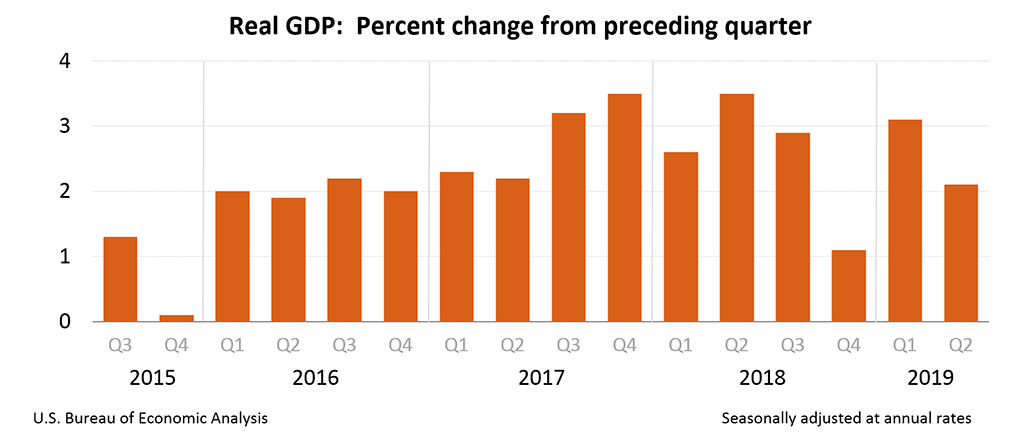
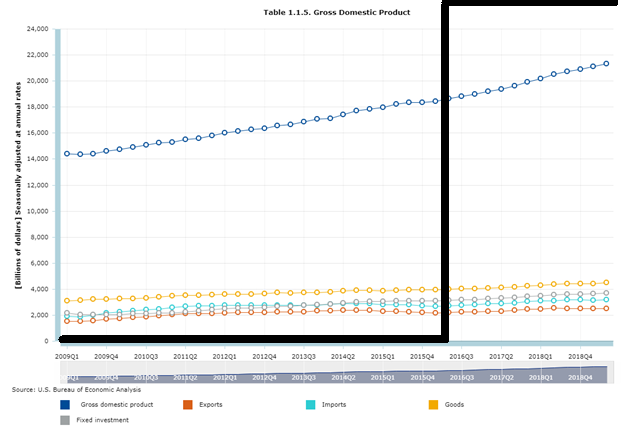
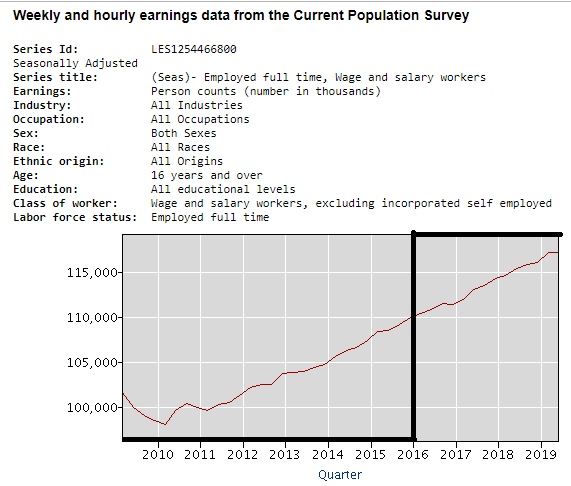
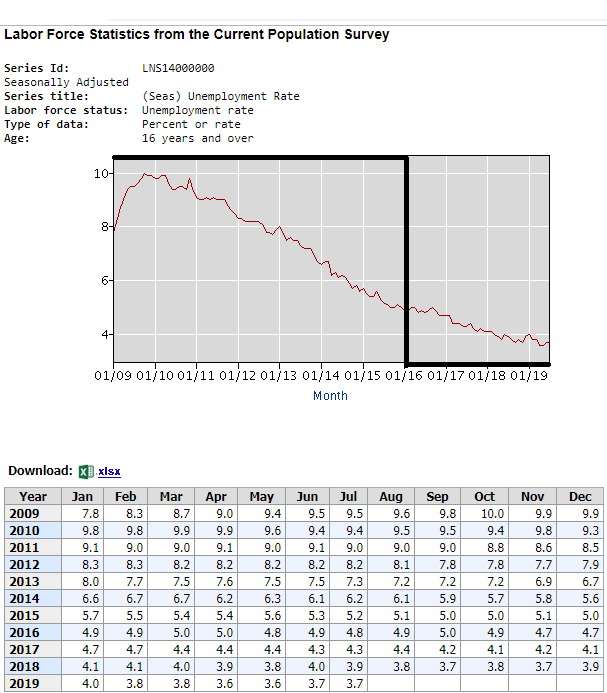
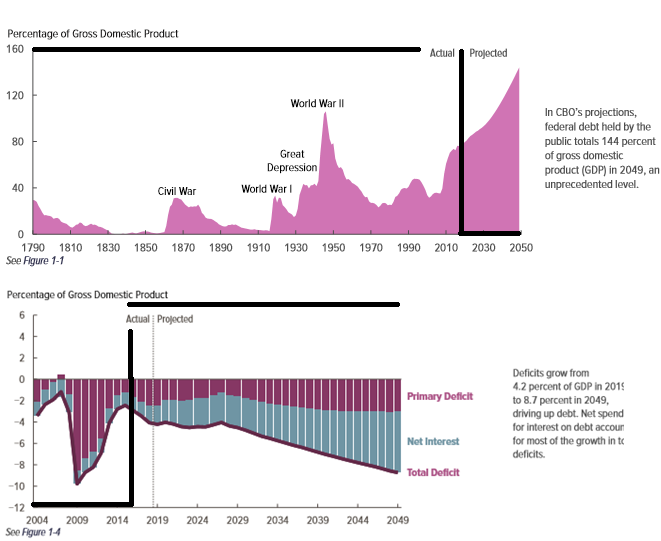
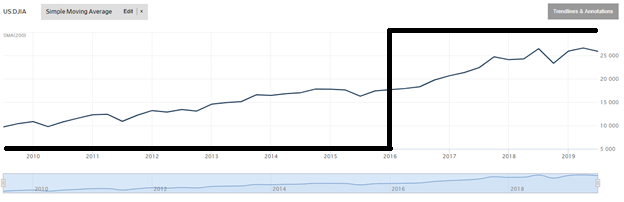

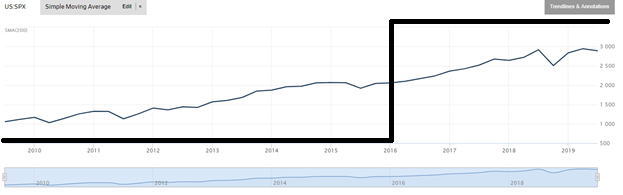
 (Gen. i. 1) creation ex nihilo (
 ). The etymological meaning of the verb
  , however, is “to cut out and put into shape,” and thus presupposes the use of material. This fact was recognized by Ibn Ezra and Naḥmanides, for instance (commentaries on Gen. i. 1; see also Maimonides, “Moreh Nebukim,” ii. 30), and constitutes one of the arguments in the discussion of the problem.”