Category Archives: Philosophy

Origin and Chaos – The Second Amendment to the U.S. Constitution

In Justice Scalia’s majority opinion in the Supreme Court’s recent and interpretive decision, DISTRICT OF COLUMBIA V. HELLER1, the majority ruled that gun ownership is an individual right and not just a collective right. The Second Amendment simply states:

“A well regulated Militia, being necessary to the security of a free State, the right of the people to keep and bear Arms, shall not be infringed.”

As recently as the 1990s total estimates of people in the civilian militias in this country range from 20,000 to 60,0002. These groups are chiefly comprised of far right wing groups. If the right to bear arms were limited to fringe groups like these, we are faced with an overwhelming dilemma:

Does the U.S. Constitution maintain an absolute right to abrogate itself?

Put another way,

Does the U.S. Constitution provide the right for groups, hostile to the United States and its Constitution, to destroy the country?

Of course, these particular groups discussed in footnote 2 would certainly maintain that they are protecting their interpretation of the U.S. Constitution. However, is the Constitution meant as a document for multiple and widely varying interpretations or is there a process described by the Constitution for deterring what are lawful and unlawful interpretations? Of course there is, the Legislative and Judicial branches of the U.S. Government. Do individuals have the right to have their own interpretation? Yes, they do but their interpretation is not protected against the interpretation of the courts and the legislative branch. The government maintains the exclusive right to determine what is constitutional and what is not constitutional. Therefore, like it or not the individual right to interpret the Constitution is trumped by the document itself and founding structural articles of the United States.

This is logically a necessity as many individual, widely varying interpretations could never be enacted into a cogent, defensible structure. If everyone with an opinion determined the formal and authorized meaning of the Constitution, the structure of the country would be ‘no structure’, an-archy, without origin. Origin is what validates and authorizes meaning. Accidental meanings, singular and without integral cohesion, are essentially thought in the context of origin as willy-nilly, whimsical and therefore, superfluous.

This is widely divergent from popular opinion about the individuality of the will and its protections in the structure of our government. Certainly individual rights are protected in a relative sense by the Constitution but not in an absolute sense. No one has the absolute authority to destroy the United States. It is sovereign not the citizens. The absolute right of an individual or group to destroy the country is not protected by the U.S. Constitution. Nor is any right given to an individual or a group to usurp the system of checks and balances set up by the Founding Fathers to impose their interpretation of the Constitution over and against the will of the people given by their elected representatives and judges.

Therefore, if a citizens militia group hates our current government and is hell bent on violently and singularly imposing its constitutional interpretation on the United States, it is limited by the document itself. Even Judge Scalia writes near the end of the majority decision that,

“Like most rights, the right secured by the Second Amendment is not unlimited. From Blackstone through the 19th-century cases, commentators and courts routinely explained that the right was not a right to keep and carry any weapon whatsoever in any manner whatsoever and for whatever purpose. See, e.g., Sheldon, in 5 Blume 346; Rawle 123; Pomeroy 152–153; Abbott 333. For example, the majority of the 19th-century courts to consider the question held that prohibitions on carrying concealed weapons were lawful under the Second Amendment or state analogues. See, e.g., State v. Chandler, 5 La. Ann., at 489–490; Nunn v. State, 1 Ga., at 251; see generally 2 Kent *340, n. 2; The American Students’ Blackstone 84, n. 11 (G. Chase ed. 1884). Although we do not undertake an exhaustive historical analysis today of the full scope of the Second Amendment, nothing in our opinion should be taken to cast doubt on longstanding prohibitions on the possession of firearms by felons and the mentally ill, or laws forbidding the carrying of firearms in sensitive places such as schools and government buildings, or laws imposing conditions and qualifications on the commercial sale of arms.” See footnote 1

The majority opinion goes on to state that all laws would have to pass rational-basis scrutiny and that the constitution itself prohibits irrational laws in footnote 27. Scalia goes on to add that “rational-basis is not just the standard of scrutiny, but the very substance of the constitutional guarantee”. Certainly this would cover that case where a fringe, radical terrorist group would decide it knew the ‘true’ meaning of the Constitution and would overthrow the current U.S. Government as the blood patriots and martyrs. The Constitution and “rational-basis” is the “substance” of the Constitution. The Constitution protects the rights of all Americans not just the ‘survival of the fittest’ Americans as in the pure market place of Austrian Economic’s capitalism. There is no hope that capitalism would find a ‘natural’ protection for the rights of the less fortunate but in the U.S. Constitution, there is an unmitigated guarantee. The market place is not given the right to determine a structure for the government just as the citizens militia is not protected by the Second Amendment to do whatever they want in the name of the ‘true’ (i.e. interpretation of the Constitution).

The Constitution and the elected government are given absolute power to make all final determinations, all “rational-basis” for the standard of scrutiny. In so doing, the irrational and accidental are by the same basis co-determined. The appeal to origin, is itself an appeal to rationality and its necessary irrational determinations. Any subsequent authorizations can only be made via the original authorization of the U.S. Constitution. If these subsequent authorizations are found to ‘deviate and perverse’ by the courts and elected representatives they cannot legitimately maintain their authority. The absolute authority of the government cannot be abnegated by the very existence of the government itself, its constitution. In this way the human instinct to survive is similarly taken up in the same exercise as inability of the Constitution of legitimate its own destruction. However, distinct from the individual will to survive the constitutional ‘will to survive’ has additional caveats.

The Constitution is a written document. An individual is alive, existing not as a writing but as an excess to writing. All writing, the body of writing, is only meaningful to a human that knows language. It is in whole meaningless to animals or atoms. Therefore, writing is inherently human. Any excess to writing does not imply a fundamental difference to writing but a qualitative difference. Therefore, we think to exist, as only humans can think they exist as such, suggests something more than a certain kind of human grapheme but exactly what this more is seems to deviate from constitution, the structure inherent in writing. Writing is not non-sense, it defines sense, it defines what is possible for ‘rationality’. To deviate from constitution, “rational-basis”, is chaos. Since Christendom, chaos has largely been thought from the basis of rationality as irrational, without meaning, empty. And yet, these negative connotations seem to be dismissive of any excess to ‘constitutionality’, the writing of God and the thought of immortality. These negative connotations of chaos bring up the nonsensical as the extremist right wing militia groups which cannot deviate from an authorizing origin and are condemned to live in the hinterland of their ‘truth’, their unthought and assumed right to exist as such. They are forever held prisoner by their ‘constitutional blood of patriots and martyrdom’ and at the same time, by the same Constitution, denied their insistence on absolute authorship. They are hopelessly lost in a singularity without an excess. They cannot endure an excess of chaos. They must in futility hold on to chaos in the passion of a singular death grip on gun, God and glory authorized by an absolute denial to their Constitutional authority. In this negation without excess, their existential angst, they take up chaos without ever becoming aware of it as such. They can only rail and rally in their desperation.

What escapes these desperados cannot be given or thought in common contemporary philosophical avenues. There is a sense of excess beyond writing, beyond constitution, that ‘constitution’ essentially cannot come to grips with. When excess to origin cannot be allowed to escape the insistence on constitution, on rational-basis, without becoming yet again a pseudo-rationalism it is condemned as Sisyphus to eternally roll a boulder up a hill only to have it fall again. This is why Hegel’s System can never be completed as Kierkegaard recognized. Not because it is inadequate but because it cannot constitutionally recognize what the early Greek philosophers realized from Hesiod,

“Tell me all of this, you Muses who have your homes on Olympus, from the beginning [archê, ἀρχῆς], tell who first of them (the gods) came-to-be [genet’, γένετ᾽].

First of all Chaos came-to-be [genet’, γένετ᾽]; but then afterwards…” Hesiod

_________________

1 See DISTRICT OF COLUMBIA V. HELLER

2 Right-wing Populism in America: Too Close for Comfort

By Chip Berlet, Matthew Nemiroff Lyons, Pg. 289, See Link


Avenues Into Philosophy

Listening to some academic philosophers discuss the question, “Why philosophy?”, I hear a kind of implicit response to a question not posed. Namely, “How can philosophy apply to the ‘real’ world?” where ‘real’ here means vocation. For undergraduate students taking a philosophy class, I can certainly see the relevance of posing and answer to this question. However, this kind of positioning of the question of philosophy can also be a bit of a subterfuge which leads away from the real questions and relevance of philosophy. To make a living teaching philosophy puts some constraints on a professional philosopher which cannot or perhaps should not be avoided. However, perhaps the unbridled truth is that philosophy does not have a very solid connection to the demands of practicality and capitalism. This in itself could lead one to begin to question capitalism or at least to clarify to oneself why one would think of capitalism as a kind of arbiter of the good. In any case, in this paper I simply want to lay out some of the basic pathways into philosophy.

Whether we like it or not or admit it or not, we all make synthetic judgments. In other words, we have some sort of unitary idea of how things came about and how they work. Let’s start our journey with two basic beginnings. We have unity and change. In the extreme would could have change which spawns off incessant differences. We would have forms or appearances without necessarily any intrinsic connection. It would be like a stream of consciousness. We would have apparitions appearing and disappearing without ever having a sense of a beginning or end or even a unifying idea of ‘objects’. This would be pure sensations. On the other hand, we could start with unities, wholes, objects, God, gods, laws of nature or physics and from this, necessarily, the notion of origins, beginnings (the Big Bang) which make the notions of unity possible. However, if everything starts as unities we may have problems explaining changes which appear to be totally detached from their unities. For example, if we start with the ideal triangle where the sum of its internal angles will always equal 180 degrees we may have a hard time with the observed fact that no existing triangle has ever had the sum of its internal angles equal 180 degrees. In the ‘real’ world (which is itself another unity) there is always some error which keeps the perfect form forever away. Socrates might call the ‘real’ world triangles shadows or apparitions. Since both unity and change pose solutions and contradictions let’s explore a new avenue: the synthesis of the two.

For the sake of this paper let’s say one possibility for synthesis is what I will call the ‘bag of tools’ approach. In this approach ourselves, the universe, existence is the culmination of a collection of tools we have acquired. This is not so unlike the condition where eventually 100 monkeys, given enough time, could build the Empire State building. Somewhat like Nietzsche’s metaphysics of eternal recurrence of the same, if time is infinite and matter is finite eventually any and every possibility will happen again and again. Since one of those already determined, limited and bounded (in advance) possibilities is 100 monkeys building the Empire State building eventually the building will appear. Notice that now we are facing two more avenues: randomness or causation. Nietzsche’s solution evokes the random. There is no apparent casual connection to effects only happenstance given unlimited time and limited space. Of course, modern physics tells us that both time and space is created by the expansion of the universe so unlimited time may be problematic. Also, limited mass may be intuitively correct as ‘what must be’ but this is not a positive proof only a stand-in for the lack of a positive proof. This we can call a negative proof. If there are infinite universes as some have postulated in recent physics, then at the least we have an alternative ‘negative’ explanation which has no positive proof as of yet.

Evolution embodies the notion that we have over time acquired a ‘bag of tools’ which has culminated in language, history (the knowledge of), science and even a more ‘primitive’ beginning in religion. The ‘bag of tools’ approach is the proverbial “pulling ourselves up by our bootstraps” intuition. This approach depends on certain sets of given conditions necessitating or causing determinate outcomes. Of course, the problem with this is the old ‘chicken and egg’ dilemma. In order to support this theory we have to keep substantiating our ‘given conditions’ so the effects we want to explain will ‘naturally’ follow. This means that this way of thinking depends on origin and beginning. However, if we follow the path of evolution back to single cells, bacteria, molecules, atoms and all the way to the Big Bang we have a problem. It seems as if our reliance on the beginning has come to an end. This presents a dilemma: our strategy of beginnings has collapsed in on itself. We are left reeling with only a negative proof that there must be a beginning before the Big Bang.

Now, we have come full circle to the other approach than the ‘bag of tools’ approach. This approach is the ‘God’ approach. By ‘God’ here we include gods, mysticism, faith. This approach does not require a ‘proof’ negative or positive, only a belief. God cannot be subject to ‘proof’ or the laws of physics since God created those things. Note that we have already made a critical distinction: things and non-things. This will be useful latter. For the ‘God’ approach we cannot explicitly rely on knowledge since ‘God’ also created knowledge. Knowledge cannot lead us to God but ‘revelation’ can. Revelation is a form of knowledge which cannot be falsified. It cannot be falsified because it begins in faith. The downside of faith is dogma. The problem with dogma is a vice. In modern terms we call this vice narcissism. In older times it was known as the sin of pride. The person of faith will always have to straddle the precipice of faith and dogma. Proof was the apparent solution to this dilemma. However, the history of science is no stranger to dogma and faith. The claim of the validity of science over ‘god’ is that science can be falsifiable whereas ‘God’ can never be false in any sense for the believer. In religion false gods are always measured by the true ‘God’ whatever form that takes on.

The incestuous relationship of knowledge and language to ‘God’ or science has always presented a conundrum to philosophers. Aristotle thought of this dilemma in terms of forms and being. The essence of form is change. Form has appearance. Appearance is mutable. All appearances in the ‘real’ world change over time. Yet, we have a notion of stuff being the same over time in some sense. Time as an intuition, not a relative idea, does not change. So, even in the midst of changing forms we have a phenomenon which apparently does not change and even seems to validate sameness: time. Well, that intuition is not exactly true since Einstein. Now we know, counter to intuition, that time can change. However, as Heidegger points out this intuition of time as linear and always the same is actually abstract. This notion is really a historical development.

Earlier civilizations thought of time as more like a quality than a quantity. The early Greeks had the word kairos and chronos. The Greeks observed that what Heidegger termed ‘lived time’ had a stretch. When one is feeling joyful or elated time feels like it moves quickly. When one is bored or having anxiety one feels that time is dragging on. There is also sacred time. For the ancients sacred time had a feel of vastness, later thought as ‘eternal’. Kairos, for the Greeks, was the supreme time, the fullness of time, the moment of all moments. Chronos was a sequence of ‘now’ moments. It is what we intuit as time contemporaneously and project it as never ending or infinite. Heidegger thought this notion of time as vulgar time. So, if our modern intuition of time is actually abstract, not in line with relativity, and not like we actually experience time we need to ask ourselves a couple questions: 1) How is it that intuition can be ‘fooled’ by history? – 2) What is it about us than can make ‘abstract’ time into what we think as ‘real’ time?

If intuition can be fooled, can revelation also be fooled? We are at the least left with an insecurity about the very nature of knowledge itself. If knowledge is subject to mutability it cannot be thought as ‘true’ at least in an absolute sense. Knowledge is always provisional. It is circumstantial. It has the real possibility of being false. If knowledge can be false what is the difference between knowledge and the chirping of a bird? This is the beginning of skepticism and existential doubt. We are thrown back upon our assumption of ‘truth’. How does this insecurity of knowledge effect our intuition of unity, of sameness, of God, of our founded-ness in the world? Are we reductively and merely products of change, of history? Are we accidental? How does this affect our sense of meaning? Does meaning have to be eternal to be true? As we live phenomenally, do we have a real or true sense of unity, of sameness. Surely we are not just a stream of consciousness in the way most of us experience ourselves. If we were simply to stand back and observe this sense of unity in ourselves we could be informed by at the least its appearance. Existence as we know it, as it can only be known with the word ‘existence’ does imply some sense of immutability. At minimum, it implies a relative differentiation between change and sameness. This was the problem Aristotle, in particular, was consumed with.

In the tradition of Aristotle, Heidegger also raised anew the question of Being in his monumental work “Being and Time”. All of us assume we know what being means but upon closer inspection this intuition appears to be one of the most empty of all meaning. We act as if it were absolutely ‘real’ and ‘true’ but try to sit down and write out what you think it is. Inevitably, most folks will just end up with a circular argument, “it is true just because it is (true)”. This is called a tautology. The root of tautology is Identity. Identity must always be ‘true’ because it can only ever only restate itself. The interpretive circle called the hermeneutical circle can only always and ever reaffirm itself like faith. However, in phenomenology our method is always to step back and ask what does this affinity in us show us about ourselves? Well, certainly it shows that we are historical in our being-ness. It also shows us that we cannot not think of ‘true’ or ‘real’ because for one, pragmatically we must act as if there is ‘real’ or ‘true’ to be in the world. The ‘true’ and ‘real’ seems to dog us like a shadow. In spite of this we seem to have a kind of poverty about absolute knowledge (unless of course you are a Hegelian). So now we have a lived, phenomenal sense of the ‘real’ or ‘true’ and we also (as is the case for the notion of being) have a kind of emptiness about what the heck it is. We must act as if it is true (pun?) in the face of our own fragility and mortality.

This then is how philosophy begins…

An Interlude to Anaximander

Philosophy Series Contents (to be updated with each new installment)

Philosophy Series 1 – Prelude to the Philosophy Series

Philosophy Series 2 – Introduction

Philosophy Series 3 – Appendix A, Part 1

Philosophy Series 4 – The Pre-Socratics – Hesiod

Philosophy Series 5 – A Detour of Time

Philosophy Series 6 – The Origin

Philosophy Series 7 – Eros

Philosophy Series 8 – Thales

Philosophy Series 9 – An Interlude to Anaximander

Philosophy Series 10 – On the Way to Anaximander: Language and Proximity

Philosophy Series 11 – Aristotle and Modernity: The Eternal and Science

Philosophy Series 12 – Levinas and the Problem of Metaphysics

Philosophy Series 13 – On Origin

Philosophy Series 14 – George Orwell and Emmanuel Levinas Introspective: Socialism and the Other

————————————————
An Interlude to Anaximander

Someone must have already stated this elsewhere so for lack of citation let me reiterate, there are many academics but few scholars. Scholars attain a breadth of mastery that few academics ever realize. Analogously, most folks are philosophers in one way or another but few find concrete paths from philosophy to existentia, actual existence. This why philosophers in modernity from existentialists to post-existentialism has focused philosophy on the concrete fact of death. Of course, death, itself, also holds the possibility for abstraction. This is why Heidegger, for example, is swift to frame death in terms of “my death”. Death is not just an end but in non-negotiable ways “my end”. When limit is thought in terms of ‘mineness’, something passionate and irreplaceable comes to the fore. Religions are also able to harness this ‘something’ in concrete displays of passion and ‘faith’. For Kierkegaard, faith is the absolute passion of existence. While academic philosophers, spurred on by the quest for recognition and therefore, economic reward, are goaded by the continuing requirement for sustenance, they are also pricked by the constraints of their specific traditions. Their freedom must end in the horizon of other’s genius. Thus, the academic is born. However, existence persists and places on each the necessity of an existential answer. However, this ‘answer’ takes form, as religion, science, morality or polis/political, denial, it must be responded to, existence therefore evokes. Evocation has long fascinated the phantasma of human imagination as magic, sorcery, desire, wish-fulfillment and even love.

In undertaking this philosophy series, I am continually facing the prospects of pure academia or existentialism. For me, philosophy dies in pure academia. Philosophy finds value and virtue in its fundamental evocation. Whenever philosophy becomes instantiated in ‘isness’ or perhaps as Levinas might sway us to, il ya, it can become obsession or insomniac. It loses a certain kind of weightiness, a certain kind of necessary ‘evocativeness’ is deferred. In the loss of limit, the bounds of ‘mineness’ can be displaced, and thus, the possibility for radical alterity. The ‘end’, this peras, was also noted by Anaximander and many before including Hesiod. Peras, simply translated as end or limit is only the beginning of its etymological intonations. The early Greeks as many archaic traditions recognized change, transition, mutation of form. The Ionians were fascinated with the notion that transitions were not magical apparitions, popping in and out of existence but had some substratum, some basis of mutability. Science and religion have been intrigued ever since. Anaximander, perceptively enough also echoing other archaic traditions thought of these limitations as intensified by re-occurrence of some sense of the same, the dissolution and reemergence of like forms. Iteration, when amplified infinitely by a notion of the same, persistence and unity through time, becomes a-peras (apeiron), the negation of limitation. It becomes intense, imposing, non-negotiable…existential as my being-towards-an-end which cannot grab hold of what this means. This inability to be able is cast without limit, without understanding in the midst of understanding. This type of overflowing itself could be thought as a beckoning of exteriority. This intensity thought in Greek terms is kairos. Kairos as the beckoning moment of answer, necessitates and requires, completion, finality, condensation, movement and action. As such, it is qualitative. It overflows itself as qualitative. In this moment, existence is borne and born.

The urgency and necessity of this evocation did not escape the keen observations of the Greeks. Nor has it yet escaped the gaze of science’s Orphic vision. Necessity is certainly embodied in biological evolution. Survival, as utmost, is dependent on successful adaptations. Could it be that habit as specific to an individual organism, the repetition of successfully completed iterations where ‘success’ is thought in terms of survival, of tarrying to the next iteration, can find some genetic bridge over successive generations of ritualistic practice into what we think as ‘instinct’. Can ‘instinct’ be ingested into DNA? Just as Nobel Prize winner Barbara Mcclintock found the cellular reflection of environment into itself as equally primordial to the cells’ internal structure, could it be that ‘adaptation’ is the innate struggle (polemus) of the internal and the external to come to stasis, to a temporal completion of ‘moment’ when neither impose its form on the other but mutually respond and co-habitat with the other. In genetic encoding then this moment becomes ‘physical’, ‘biological’ and ‘chemical’. It also becomes ‘physics’ as atomic or better sub-atomic.

In modern physics we have the notions of isolated, closed and open systems. Isolated systems can neither pass energy or matter. Closed systems can pass energy but not matter. Closed systems in classic mechanics would be considered an isolated system in thermodynamics. Isolated systems do not exist in actuality. Open systems can pass both energy and matter. In isolated physical systems we say that momentum is conserved. In an isolated system we can account for change, transition, mutation and thus energy is conserved. However, in an open systems we have a loss of accountability we call entropy that shows itself as error. The isolated system is thought yet again as the Hegelian dialectic of internal and external, the particular and the universal. The isolated system demonstrates a kind of respite, a cessation of strife, of the temporal tearing, incessant bubbling of sub-atomic particles, a transformation (aufhebung), where, what Hesiod termed, a ‘yawning gap’, chaos, subsides and the moment of archy, of origin, of birth, opens up genesis, genetics, genet’. This moment is a kind of equilateral-ism, congruency, a pause thought as stasis. Aristotle’s discussions of actuality (actualitas Latin, energeia Greek) or work as what persists and potential (potentia Latin, dunamis Greek) or possibility as what could be, find their stasis in motion or kinetic (kinesis) as the actuality of potentiality, as the persistence of possibility. Temporality and motion, known in Classic Greece, is conserved and preserved by persisting through time by limitation, by form. A temporal wholeness or completion as ousia, being, is evoked from apeiron, perhaps Hesiod’s ‘before the gods’ of chaos. Of necessity, this temporal pause to the incessant change of form, is first made possible by a terminus, a telos, a limit or boundary. The existential weight of evocation, the ‘must’ of action, cannot be ignored or denied without only re-affirming it. Any turning away is yet again a turning towards as the existential moment of existence must obey a call from without as a singularity, as a persisting form cast upon the void, the yawning gap.

The isolated system in physics is always a kind of existence creating moment. It is imposed by boundary and limit, arrangement and designation. However, closed systems, as the perfect triangle, are idealizations. Any isolated system in reality leak and absorb information in the larger context of an open system. Isolated systems in the real world are intrinsically and essentially effected by externality, they have entropy. Information cannot be completely recovered in an isolated system. Information must be truncated in the idealization of an isolated system. The loss is irretrievable in an isolated system context. Typically, the universe is thought in the motif of a closed system. A closed system universe could interact with other energies, perhaps from bubbling multi-verses or multi-dimensional factors but not with any ability to transfer mass. This then gives rise to a metaphysical question, is the notion of the absolute open, closed or isolated? Or, could it be that, the notion of the absolute is an iteration, a singularity, a tautology of a primordial limit in an isolated system context? Some might say this question, devoid of existential import, may as well ask how many angels can dance on the head of a pin?

In modern physics, a singularity such as the infamous ‘black hole’ is a margin from the isolated system con-text. It is a parenthesis, a deferment until logos, understanding, can finally recover its enigma. Is information conserved or lost in a black hole? Has physics reached an absolute limit in a black hole? The black hole is a unity. It is not a solely a swarming buzz of sub-atomic particles popping in and out of existence. It is not a formless chaos. It is in stasis, driven by necessity to be, and yet it’s being is an absolute limit in a multitude of ways…more importantly, to understanding, the very possibility of understanding. Physics has in recent times brought to the fore more and more staggering limitations of itself with the ‘God Particle’, super-symmetry, multi-verses, higher order dimensions, dark matter and dark energy and brought with these, reflective questions of knowledge itself. Not that there is an alternative to knowledge but it has brought to the fore the necessity of knowledge and at the same time it’s absolute limit. Absolute limitation in physics mathematically become singularities. Singularities are nonsensical, Alice in Wonderland. While ‘bad science’ is thought to end in a proliferation of singularities, they cannot be ignored as they pose fundamental questions which defy ‘reality’, the light of, even the possibility of, knowledge and as such convey an unsettling existential angst.

Mass and energy are inextricably linked just as Aristotle’s thinking of actuality and potentiality are linked. Now with the proof of the Higgs Boson we have a particle ‘field’ whose origin appears in the first moments of the Big Bang which determines and necessitates mass. It transforms massless energy to relative degrees of stickiness, of clumping, of resistance, weightiness; mass. This boson imposes an ir-refusable limit to matter. Thus, the name ‘God Particle’.

The point of this divergence into modern phusis is to show that the import of ‘my death’ never achieves an ‘outside’. It can only converge in upon itself into a singularity. It cannot retain information without irretrievable loss. Even more so, we see this phenomena everywhere we look in phusis. This is the setting in essence of ancient Greek inquiry. The Greeks did not have the apathy of centuries of abstractions into being. They felt the import originally with other archaic cultures and the interruption of the raw gap, the chaos, not yet historically named but recognized in imposing enigma. They understood the transformations of forms as mutations of hot and cold, damp and dry, atom and void. They thought with resoluteness and determination the absolute connotations of limitation, of death, of knowledge. These differences could not easily rest in stasis as being and nothingness, self and other, as pure, self-determining Idea. These differences brought them to the abyss that looks back into our souls, beyond Dread to a gap, an otherness not captured by thought but intensified as the moment of dissolution and birth, of limit in which even light cannot penetrate or escape.1

Philosophy Series 10 – On the Way to Anaximander: Language and Proximity

_________________

1 The next installment in this series will probably take some more time for research and thought as the topic of Anaximander brings with it enormous scholarly attention and far reaching possibilities for departure. There may be more preliminary discussions before I really start with the textual, philological and canonical discussion.

The Work of Days (revisited)

This started as a footnote to the previous post but ‘grew’…

I would also suggest that this ‘stuff’ we call ‘matter’ may have an exteriority which, as the history of science demonstrates, resists our most concerted efforts to finally understand it, to know it in totality. Could it be that we can learn something about ‘knowing’ from this observation? ‘Knowing’ tends toward totalizing. In the Greek sense of telos, knowing aims and is directed in advance by the desire to understand. Under-standing is desire for arche, for origin. It seeks foundation, founded-ness, to arrive and yet, in view of the history of science or metaphysics, never arrives.

Never arriving is an exteriority to the desire for knowing. Never arriving is an essential teleological characteristic of knowing. Thus, the desire and the impossibility of the desire generate anxiety. Anxiety results in totality and historical metaphysics. Historical metaphysics’ telos aims at first philosophy. However, its history shows us much unapologetic failure. Totality is permeated by historical metaphysics just as historical metaphysics is permeated by totality. Thus knowing wants to ‘take account’ of exteriority, of error, and exteriority is violently appropriated by knowing. In both cases totality desires to take precedence, to understand, to rest. However, for desire to be desire it can never terminate; it can never complete itself in its object. Thus, desire is endless by necessity. The ancient Greeks called this struggle peras and apeiron, simplistically translated form and chaos (void).

Peiron in ‘a-peiron’ is the Ionic Greek for boundary or limit. The older form of this, peras, meant ‘beyond’ or ‘further’. Thus, a-peiron in Ionic Greek from Anaximander is the alpha privative, the privation of boundary and limit or without boundary or limit. Even in the much earlier archaic period of the Greeks, in Hesiod, we have Uranus (father sky) and Gaia (mother earth). Sky suspends, stands off, provides perspective. Sky is the son and husband of earth. Therefore, earth is generative. As the first of the gods, Earth is yet to be differentiated, it is undifferentiated.1 Earth is the origin of sky. Thus, Earth is arche. In Hesiod, Earth, what we now call ‘matter’, was the first of the gods. Yet, Hesiod’s Muses tells us that first of all was khaos, chaos. Chaos means the ‘yawning gap’, a void. Thus, chaos differentiates and separates (the heaven and the earth). Earth is permeated through and through with chaos, undifferentiated but fertile and generative.

The Ionic Greeks further refined this notion to what post modernism might call the “play of difference” (differance [sic] in Derrida). The play of differentiation and a-differentiation, without difference, is not a confusion of differences or a tautological identity of sameness but an exterior to difference. According to Heidegger Phusis, through Latin, got translated as natura (or the modern word nature) and lost the original meaning of the word which is to grow, to emerge, to unfold. Phusis is generative. Heidegger calls this emerging-abiding sway. He maintains that phusis was the original Greek idea of being. Thus, differentiation, the earliest beginnings of science, of phusis (later physis, later physics) gives context to the already understood (pre-cognitive) notion of ‘is’. Yet, even earlier, we have chaos which is the necessary condition, “first of all”, and by absolute exteriority conditions and generates growth, differentiation and physics by chaos, a yawning gap. What was lost from the archaic period of Hesiod was the gap, the anarchy, which cannot be captured, totalized, brought into the light of knowledge or, as Plato may have written, “the good beyond being”.

In meta-physics we do not have the beyond as later Latin thinkers would have us believe. Aristotle does not use that title since it came much latter. His work currently titled and typically understood by the Latin word Metaphysics is really τὰ μετὰ τὰ φυσικά” and may have been added by an editor. Aristotle claims the work was about “first philosophy”.2 Heidegger thought it was Aristotle’s exploration into Being, ontology. It was not beyond or contrary to phusis but an inquiry into the ‘first’ of phusis. Perhaps we could think it as the great question of Hesiod, “what came first”. As such, the depth and richness of this question begins science; it begins physics, not transcends it. Earth generates sky but undifferentiating does not generate differentiation, it separates it. This separation or gap excludes a middle, an ever mediated in-between. This suggests that what always and ever grows seeks it telos, its completion, in bridging the gap, completing the difference, the error, in a unified totality. However, it can only ever, like Sisyphus push the rock uphill to have it roll down again. The Desire cannot be complete as it would no longer be Desire but the loss of Desire as sameness, totality and Error.

When the place of absolute exteriority is lost in totality and interruption of the other is taken as the same, as the already understood of ‘is’ (materialism, dualism, pluralism, stuff, thing, substance, atom, etc.), the otherness of the other, radical exteriority, can only be effaced. The effacement of the other in its most radical form is genocide. Ethics leaves the gap, the first as other and has always been at work in metaphysics, in the notion of God and gods. The problem is that so has the work of totality. Metaphysics errs by assuming the other as substance just as science can err. However, the virtue found in science is the deference to error, the possibility of falsifiability. To be sure, science can also be defiant and dogmatic as well but its health comes from its recognition of error. Metaphysics as religion has a tendency to forget its propensity for error. Its error then seems to be the error of dogmatism and denial, of another substance called God. The play of alterity in the history of science and metaphysics is what validates or what fails to validate particular differentiations.

The endless play of difference as Desire can never end in totality, the Truth. It can only bridge the yawning gap in violence, in totality and thus fail to achieve ethics. Desire as Eros can never find completion but it can find work. The work of physics-first philosophy as differentiation and the telos of differentiation as completion, fulfillment and wholeness desire finality. Ethics resists finality as totality. Only death as the possibility of the impossible can finalize Desire. Death as the radical alterity of the other overtakes us from without, from an exterior which can never be conquered. We can never have power over death. We can only be absolutely passive beyond all passivity in the face of death. Death is the answer to phusis not totality. Our telos is not in power or truth but in absolute exteriority. As such exteriority is the ethic of Desire. Since finality can never achieve totality, ‘archy’ (arche; origin) can never achieve an-archy. Arche can never find light, meaning, logic or value in anarchy. Anarchy can never ‘make sense’ to arche but it can always interrupt arche and provide the gap which keeps arche from totality, science from absolute knowledge, religion from false god-hood (idolatry). Anarchy is the openness of phusis which comes from without. It makes science and religion possible.

Ethics as Desire is the embodied of work. The work of days achieves value and meaning in ethics. Ethics in this sense stands back from purity or the proper, the achievement of totality. It recognizes limit and boundary. It grows from error and does not die in dogmatism. Totality is the premature termination of Desire, the facade, the semblance. In the play of Desire, what the Greeks termed Eros, we encounter the gap, the absolutely excluded in-between, which is neither mortal or divine. The work of Ethics gives value, meaning and place to the stranger, the wanderer, the homeless, the errant with dignity which can only be reserved for the gods.

_________________

1 See Reading Hesiod’s Theogony (with Notes and Questions)

“But I want to ask again, do we need to make this assumption of such a “pre-existing undifferentiated field”? I do think it is called for by Hesiod’s words.” Page 13, Heidegger and the Greeks: Interpretive Essays, Drew A. Hyland, ‎John Panteleimon Manoussakis – 2006, See this

2 τὰ μετὰ [in the midst of, among, after] τὰ φυσικά [physics] If the editor, Andronicus of Rhodes [50 BC], placed this title on Aristotle’s work, it may simply have meant that he physically placed the material after Aristotle’s books, the Physics. See this and this.

In Metaphysics A.1, “Aristotle says that “all men suppose what is called wisdom (sophia) to deal with the first causes (aitia) and the principles (archai) of things”” (981b28), and it is these causes and principles that he proposes to study in this work. Aristotle’s Metaphysics, First published Sun Oct 8, 2000; substantive revision Mon Jun 11, 2012


Philosophy, Evolution, Chris Hayes and Punk Rock

Last night on the MSNBC program “All In with Chris Hayes” he had an interesting discussion with Gregg Graffin, punk rocker of Bad Religion and PhD in Zoology.1 He thinks of himself as a naturalist. He has written books concerning evolution, God and atheism. Last night he was discussing what he termed “dualism” and “materialism”. The initial story on MSNBC was about some comments the Pope had made reconciling evolution and the big bang to Christianity. Gregg thought that folks that did this were dualists. He made the claim that scientists were materialists. While I am sympathetic with his views on evolution and science, I found the discussion in terms of dualism and materialism to be very anachronistic. These terms have been discussed in philosophy for hundreds of years. These terms have been retrofitted as far back as Plato and Aristotle. While they may oversimplify and fail to capture the Greek differences in Plato and Aristotle, they probably started coming into their own in Neo-Platonism in Rome, Constantinople and Christian Scholasticism. These modern philosophical notions really came into play with Rene Descartes in terms of Cartesian Dualism. They were in vogue in the days of Charles Darwin and most recently for Karl Marx and historical materialism. However, with regard to contemporary philosophy, the use of these terms reflect a kind of naiveté of where philosophy has subsequently traversed. Of course, in the history of philosophy they are still discussed just as medieval literature, Robert Boyle and Isaac Newton’s “aethereal medium” for the transmission of light, along with the struggle of the Royal Society with alchemy are still discussed in academia.

Framing contemporary arguments with these historical motifs is tantamount to trying to talk to a physicist in terms of atoms. Of course, the atom has a historical paradigm and certainly is useful for teaching students new to physics but physics has traversed quite a ways from the Greek notion of Democritus’ atom. Likewise casting the net of dualism and materialism over science and theism forces the discussion into anachronistic dispersions. The fact is, just as science has paradigm shifts as Thomas Kuhn discussed in the sixties in “The Structures of Scientific Revolutions” so does philosophy. As Kuhn points out, the semantic certainties of science are not some kind of self-evident, a priori, ‘truth’ content but have roots in history, politics, economics as well as accuracy, consistency, scope, simplicity, and ‘fruitfulness’. Contemporary philosophy has long since left the binary oppositions of dualism and materialism. These concepts may have historical significances and utilitarian virtues but they also fail to convey richness, value and truth just as Nietzsche’s aphoristically declared “God is Dead” and ether was finally dismissed in Einstein.

The error in dualism or materialism is in the metaphysic of ‘substance’. In the notion of substance a whole history of what philosophy calls ‘ontology’, being-logos or the study of being, is already understood and assumed. The assumption cannot help but think2 of what ‘is’ is, is-ness, in terms of ‘thing’ or what Heidegger termed ‘thing-ness’. So ontologically synonymous terms such as ‘reality’, matter, mind, spirit and even ‘is’ equivocally and already (pre-cognitively) understand what ‘is’ in easy terms of stuff, thing and substance. All that is required after that is to categorize this stuff in terms of one (materialism or idealism), two (dualism) or more (pluralism). In the modern occident, materialism and dualism are most prominent. In 20th century phenomenology, what this capacity for en-framing shows is not what it pretends, the actual stuff of ‘is’, but a certain capacity of who we are as ‘historical’. We cannot help but think in these historical motifs because our language, our thinking, is already formed by a certain history of ontology. In the 20th century, philosophy has reawakened the thought of being, what was thought in the Pre-Socratics as phusis, from where we get our modern word physics. Just as sub-particle physics now thinks the atom in terms of quanta, current philosophy has tried to stratify content and ‘meaning’ in historical terms. What this does is open up a kind of externality to the already understood notion we have of being, existence, substance, matter, etc. and asks if the notion we have of the early Greeks is really the sealed, hermetic space, classical philology imagines or if there is an excess that has been overlooked in what those early Greeks were asking.

Once ‘is’ has been incased in terms such as ‘matter’ a whole history comes along with that which even the history of science has abundantly demonstrated cannot be what it appears as. Simplistically, the ‘scientific method’ makes claims to a certain kind of anarchy (without origin) of the direction of thought. It claims to be guided by whatever ‘truth’ may come along to upset current convention. Sure enough, the history of science is replete with such examples or what Kuhn terms ‘paradigm shifts’. However, as he also shows, that movement is not simply a movement of ‘truth’ guided by mere materiality but also brings with it histories of content not merely reducible to ‘matter’ but essentially dependent on politics, economy, culture, etc. Likewise, a certain kind of anarchy also betrays the common notions of philosophy and I would dare say theology as well (but that is another topic). What betrays us is a certain kind of myopia or what Socrates characterized as shadows cast on a cave wall. Rather than deny or affirm the individual tenants of our sight, in contemporary philosophy, we should turn the question towards what is it about us that conditions us for such wanderlust? What shows itself in the unimpeachable certainties of our determinations? How is it we can encapsulate entire histories with widely varied, forgotten and even undiscovered possibilities in such as simple word as “is”? What can this capacity tell us about language, about truth, about matter? On the apex of dark energy and dark matter where physics itself has put its truths in essential question how can we not be thrown back on the anarchy of thought, a radical exteriority which must always remain a ‘yet’? What is more, in physics as in philosophy the whole question of temporality has once again been brought to the fore.

Heidegger calls the notion of sequential, linear ‘now’ moments the vulgar notion of time. For Heidegger it is an abstraction. It may have pragmatic and utilitarian advantages but as we know in Einstein such a notion was essentially made relative to the speed of light and thus the notion of time was entangled in the permeability and contingency of matter and energy. Time, in physics, is no longer understood in Newtonian absolute categories but as having stretch and even termination. Likewise, Heidegger recognizes a stretch in the way we experience temporality where, for example, anxiety or boredom may slow down time and exhilaration or joy may make time fly by. Of course, our history has once again given us convenient categories for explaining this in terms of ‘subjective’ and ‘objective’ but as we have seen, the historical capacities we have may cover over as much as we think they reveal. For example, now we think time in physics as relative and with a stretch which we put in categories of matter. When we think time in terms of the human experience of time we put that in categories of subjectivity. However, for both the dynamic is very similar and we supplement that dynamic with convenient historical categories of matter and subjectivity.

This detour into current philosophy was to make apparent underlying metaphysics of such easily tossed about notions as dualism and materialism where ‘is’ has already been explained and understood in terms of substance, matter, ‘thing-ness’. It was also to show a kind of philosophical contemporaneousness where the alternative to endlessly debating the merits of dualism and materialism gets enveloped in a certain way in which we ‘are’ or what Heidegger called ‘da-sein’ (the ‘there’ of being). Finally, the allusions to radical exteriority discussed in Emmanuel Levinas and highlighted here in the radical contingency of science, of ‘truth’, even of ontology would bring us full circle to an anarchic origin of a possible notion of God and the absolutely suspended and founding place of metaphysics. The negation of knowledge or ‘truth’ stops short of the alterity of excess, of otherness, as it agnostically decries the possibility of alterity whereas in Levinas the anarchical beginning, the origin of all our meanings is in the face of an unbridgeable, untraceable disruption of the other. This he terms anarchic3, without origin, which also finds a voice in the earliest Greek writings of Hesiod:

Tell me all of this, you Muses who have your homes on Olympus, from the beginning, tell who first of them (the gods) came-to-be.

First of all Chaos came-to-be; but then afterwards…4

_________________

1 Talking God and evolution with a punk legend

2 An assumption which we ‘cannot help but think’ could otherwise be known as ‘truth’.

3 See The Work of Days (revisited)

4 Hesiod, Theogony. See my yet to be completed philosophy series starting here, Prelude to the Philosophy Series.

Modernity and the Contradiction of Values Dilemma (Updated 10/6/14)

Everyone has values. Values always have a temporal setting. Temporality, as Heidegger would remind us, has a stretch1. The root of crime is incongruent2 values. Incongruent values result in self-destruction and other-destruction. The work of life and the highest goal of thinking is congruency. Temporality certainly brings with it contemporaneous themes but also, universal themes. By universal themes I specifically mean the body. Not just the human body but body in the broader sense of organized (organically, physically, etc.), essentially interdependent and fundamental boundary conditions. In this sense, congruency means harmony. As such, human kind has completion, wholeness, telos3 in the Greek sense as fundamentally constitutive. Therefore, harmony is our ‘from which’ and also ‘to which’ of existence. As long as we exist, we are founded as origin (archê)4 and telos. However, equally co-constitutive with body is entropy. Entropy is cacophony. Entropy is the tear of temporality. It is radical alterity, exterior to body. Entropy is anarchy, without origin, anachronous5. For Anaximander:

Whence things have their origin,
Thence also their destruction happens,
According to necessity;
For they give to each other justice and recompense
For their injustice
In conformity with the ordinance of Time.

We also have in Hesiod, writing of the origin, “First of all chaos came to be…”6

Therefore, values as congruency is temporized as the middle voice, as not mortal or divine as Eros, as harmony and cacophony, as interiority and exteriority, as being and radical other, impenetrable transcendence. Upon this plight, thought as existence: work.

Work is the movement of peras and aperion7, form and void (chaos as yawning gap). Body is the motion of work. As such, value is the promise of harmony and the yawning gap of cacophony. Neither can be without the other. Yet, if meaning is to be found in existence, if body is to be inherent, coherent, intact value is not optional. Death is the destruction of body, at least with regard to organism, to human body. However, body is overlapping bodies. As human body we live in historical, setting body. Human body also lives in matter, physics body. Human body belongs to political, community, labor bodies etc.. Body necessarily connotes “in”. By “in” we mean indeterminate, interwoven bodies. This aspect we call intermediate. Both harmony and cacophony are mediated, essentially and irrevocably. What this means is that there is never simply a binary totality except in utility and intermediacy. Some may call binary totalities ‘illusion’ in grander schemes but if that is the case, it is a necessary illusion in the semantic of utility. Grammar as the interplay of syntactic and semantic, sign and symbol, is body also which reflects harmony and cacophony, congruence and “in”-congruence. In grammatology, we also find the middle, the intermediate, the play of the same and other, body and bodies.

To radically shift modes…

I recently reflected on discussions I have had with Austrian Economists8. The Austrians are fundamentally devoted to radical laissez-faire capitalism. They reflect some of the current libertarian and right wing views in the United States. They believe that when ‘free market’ capitalism fails, systemically, it is because of government intervention. The only way to emphatically prove their point would be to eradicate government which would be an impossibility or, short of that, make it “small enough to drown in a bathtub” as some of them have stated. In this case, we have the body of enterprise, of a certain kind of market economy, which has been given an elevated status, a reified status of the proper over and against the body politic. Their belief is that laissez-faire body maintains itself more efficiently in the microeconomics of capital dynamics than the macroeconomics of large government regulation. One downside I have pointed out to them is that non-governmental body9 can have small companies and extremely large multinational corporations. Systemically, this means that extremely large multinational corporations can suffer from the same woes as large governments which regulate. They can also be bureaucratic and inefficient. They can also monopolize and regulate the market in every sense of the word10. Likewise, governments can be small like Switzerland or Austria with relatively large tax bases but distribute social services as efficiently as small companies would in the laissez-faire capitalism. Even very large governments like the United States can systemically be organized as large multinational corporations, as conglomerates or independent business units which give them the same type of systemic advantage as smaller companies. The National Park System, the Governmental Accountability Office (GAO) and many other departments in the U.S. government provide ample proof of this.11 In effect what we have are intermediates at work in the body politic and the body market. The binaries break down except in the minds of dogmatically committed enthusiasts.

The Austrians believe that voting in the body politic is not at all like ‘free market’ competition. This, in spite of the fact that corporate boards are voted in, in large corporations. Perhaps, again the argument could be made that the small number of participates in corporate governance makes the process more efficient than general voting in, say a large government like the U.S., and therefore less likely to accrue professional politicians but anyone that has worked in a large corporation will readily tell you about politics in those corporations. It has occurred to me that, while the Austrians will not say it, they really do not believe in democracy. They believe that the reins of power in economics operate most efficiently when they are held by the few or by fewer folks than when many folks are involved. They hurry past the issues of body politic in body corporation and also wise corporate governance such as in conglomerates. They have setup binaries which define their most basic value system. While these binaries may be illusory and lead to far too reductionist conclusions, the real question is, could Austrian Economics serve as a protectionist strategy for the few? If we dismiss democracy as a viable means for governance aren’t we really left with the mercantilism that folks like Thomas Jefferson were so vehemently opposed to? Can democracy work? Can we have large governments with efficient social services just as large corporations can have efficient conglomerates? Sure we can also have inefficiencies in large government, large corporations and even small governments and small businesses. Perhaps less or more likely depending on the independent and dependent variable we setup in our statistical measurements.

To be fair, power does not necessarily reduce to elitism. It is commonly thought that money is power and absolute power corrupts absolutely. Well, Christians do not think the power of God corrupts and according to them, God is absolute. After all, Plato thought that the philosopher king would be the best answer to politics. Personally, I prefer everyone evolve to the level of philosopher king. In any case, there certainly has been examples in history of wise leaders, wise corporate leaders, etc.. However, without knowing any actual statistical studies on this, I would think that there is greater effects with corruption in greater concentrations of power12. I am not sure there is statistically any greater percentage of corruption with greater power. Many small businesses cheat on their taxes. Many folks lie with ease. The macro effects of these vices could only be corrosive on a large scale by way of accumulation. Examples of this would be countries where corruption is widespread and laws are commonly broken by average citizens. Those that control concentrated pockets of power and are corrupt can have great, catastrophic, macro effects as history is replete with examples. If my suspicions are correct, it follows that if corporations are people too (but not government curiously enough)13 and since they typically have more power, these concentrations of power would lend themselves to greater statistical negative effects from corruption. Of course, this can apply to governments as well.

The problem with the laissez-faire capitalists is that on one hand, when it comes to the ‘free’ market, they appear to completely ignore the effects of corrosive power on systemic capitalism and on the other hand seem to suggest that the government is the embodiment of absolute power and absolute corruption. This dichotomy is not mitigated in their analysis by intermediate factors such as when power is systemically used wisely as many Americans ‘say’ is embodied in the U.S. Constitution or when market players corrupt the competitive advantage (i.e., monopolistic tendencies). In the U.S. Constitution there are checks and balances against elitists consolidating power and corruption. The whole system is based on a representative democracy. If you believe that the U.S. government is a complete failure, it follows that you believe the checks and balances in the U.S. Constitution are negated by the corrosive effects of power. The laissez-faire capitalists oppose any corrective market intervention such as regulation. They offer no checks and balances to monopolistic tendencies by private corporations except the “competition of the market”. They believe that the only checks and balances needed in capitalism are completely inherent to the market itself. They typically ignore the same kind of regulatory effect that large, monopolistic multinational corporations have on the market. To eliminate competition, they believe that price fixing and collusion, supply side manipulation, buying or driving the competition out of business is a legitimate enterprise in big business. They would have vigorously defended the “robber barons” such as John D. Rockefeller, Jay Gould, Henry Clay Frick, Andrew W. Mellon, Andrew Carnegie, J. P. Morgan and Cornelius Vanderbilt. The would have opposed the crony capitalism practiced by these folks as an example of government deformation of the natural business cycle. However, they appear to blame government for these deformations not the “robber barons”. They would never blame the capitalistic system which allowed these folks to acquire vast money and power and enabled them to buy off the government. How could they afford the government payoff before they obtained a high degree of wealth to even start down the path of cronyism? Could it be that they were corrupted by the capitalistic system before the government was ever implicated? This one-sidedness is exactly what shows the Austrian’s hypocrisy and blind dogmatism.

The fallacy of their analysis is that when it comes to large, multinational corporations, competition is systemically and artificially diminished by great wealth and great power regardless of laissez-faire-government interaction. In view of this, “competition of the market” becomes a kind of mantra which cannot be intrinsically corrupted from within the system, the ‘free’ market can only be corrupted from without, by governmental regulation. This kind of binary reduction makes fair competition a variable which, for them, cannot be diminished or increased except from within proper and legitimate laissez-faire capitalism. In other words, there are no unfair competitive advantages which are systemic to laissez-faire capitalism as long as government regulation is excluded. In their opinion, the Gilded Age was not an effect of laissez-faire capitalism but crony capitalism. The Great Depression was a result of government intervention in the stock market not a stock market free-for-all where the ‘all’ was the few. For them, true laissez-faire capitalism would have prevented these historical atrocities.

Competition cannot decidedly be corrupted from within but chiefly from without, the government. This myopia of the notion of competition has and will allow corrupted, concentrations of power to go unchecked. The Austrians fancifully and unrealistically believe that the ideal of laissez-faire ‘competition’ cannot be systemically, over the long term, compromised from within. This kind of blind dogmatism is what I refer to as elitism. It is a contradiction of values which cannot be brought to the light of day. This value cannot be made coherent by Kant’s categorical imperative. What kind of person would defend no limitations to absolute power, to pure economic Darwinism, to absolving absolute power of any blame as long as it triumphed competitively without government coercion. What kind of human value system could be harmonized with a ‘legitimate’ totalitarianism as long as it is acquired by ‘competitive’ laissez-faire capitalism.

Of course, the Austrians would claim that ‘real’ competition would prevent such an outcome. They would protest that monopolies were the result of corrosive government intervention into the market not any ability of the marketers to systematically and intrinsically manipulate the market and eventually the government, to obtain their empire. If the government did not exist or barely existed in pure market terms, the “robber barons” would have failed from market competition. For the Austrians, it would be impossible for laissez-faire capitalism to effectively become the government, to acquire that kind of power. It would be impossible for the government to be a byproduct of laissez-faire capitalism. For them, the original beast is the government. In the case of the United States, the government can only corrupt laissez-faire capitalism. It can never enhance the market. Representative democracy can only interfere and thwart ‘free’ enterprise. Freedom is not a result of government, it is a result of market dynamic. This reduction allows no intermediation, no checks and balances, no voting, no democracy. Democracy only sets the stage for government corruption and therefore, market deformation. In Austrian Economics’ terms, checks and balances are solely from within, intrinsic, the “in” without considerations for legitimate external contingencies. The market admits no exterior, no other, no proper and valid interruption outside its hermetically sealed body. In vernacular, this reduction allows the rich to get richer and the poor get poorer as long as the fittest survive without cronyism. Laissez-faire capitalism can only be corrupted by government, it can never be systemically, over time, corrupted from within due to pure market competition.

If this is the case, do we all to easily give up on democracy? Do we favor heroic elitism, triumph of the fittest, over common populism? I ask the reader, are these binaries beginning to show themselves in their artificiality? This is where critical thinking must and should come in. If, as Kant would have us think, our maxim of elitism were to be the universal law of ‘bodies’ human, would we be ok with laissez-faire capitalism as the Austrians envision it? Didn’t we and Thomas Jefferson crawl out of that kind of dark economic age? Are we all too willing to go back there? Why would it be different this time around? Here is where congruency, given the many different bodies, weighs most heavily. The work which thought places on us, which values require of us, is not to hide or apologize for our secretive values which cannot reach the light of day but to harmonize what we believe internally with what we think should be the maxim of society, of body politic, of value as coherent and congruent with body.

The artificial reduction of values into disparate, cacophonous binaries may simplify and stupefy the work of congruence, of allowing, defending and justifying dogmatic ‘differences’ without explicitly endorsing contradictions but letting them remain implicitly (albeit, convenient for some). The work of thinking is in proportion and magnitude as Aristotle would instruct us. Every time we vote each of us has that work laid upon us not from without but from who we are. That is what democracy is about. We are called to the work of democracy, harmonizing constitutive bodies from which we exist and allowing interruption from the other for which we have no already understood dogma or reduction. If we fail this, the elitists will be all to happy to do the work for us.

_________________

1 See A Brief Introduction to Being and Time

2 not corresponding in structure or content

3 See Philosophy Series 7 – Eros

4 See Philosophy Series 6 – The Origin

5 See Thoughts on Heidegger and Levinas, also Stanford Encyclopedia of Philosophy – Emmanuel Levinas

6 See Philosophy Series 4 – Hesiod

7 See Aristotle and Modernity: The Eternal and Science

8 See An Email to Paul Krugman, Steve Horwitz and’Free Market’Fundamentalism, Theoria and Austrian Economics [from what I can see], Fundamentalism in Market Economy: The Austrian School, Fundamentalism in Market Economy: The Austrian School and Regulation

9 I use this grammatical rendition purposely to refer back to the previous discussion.

10 See The Free Market Ideal

11 See Free Market Either/Or Government?

12 There are those that believe power, whether used wisely of corruptly, is absolutely reductive of existence as one reading of Nietzsche might suggest. This analysis sets up and reifies another binary dichotomy as for example power and powerlessness and refuses the absolute interruption of the other. I think of this as yet another example of an enlarged amygdale. See The Conservative and Liberal Brain

13 See Formalism: When a Lie Becomes Truth (really)

Reflections on “Being and Time”, Heidegger and Levinas

Thinking over Heidegger’s work “Being and Time”, I am coming back again and again to the setting of authenticity. Contrasts are continually made between authentic and inauthentic, resoluteness and everyday-ness. Fleeing in the face of thrown nullity according to Heidegger is being dragged along in the present. Heidegger’s setting is one’s ownmost, the possibility for one taking hold of one’s existence instead of being tossed about to and fro. The call one must heed, ‘to be’ authentically, is toward a kind of rootedness, resolute standing in the face of thrown nullity. A power rooted in the wellspring of authenticity maintains itself actively and not passively as in the they-self. The stark there-is-ness can be faced without fleeing via authentic resoluteness.

For Levinas, what we flee in the face of is not thrown nullity but the other. The face of the other refuses our power over it, our authentic and resolute empowerment. The other is an absolute end to mine-ness as the possibility for authenticity and inauthenticity. The other refuses the neutrality of stark there-is-ness. The interruption of the other refuses my circumspection, my solicitude as evocative. To recover one’s authenticity through guilt is to appease one’s guilt, the debt which refuses payment and anarchically results in a kind of reverse substitution. When we substitute one, Being, for the other we thereby take on the guilt of murder. For Levinas, we are unable to be able in the alterity of the face of the other with a passivity beyond all passivity.

For Heidegger, we are powerless as inauthentic, fleeing thrown nullity and thereby inviting guilt which opens the possibility of authenticity. For Heidegger, in taking hold of one’s ownmost the other is the they- self in inauthenticity as fallen and being-with as the there of being (dasein) as authentic. In both cases the other is taken as constitutive of dasein. For Levinas, the other is transcendent to being, an absolute alterity which cannot be brought under the rubric of dasein‘s temporality in the structure of care (Sorge). The act of totalizing the other into ontology covers over the radical interruption of the other in a murderous act of auto-affection. History is the story of leveling off the rupture of the other.

The relentlessness of authenticity for Levinas may be more like the resoluteness for the there-is, the il ya. In declaring our freedom as mineness we obliterate any interruption of the other. My death as sacrifice in the face of the other is transformed in Heidegger as the authentic possibility of the impossibility of death as thrown nullity. Resoluteness, given by the possibility of Being, can face sheer is-ness in taking hold of its ownmost possibility for authenticity. Ontos, being , is the final banishment of alterity and conquering moment of vision for what is left, nothingness emerging as metaphysic, as suspended over nothingness, as the proper mode (dwelling, abode perhaps) of mineness. For Levinas, metaphysics taken over historically by ontology nevertheless retains a trace of the desire for the other.

What rationality as the Concept (Begriff) failed to conquer in absolutizing self-determinination, Heidegger lays hold of in the existential of Being as authentic. Yet, what remains in such empowerments, archical, synchronicities of Idea or Being, loses the radical and unequivocal interruption of the face of the other in a solemn neutrality which goes counter to Ethics in Levinas and denies any possibility for the impossibility of Being in the face of the other.

Here’s a thought…

What if the universe thinks?

This may sound quite mad but,

what if thoughts and intelligence are not simply invented by us and trapped in our heads as a by-product of the culmination of evolution’s Homo sapiens but thoughts required the universe to be.

What if we did not invent thoughts but thoughts invented us by necessity?

Analogously, as frequencies (logical, ordered thoughts) and radiation noise (chaotic, random thoughts), thoughts as light is ‘transmitted’ from source to sink.

Perhaps, we do not have a clue as to what the ‘medium’ of thoughts could be just as we recently discovered dark matter and dark energy make up most of the universe and we do not have a clue as to what they are.

Perhaps, ‘gray matter’ is a receptor, a sink for a universe of transmitted, sourced, thoughts.

Is the universe the ‘mind of God’?

If so, we are trying to transmit and look for transmitted signals from aliens with radio waves?1 Wouldn’t this be quite comical? Higher intelligence, lower intelligence permeates the universe and here we are trying to send and receive smoke signals.

If thoughts are ‘real’ why do we have to think we invented them? Could they have been around from the beginning, the arche, or even before the beginning? Could they have required the universe to be?

Well, if you believe the ancient Greeks the arche, the origin, is chaos, the gap of indeterminate and determinate. The logos, pitifully transmitted as ‘word’, is a gathering, an ordering, of thoughts, determinate, determining, conceiving, ‘circumspecting’, which is bounded by disorder, chaos, the indeterminate, the apeiron. Logos is the form, the forming, which thinks. Humans are the animal that speaks, that has the forms of thought which culminates in speaking, communicating, transmitting ideas.

Or, if you believe Christianity, “In the beginning was the word.”2, the logos. The logos is the mind of God. The universe is the actual ‘gray matter’ of God. Jesus was the perfect ‘receptor’ of the thoughts of God. We are receptors too and can ‘heed’ the word of God.

Need I say for Hegel there is the Concept, the Begriff, the Idea.

We can receive thoughts and transmit them with speech but also in other ways. Ladies seem to have a keen receptor for picking up certain erogenous ideas from men. We can sense when someone is dangerous or, in this case, mad.

Even more, when cave men threw spears they received the idea of the ‘laws of motion’. True, their reception was bit crude and more refined reception was given by Newton but the ideas were there. Even animals can receive these precepts of their environment and respond accordingly. The physics, phusis, of the macro-universe is ordered and cohere while the bad boys of the quantum-universe dis-order, disrupt, fill all origins with noise.

From the beginning of ‘consciousness’ we perceived the lived stretch of time Heidegger discusses.3 When we are happy ‘time flies’. When we are bored time slows to an unbearable pace. Physically, Einstein more eloquently thought a time-space continuum, a ‘law’ of nature where space and time are two sides of the same coin so to speak. But we felt it, lived it, long before it found ‘scientific’ words.

As thought receptors, we can distort and truncate thoughts. We are capable of Error as Kierkegaard thought. We might call this ignorance or crude or bizarre or dangerous. We may historically fence off a canonical, approved domain, of logos we call sanity and expel insanity to the nether regions as Foucault may have suggested, symbiotically related. Are these de-ranged thoughts dangerous in themselves or simply the defect or ‘frequency limiting’, filtering, of the receptor? I suppose this could give credence to those that ‘hear voices’ or believe they had transmitters implanted in their heads; perhaps, these defective receivers cannot ‘own’ the thoughts they receive.

Could it be that we are not locked up in an existential aloneness but all our lives receiving and transmitting a small portion of an infinite universe of thoughts. We cling to some ideas as ‘us’ or ‘I’. We attach to some thoughts as mine-ness. We own them but perhaps they own us. Perhaps they require the universe to be to actuate them, to flesh them out, to give voice to them in ever more profound ways. What would the universe be without them? How would a universe even get perceived, understood, known, observed without an observer, a receptor and transmitter, source and sink of universal ‘math’, its order, its language, its Forms.

What of the idea of infinity? We truncate it, filter it, of necessity but it always exceeds our truncations as Descartes perceived. Infinity is the perception of the spectrum, the frequencies, of thoughts from crude to profound, highly ordered to chaotic. The background noise of the universe is noise in the receiver, the inability to ever make thought concrete even though it concretizes us, nature, phusis (physics). It is the meta-phusis, metaphysics, which allows being to be. Its absolute indeterminacy determines what ‘is’.

And here we are going around trying to talk or listen to aliens with radio waves. We live in sea of thought and we transmit radio waves to aliens like smoke signals or shadows cast on a cave wall, all the while thinking the shadows are the reality of the sun. This is quite comical in the preceding light. Perhaps what we are really looking for is others as unintelligent as ourselves. The universe is intelligent and the only ignorance lies in something we forget or neglect. Could it be that the universe looks upon us as ‘proof’ that there is unintelligent life in the universe?


_________________

1 SETI

2 1 John 1:1

3 A Brief Introduction to Being and Time

The Free Market: Capitalism and Socialism – Part 1

Adam Smith, an Enlightenment thinker, thought of humans as fundamentally self-interested as contrasted to Thomas Hobbes. Hobbes thought that selfishness worked as a kind of glue for society. His idea was that people are selfish; fundamentally concerned only with themselves. This meant that each person wanted to thrive based on their personal wants and needs without regard to ideals like the greater good or the plight of others. However, as selfish people, they want security at any cost. In order to obtain security, people subject themselves to the state, to laws. While individuals would freely rape, murder and plunder without concerns of conscience they do not because they do not want to be on the receiving end of their brutish desires. The free subjugation of themselves to the state is called ‘social contract’ theory.

Adam Smith lived hundreds of years after Hobbes. He was also a social contract theorist. He was concerned with how self-interested individuals create commerce. In “The Wealth of Nations”, Smith writes:

“It is not from the benevolence of the butcher, the brewer, or the baker, that we expect our dinner, but from their regard to their own self-interest. We address ourselves, not to their humanity but to their self-love, and never talk to them of our own necessities but of their advantages.”[1]

He thought that when self-interested individuals compete, the process of competition resulted in the most optimum allocation of resources because competition resulted in the lowest average cost of goods or services. In this way, he thought that self-interest served the greater good. He thought that any time the government or monopolies intervened in this process it prevented the process from working as it should and kept costs artificially higher thus interrupting the normative operation of a free market. It is important to note that Adam Smith’s ideals of the free market only work on the basis of competing individuals not market monopolizing corporations or governments. Market monopolies interfere with competition and defy the ideal of a free market.

“The price of monopoly is upon every occasion the highest that can be got. The natural price, or the price of free competition, on the contrary, is the lowest which can be taken, not upon every occasion indeed, but for any considerable time together. The one is…the highest which can be squeezed out of the buyers…The other is the lowest which the sellers can commonly afford to take…. The monopoly price is most often sustained by “the exclusive privileges of corporations (65)”[2]

“Smith uses the terms “self-interest” and “private interests” always in opposite ways. For former, his most famous statements are “It is not from the benevolence of the butcher, the brewer, or the baker, that we expect our dinner, but from their regard to their own interest (20),” and, “by directing [his] industry in such a manner as its produce may be of the greatest value, he intends only his own gain, and he is in this, as in many other cases, led by an invisible hand to promote an end which was no part of his intention (351)”. Concerning “private interests,” Smith is not so sanguine; these private interests constitute the “spirit of monopoly (371)” which Smith so much detests. It should be clear by now, from what has been said before, that Smith is well aware of the dangers of avarice and especially so since the interests of capitalists diverge, in Smith’s view, so much from the interests of the general public.”[3]

Capitalism (a term he never uses), as Adam Smith thought, is depended on private property and private ownership. The self-interested individual had complete legal and sole rights to their property. Without private property there would be no motivation for individuals to compete and increase their property ownership, their wealth.

Socialism believes that individual interests are served better when they cooperate with each other and not compete. Socialism believes in social ownership. In effect, this means workers own production (also called the means of production). Production is not owned privately but by a group. There are many forms of socialism. Some forms of socialism believe that the workers in a factory own the factory, but everything else in the economy is ‘free market’ and private property. There is no government ownership is this type of socialism. Some forms of socialism simply pay a social dividend based on factory profitability. Some forms of socialism nationalize factories but still maintain private ownership. Social democrats use a progressive tax system and government regulation within a private market economy. There are also anarchist and libertarian forms of socialism. Socialists tend to believe that when the individual is elevated above the group, normal human interaction and group identities tend to get ignored. Language[4] is a perfect example of how humans are fundamentally collective. People do not have ‘private languages’. Communication is only possible by sharing a language that we individually did not make up. People are not hermits. We form governments, churches and social communities.

“As soon as the land of any country has all become private property, the landlords, like all other men, love to reap where they never sowed, and demand a rent even for its natural produce. The wood of the forest, the grass of the field, and all the natural fruits of the earth, which, when land was in common, cost the laborer only the trouble of gathering them, come, even to him, to have an additional price fixed upon them. He must then pay for the license to gather them; and must give up to the landlord a portion of what his labor either collects or produces. This portion, or, what comes to the same thing, the price of this portion, constitutes the rent of land, and in the price of the greater part of commodities makes a third component part.

The real value of all the different component parts of price, it must be observed, is measured by the quantity of labor which they can, each of them, purchase or command. Labor measures the value not only of that part of price which resolves itself into labor, but of that which resolves itself into rent, and of that which resolves itself into profit.”[5] -Adam Smith

It is important to note that a ‘pure’ socialism or capitalism has never existed on any large scale. Every world historical economy has always been a mixture. For example, consider the notion of rent in capitalism.

“For the purposes of economics, Smith divides society into three economic classes: the landlords, the laborers, and the merchants and manufacturers (448), or those who live by rent, those who live by wages, and those who live by profit (217). Now the interests of the first two classes are tied to the prosperity of the nation; economic expansion raises the value of land and increases the demand for labor and hence its wages. But exactly the opposite is the case with the third class, those who live by profit:

But the rate of profit does not, like rent and wages, rise with prosperity, and fall with the declension of the society. On the contrary, it is naturally low in rich, and high in poor countries, and it is always highest in the countries which are going fastest to ruin. The interest of this third order, therefore, has not the same connection with the general interest of the society as that of the other two (219).

Thus the interests of the third class run contrary to the interests of the other two; expansion actually raises the cost of labor and rent and increases competition, thereby lowering profits, so much so that the ruination of a country is actually in the best interests of the third class”[6]

It is interesting to note here that economic expansion “raises the value of land” but it is uncertain how long the values of land can go higher and how exactly the profits increase unless the property owner is the sole owner, i.e., already paid for and not obtained by a loan. It would seem that profit is “high in poor countries”. Adam Smith takes this an indicator of “ruination of a country”.

A property owner allows a tenant to live in their property for a fee. The renter does not own the property and if the renter quits paying rent they are not allowed to live in the house. Likewise, a mortgage is ‘ownership’ on paper but the bank allows a mortgagee to live in the house as long as the mortgage is paid. In both cases, ownership is not sole or absolute – it is contingent on paying a periodic fee. So, the landlord or the bank cooperates with the individual in the interest of capitalizing on the financial arrangement. It should also be noted that the bank and the landlord are likely to be indebted themselves to the third class, “those who live by profit”; the financiers, that Adam Smith writes of above.

We can see that the renter or the mortgagee is not a property owner in Adam Smith’s notion of property ownership. However, the aspiration of the renter or mortgagee is for property ownership. Since the aspiration of sole ownership is not reality, a group arrangement is made that allows an individual to have shelter until their aspirations can be obtained. However, it is certainly true that most individuals today will never own their house outright. Therefore, in reality they will live their whole lives working and cooperating in group economic, arrangements.

In finance, leverage is the ability of an investor to increase their ‘paper’ holdings based on loans. Again, a group economic arrangement allows investors to obtain securities that they would normally not be able to afford. As such, the investor is obligated to a group, cooperative arrangement to leverage their holdings. The question of fees and profit is actually an ancient issue. The Bible explicitly forbids interest or profit on loans (Exodus 22:25–27, Leviticus 25:36–37 and Deuteronomy 23:20–21). These passages state that interest is exploitative. In this sense, those that base their faith on these books would be in perfect agreement with the writings of Karl Marx (at least on this specific topic) and Adam Smith. Exploitation with higher and higher fees for loans on rental and mortgaged property are examples of how the wealthy class, the real property owners, has increased their wealth at the expense of those that are not wealthy. This exploitation has been going on from the beginning. Even Adam Smith recognized the exploitation of labor. This excerpt is from an essay on The Wealth of Nations:

“However, in the negotiation of wages, the worker is at a distinct disadvantage. In the first place, the law prevented him from joining with his follows to bargain (71, 151). Further, the law always favors the masters over the workers (151). Workers are prevented from joining in unions to raise wages, but the masters are not forbidden to unite to lower them; indeed, the law encourages them to do so. This legal inequality particularly angered Smith, who noted that, “People of the same trade seldom meet together, even for merriment and diversion, but the conversation ends in a conspiracy against the public, or in some contrivance to raise prices (137).” But when the workers attempt to meet, it “generally end[s] in nothing, but the punishment or ruin of the ringleaders (71).” The inequality is so great that:

Whenever the legislature attempts to regulate the differences between masters and their workmen, its counselors are always the masters. When the regulation, therefore, is in favor of the workmen, it is always just and equitable; but it is sometimes otherwise when in favor of the masters (151).”[7] –Adam Smith

Socialism also recognizes the tendency for exploitation of the worker and tries to address it.

In both socialism and capitalism dues must be paid to benefit. For Christianity[8], capitalism and socialism[9] a main tenant is “He who does not work shall not eat”. Paying your dues is not an option in socialism or in capitalism. Fees are required to participate in the group. The main difference is that in capitalism, according to the ‘theory’ of Adam Smith, individualism as self-interest reigns supreme. The ideal is that the individual worker benefits with private property ownership not the financier. In socialism, the individual worker benefits as well but socialists want to formally recognize ownership of production in a group context – the laborer not the financier. Depending on the type of socialism, the group could mean anything from share holders in a factory to nationalism of a factory. In theory, the individual should benefit in both systems. However, socialism wants to take precautions to ensure that the group of laborers benefit and capitalism viz. Adam Smith acknowledges that in some cases the financiers will benefit at the cost of the laborers. Both systems distribute wealth in one way or another. The fundamental problem that Marx wanted to address with socialism was how the wealthy, the financiers, ended up with all the real private property ownership while the workers, in effect, ended up as indentured slaves barely able to pay their bills. Additionally, in both systems classes are set up in practice.


[1] Adam Smith, Wealth Of Nations, [WN I.ii.2)

[2] The Forgotten Agrarian: Re-Reading Adam Smith, John C. Médaille, http://www.medaille.com/newadamsmith.htm, parenthetical numbers refer to section numbers in the cited Adam Smith work

[3] ibid

[4] Alas, you too young, free-market libertines who rail against the socialists in your rabid individualism – you too are a product of ‘group-think’ – it is called language – you just don’t know your indebtedness yet…

[5] Adam Smith, Wealth Of Nations, [WN I.vi.7-8: p 67]

[6] The Forgotten Agrarian: Re-Reading Adam Smith, John C. Médaille

[7] ibid

[8] II Thessalonians 3:10

[9] In accordance with Lenin’s understanding of the socialist state, article twelve of the 1936 Soviet Constitution states:

In the USSR work is a duty and a matter of honor for every able-bodied citizen, in accordance with the principle: “He who does not work, neither shall he eat.”

In Lenin’s writing, this was not so much directed at lazy or unproductive workers, but rather the bourgeoisie. (Marxist theory defines the bourgeoisie as the group of those who buy the labor-power of workers and engage it in the process of production, deriving profits from the surplus value thus expropriated. Once communism was realized, that is, after the abolition of property and the law of value, no-one would live off the labor of others.)

http://en.wikipedia.org/wiki/He_who_does_not_work,_neither_shall_he_eat
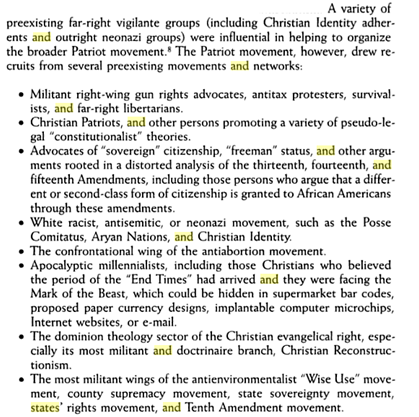
The Free Market: Capitalism and Socialism – Part 2

Karl Marx, the founder of communism, thought there was a higher and lower form of communism[10]. Engels and Lenin called the lower form of communism, socialism. Socialism is not egalitarian. Egalitarianism means everything is shared equally. Marx described socialism like this:

“But one man is superior to another physically or mentally, and so supplies more labor in the same time, or can labor for a longer time; and labor, to serve as a measure, must be defined by its duration or intensity, otherwise it ceases to be a standard of measurement. This equal right is an unequal right for unequal labor. It recognizes no class differences, because everyone is only a worker like everyone else; but it tacitly recognizes unequal individual endowment and thus productive capacity as natural privileges. It is therefore a right of inequality, in its content, like every right. Right by its very nature can consist only in the application of an equal standard; but unequal individuals (and they would not be different individuals if they were not unequal) are measurable only by an equal standard insofar as they are brought under an equal point of view, are taken from one definite side only, for instance, in the present case, are regarded only as workers and nothing more is seen in them, everything else being ignored. Further, one worker is married, another not; one has more children than another, and so on and so forth. Thus, with an equal performance of labor, and hence an equal share in the social consumption fund, one will in fact receive more than another, one will be richer than another, and so on. To avoid all these defects, right instead of being equal would have to be unequal.”[11]

Karl Marx thought that communism would eventually replace socialism not by force but by natural progression. Communism is egalitarian. Communism thinks that wealth should be distributed equally among equals. Individuals should not be singled out according to class, wealth, natural abilities, etc. but should work cooperatively for the greater good of society. Communism does not believe in private property. Private ownership and competition is thought to favor the rich and; necessarily, put less wealthy individuals at a competitive disadvantage. Private property is what gives rise to a class stratified society. In communism the ideal is one of egalitarianism; that all people are equal and should receive the benefit of their labor equally.

For communism, individual ownership is not allowed but that does not restrain class stratification. The administrators of shared wealth, the government, become the de facto upper class. Wealth gets disproportionately distributed according to this class structure in communism as well. In practice, capitalism, socialism and communism cannot claim a classless society nor can they claim that the individual is the sole beneficiary of the toil of their labor as property owners.

What follows from this is that the group or the individual is not normative for these economies but ideals. Class is inevitable for capitalism, socialism and communism – it is utopic to think otherwise. A class is group comprised of individuals. Mitt Romney is part of a class, a wealthy class. Most of us will realistically never be in his class. However, humans are aspirational – being human is being towards a future. In this way capitalism offers the promise of a possibility – the possibility for success, the chance to be in the wealthy class. For those that extol the virtues of capitalism, it does not seem to matter as much that the vast majority of these aspirations will never be fulfilled. What matters is the place for the dream, the drama of the ideal. As individuals, we need aspiration just after the need for food and shelter. We need to think we are or will be a part of the wealthy class. The goal of this aspiration is for membership in a group, a communal hope shared in capitalism. We are ready to use our collective language, our economic group arrangements, our families, societies and affiliations to aid us in our goals – the envisioned absolute wealth of our freedom. The dream that imagines itself as self-interested individualism is all the while prefaced, perforated and dependent on the other, the group, the community – our shared language. This is what socialism recognized and tried to articulate in its economics. What communism lost was the aspirational; the value we place on the desire for moving towards a future.

In reality, there never is an isolated individual that can cleanly be separated from a collectivity. Additionally, the dream of accumulating more and more sole property ownership based on the system of self-interested individuals appears to reach practical limits as a result of the third group Adam Smith writes of, the financiers. None of us are hermits and make up private languages as we go through our daily lives. The notion of an Adam Smith styled individualism is what many philosophers think of as metaphysical (meta-phusis as beyond physics or beyond the physical). The aspiration I have referred to is desire for the metaphysical individual. It does not reflect our lived reality but necessarily participates in our sense of meaning and hope as an ideal. Aspiration is essential for meaning. To aspire is to see beyond the hum drum, the daily grind and meaningless repetition – perchance to dream. How does the state, the government, figure into our aspirations?

For Adam Smith the state is the guarantor of our security. It is responsible for the military. It also is responsible for enforcing the law. It holds the promise of reprisal for violations of law. It is also responsible for public works projects and certain public institutions where profit is not possible.

“According to the system of natural liberty, the sovereign [government] has only three duties to attend to; three duties of great importance, indeed, but plain and intelligible to common understanding: first the duty of protecting the society from the violence and invasion of other independent societies; secondly, the duty of protecting, as far as possible, every member of society from the injustice or oppression of every other member of it, or the duty of establishing an exact administration of justice; and, thirdly, the duty of erecting and maintaining certain public works and certain public institutions, which it can never be for the interest of any individual, or small number of individuals, to erect and maintain; because the profit could never repay the expense to any individual or small number of individuals, though it may frequently do much more than repay it to a great society.”[12]

Contrary to popular belief, Adam Smith was not opposed to government regulation. He spent 100 pages in the “Wealth of Nations” discussing banking regulations. As has already been mentioned he knew the financiers in a society had a corrosive effect on society. They had a tendency for exploitation and government regulation was needed to hold them in check.

For Adam Smith, self-interest is good for those that live by ‘rent’ and ‘wages’ but not for those that live by ‘profit’ as previously mentioned. Smith thought those that live by profit had a destructive influence on society. This is why Smith favored regulations for those who live by profit. The government certainly plays an essential role for ensuring a fair market. Of course, he recognized the issues with capricious regulations and the way they interfered with the normal market operation of efficient competition. However, he would have never given financiers carte blanch, deregulated access to the market. Adam Smith would have said, “I told you so” when the Gramm–Leach–Bliley Act of 1999, deregulated financial services. It repealed part of the Glass-Steagall Act of 1933 that prohibited a single institution like a bank from acting as any combination of an investment bank, a commercial bank, and an insurance company. Basically, the repeal allowed banks to use customer deposits for risky financial ventures. It also allowed banks to have conflicts of interest by ‘advising’ its customers to use its financial services and products without regard to more competitive and valuable investments. Additionally, the government was implicated in these risky investments as the Federal Deposit Insurance Corporation (FDIC) backed up customer deposits. The Dodd–Frank Wall Street Reform and Consumer Protection Act tried to restore financial oversight of banks and financial institutions and consumer protections. One thing it did was to allow the government to liquidate these institutions that are covered by the FDIC in order to keep these institutions from having large scale failures that would jeopardize the ability of the U.S. government to bail them out. Regulations not only provide a fair market but also protect the government from bankrupting itself from market excesses. Adam Smith would have understood the need for this and would not be calling for deregulation as modern Republicans have been doing.

The issue here is that when individual self-interest promotes the healthy working of the market place then the government should stay of the way. However, the government exists to make sure it protects “every member of society from the injustice or oppression of every other member of it”. While it may be in the interest of oil companies to “drill baby drill” it may not be in the interest of the environment and therefore, other members of society to let them do it merely to increase their profits. The government’s job is to make sure the market protects other members of society whose self-interest may be damaged by one group’s profit incentive in the market.

Adam Smith even recognized that the ‘free market’ was not a panacea that could solve all social ills. He stated that a primary function of government was to take care of public works and public institutions where the “profit could never repay the expense” of doing the project. It is certainly arguable that health care insurance providers and education could come under this rubric. It is not the profit interest of health care insurance providers to cover certain risky population groups or chronic illnesses. In order to maximize their profits it is in their interest to ‘cherry pick’ their clientele and drop clients that are a drain on the system. It would be hard to believe that anyone could seriously argue that health care insurance providers have not had quite a long history that illustrates this point. Additionally, while a very good private education is certainly feasible, the cost would prohibit many classes of society from being able to obtain an education. Education for a profit certainly works for those that can pay but simply ignoring the others that cannot pay is not in the long term interest of a society. Adam Smith argued that education is a public work when he we wrote:

“The same thing may be said of the gross ignorance and stupidity which, in a civilized society, seem so frequently to benumb the understandings of all the inferior ranks of people. A man without the proper use of the intellectual faculties of a man, is, if possible, more contemptible than even a coward, and seems to be mutilated and deformed in a still more essential part of the character of human nature. Though the state was to derive no advantage from the instruction of the inferior ranks of people, it would still deserve its attention that they should not be altogether uninstructed. The state, however, derives no inconsiderable advantage from their instruction. The more they are instructed the less liable they are to the delusions of enthusiasm and superstition, which, among ignorant nations, frequently occasion the most dreadful disorders. An instructed and intelligent people, besides, are always more decent and orderly than an ignorant and stupid one. They feel themselves, each individually, more respectable and more likely to obtain the respect of their lawful superiors, and they are therefore more disposed to respect those superiors. They are more disposed to examine, and more capable of seeing through, the interested complaints of faction and sedition, and they are, upon that account, less apt to be misled into any wanton or unnecessary opposition to the measures of government. In free countries, where the safety of government depends very much upon the favorable judgment which the people may form of its conduct, it must surely be of the highest importance that they should not be disposed to judge rashly or capriciously concerning it.”[13]

While this may seem to promote a certain kind of equality, it is really “the duty of erecting and maintaining certain public works and certain public institutions, which it can never be for the interest of any individual or small number of individuals, to erect and maintain”.

The government is not a cancerous growth of society but just as essential as referees and rules are to games of sport. Getting rid of government is cutting off your nose to spite your face. It ignores the need for a market framework where fairness and protections are ensured. It should restrain monopolies and market bubbles that would cause cost to be “the highest which can be squeezed out of the buyers”. It is also responsible for filling in gaps that self-interest and profit cannot address. Karl Marx and Adam Smith both addressed the inherent exploitation built into an economy. Protecting individuals from economic exploitation is vital for an economy as socialism and Adam Smith understood. Karl Marx went further with trying to embody elements of protections for ‘self-interested’ individuals into an economy. Adam Smith understood the human need for aspiration, the need to dream, and tried to embody this in the economy of capitalism.

What is dreamed must pertain to me and not to an abstraction about the state or egalitarianism. An ‘aspiration of the state’ is too abstract from the self-interested point of view. However, the abstract notion of an ‘aspiration for the state’ is not inconsequential – it is the aim of morality or what Adam Smith termed sympathy[14] (more like what we think of as empathy). Morality aims at egalitarianism in that it places oneself in the place of the other for Adam Smith.

“However selfish man may be supposed, there are evidently some principles in his nature, which interest him in the fortune of others, and render their happiness necessary to him, though they derive nothing from it except the pleasure of seeing it.”[15]

When I refer to morality, I am speaking specifically about the natural empathy that many people have for the suffering of others. There are very few people that proclaim outright that if you do not work just go ahead and starve to death. For most of us, we may think that those who do not work will not eat but few are willing to let children, elderly, handicapped or even lazy people die before our eyes. The same holds true for health care. We do not want to pay for others health care but the idea of just letting people die without it is abhorrent. This is why we are willing to pay more for emergency room health care than to address the issues systemically and at a lower cost. Most of us will not overtly proclaim that if you do not have health insurance go off somewhere and die. Few will proudly state that if you do not have shelter go live on the street (just not my street). While there is a certain chest beating, cathartic youthfulness about these proclamations it offends most people’s sense of responsiveness to these situations. It may help some to think that suffering is the fault of the person suffering (as certainly may be the case for some) but pushing this very far starts to look like ‘protesting too much’ and really serves only to show that the pull of morality is felt only reacted to negatively and defensively.

This feeling of responsibility for the suffering for others is what I mean by morality. From the point of view of ‘my aspirations’, the suffering of the other is irrelevant. From the ideal of pure self-interestedness there is no place for this feeling. If the self is thought as the absolute metaphysic of individualism, the sole property owner, it does not serve the absolute interest of the self to care about the suffering of others; much less do anything about it that will not directly benefit the self. While morality is an abstraction from the point of view of self-interestedness, it is nevertheless a notion that most are not willing to depart with. Our self-interestedness tells us not to pay for anyone other than ourselves but the pull of morality will not let us ignore the suffering of the other. Morality is the ghost of our group involvement. It is the basis for the inevitability and indispensability of the state.

As I have discussed while our metaphysics of individualism compels us towards an aspirational future, our realistic, daily involvements are fundamentally based on language, community and group. The capitalistic goal for moving into the upper class is itself a self-interested aspiration that embodies the notion of class, the group. All this shows us that individualism is perforated with group involvement and community. We are indebted to the other whether we acknowledge it or not. While chest beating individualism may be fun for some, individualism, the sole property owner, is essentially a dream, a drama that gives us meaning in our ‘me-only’ self-centeredness. However, individualism ignores the real ways in which we participate with others and are always already indebted to the other.

Karl Marx went further than leaving the option of morality up to every self-interested individual. Adam Smith as well understood the role of government in achieving the affluence and security of individuals in an economy, protecting them from exploitation and providing public works projects. The communist notion of equalitarianism failed to make everything equal in terms of labor and preventing exploitation. However, socialism attempts legal protections of groups and individuals that aim at fairness, equal opportunity, an equal playing field and protections in an economy. It is important to note that ‘equal’ here is not some absolute ideal of equalitarianism as in communism but should be thought under the rubric of fairness. Marx fleshed out possibilities for how this could work more than Adam Smith but Adam Smith would probably have more in common with the objectives of Karl Marx’ than many of the modern Republican, the neo-conservative, advocates of capitalism.

In any case, we are neither socialists nor capitalist; we are both. The ideal of either is not where we live. This is why there never has been a pure capitalism or a pure socialism. All great economies have essential elements of both. Beating others over the head with these labels may make some feel good but it is only a silly drama that fuels an inflated ego. These kinds of accusations can also be used to manipulate less aware people but it is really only empty rhetoric. The outcome of such practices is a chronic condition called hate and only hurts the hater in the long run. I believe it is better to ‘see’ how we live and try to ‘understand’ our drives and aspirations as they show themselves without metaphysical hermeneutics, pre-cognitive dispositions and assumptions, working below the surface. There is value in letting ourselves see and understand ourselves as we are and not in the service of some head game we play on ourselves. In all great economies, socialism and capitalism are really only two different historical ways of thinking about the same thing – an economy that works.


[10] http://www.marxists.org/archive/lenin/works/1917/staterev/ch05.htm

[11] Capital, Vol. I, Chapter 1, Section 4 (p. 78); Also see http://www.lrp-cofi.org/book/chapter3_transitiontosocialism.pdf

[12] Adam Smith, Wealth Of Nations, ([1776] 1976, 687–88)

[13] Ibid, (WN V.i.f.61: 788)

[14] Internet Encyclopedia of Philosophy, Adam Smith, http://www.iep.utm.edu/smith/

[15] The Theory of Moral Sentiments, Adam Smith (TMS I.i.1.1)